

Wheel Heat Exchanger Supplier Solutions for Efficient Energy Recovery Systems
2026-11-16
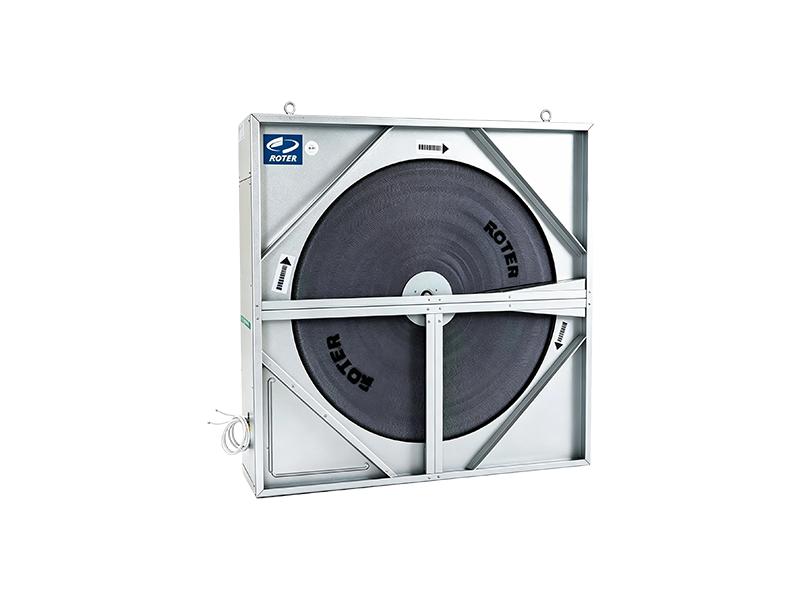
Energy recovery is no longer a nice-to-have—it's a competitive necessity. But finding a wheel heat exchanger supplier that truly understands your system's efficiency demands? That's where many projects stall. Enter ROTER, a name built on precision rotary heat exchanger solutions. Whether you're retrofitting an aging HVAC plant or designing a next-generation ventilation system, the right supplier doesn't just deliver wheels—they deliver measurable thermal recovery. This series breaks down what separates a commodity supplier from a true energy recovery partner, and why ROTER's approach to wheel heat exchangers is changing how engineers think about wasted heat. Let's dig into the mechanics, the myths, and the real-world payback.
Rotary Wheel Geometry and Why It Changes Recovery Rates
The recovery rate of a rotary wheel is shaped less by the material choice than by the internal passage geometry. Triangular, sinusoidal, and hexagonal flute cross-sections each create a different balance between exposed surface area and pressure loss. A sine-wave flute, for instance, packs more exchange surface into the same wheel volume and tends to hold a thinner moisture film, which lifts latent recovery. But the same tight curvature that improves heat and mass transfer also makes the wheel harder to clean and more prone to fouling in dusty airstreams. Those practical limits feed directly back into how often the wheel reaches its nameplate efficiency.
Wheel depth and flute hydraulic diameter act together because they set the number of transfer units. A deeper wheel gives the two airstreams more contact length, raising recovery at low face velocities, but only until the pressure drop across the matrix becomes unacceptable. Narrower flutes push the flow closer to a laminar regime with thinner boundary layers, which improves convective exchange yet increases fan energy consumption. The recovery rate therefore shifts nonlinearly: doubling flute density rarely doubles effectiveness, and a wheel tuned for maximum heat recovery may sacrifice moisture recovery or vice versa.
The angular layout of the wheel also matters, especially the purge sector and seal arrangement. A purge sector redirects a small amount of return air to sweep the flutes before they rotate into the supply side, lowering contaminant carryover but consuming a portion of the supply airflow that would otherwise pass through the heat-exchange zone. Wider purge angles typically improve indoor air quality at the cost of a few percentage points of thermal recovery, and the exact penalty depends on flute geometry because narrow flutes retain more exhaust air per unit volume. Rotational speed interacts with the same geometry: slower rotation allows each flute to approach equilibrium with the airstream, raising recovery until carryover begins to offset the gain.
Desiccant vs. Polymer: Matching Media to Moisture Control Needs
Desiccants like silica gel and molecular sieves work by adsorption—pulling water vapor onto internal surfaces to reach very low relative humidity inside a sealed space. That makes them the default choice for electronics, pharmaceuticals, and other items that fail or degrade if the microclimate creeps above a few percent RH.
Polymer media typically absorb and hold moisture within their structure, and some can be formulated to buffer humidity within a specific range instead of simply driving it toward zero. This is useful for natural fibers, certain foods, or museum storage where over-drying causes brittleness or shrinkage, while still preventing condensation and mold.
Choosing between the two means matching the moisture control goal to the medium's behavior: target RH, response time, and whether the product tolerates contact with the media all matter. A desiccant pack can over-dry leather or botanicals, while a polymer may never reach the low vapor pressure needed for moisture-sensitive chemical reagents—so the real question is not just how much moisture to remove, but how dry, for how long, and under what conditions.
Balancing Pressure Drop and Thermal Performance in Tight Retrofit Spaces
In retrofit projects where mechanical rooms are cramped, the default impulse is to select coils or heat exchangers with the lowest possible airside pressure drop. But that choice often forces a larger face area or deeper row count that simply won't fit behind existing structural beams or above a tight dropped ceiling. A better starting point is to map the available envelope first—measure the actual plenum depth, access clearance, and duct connection angles—then back into a coil geometry that keeps face velocity low enough to avoid moisture carryover while accepting a modest rise in static pressure. That rise can usually be recovered elsewhere by straightening a bad elbow or replacing a sharp transition, which costs far less than trying to force a high-performance coil into a space that can't breathe.
Another often overlooked lever is circuiting and fin spacing. In a tight retrofit, reducing fin density from 12 to 10 fins per inch can cut airside pressure drop by roughly 15–20% without a proportional loss in heat transfer if the water or refrigerant side is rebalanced to a slightly higher flow rate. The key is to stop treating pressure drop and thermal performance as a zero-sum trade. By staggering tube rows, using rifled tubing on the waterside, and slightly oversizing the return bends, you can shift the balance point toward both lower resistance and adequate capacity. What matters in the field is not the coil's lab rating but how it behaves after it is shoehorned into a space with a 14-inch return duct and a filter rack that nobody planned for.
How Smart Bypass Controls Prevent Overheating in Summer
Summer heat puts real stress on cooling loops, especially when a chiller runs at part load. A smart bypass control reads the actual differential pressure across supply and return lines, then adjusts a motorized valve in real time. Instead of forcing all chilled water through coils that don't need it, the valve lets excess flow return directly to the plant. This keeps the system from short-cycling and stops compressors from working against artificially high head pressure.
The result is smoother operation during mild mornings and scorching afternoons alike. When rooftop temperatures climb, the bypass opens wider to maintain stable flow through evaporators, even if only a few zones call for cooling. That prevents the classic summer failure mode where low flow triggers freeze protection trips or overheats the compressor oil. The control also reacts faster than a manual balancing valve ever could, so the entire loop stays within a safe temperature band without constant operator intervention.
Over time, this reduces thermal fatigue on piping and valves, because flow changes happen gradually rather than in sudden slugs. Building owners notice it as fewer hot spots near perimeter offices and less noise from vibrating actuators. The smart bypass doesn't just dump water—it shapes the pressure profile so every coil gets just enough flow to do its job, while the rest of the system breathes easy.
Case Studies: District Energy Plants Running on Recovered Heat
Recovered heat often arrives with an unpredictable rhythm, yet several district energy plants have turned that variability into a dependable asset. One Scandinavian network, for instance, taps into exhaust from a nearby data center, capturing thermal energy that would otherwise drift into the sky. By pairing the fluctuating supply with a large stratified storage tank, the plant can smooth out the peaks and valleys, delivering steady warmth to thousands of apartments even when the servers idle. The design lesson is subtle but crucial: buffer capacity matters as much as the recovery technology itself.
In another case, an industrial port district repurposed the cooling water from a steel mill, raising its temperature through heat pumps before feeding a closed-loop network serving both warehouses and office blocks. What makes this project stand out is not the hardware, but the contractual choreography. The plant operators negotiated a heat delivery schedule that aligns with the mill's production cycles, while a cascading tariff structure encourages off-peak consumption. This approach shifts the conversation away from simple efficiency metrics and toward the art of matching supply with demand in real time.
A third example comes from a mid-sized city that retrofitted an old gas-fired plant to run primarily on heat recovered from municipal wastewater. The outflow from a treatment facility, normally around 12°C, passes through a series of exchangers and heat pumps, eventually feeding a district loop at 70°C. The engineering team discovered that the real bottleneck was not the heat source but the legacy piping: older sections had to be re-insulated and pressure-tested to prevent losses. After the upgrades, fuel consumption dropped by half, and the plant's operating staff now spend more time tuning pump curves than managing combustion. Across all these cases, a common thread emerges — recovered heat systems reward patient design, creative partnerships, and a willingness to treat thermal energy as something that can be scheduled, stored, and negotiated rather than merely consumed.
When to Replace a Wheel Instead of Cleaning It
Wheel cleaning can restore a fair amount of shine, but it has clear limits. If you notice deep gouges, visible cracks around the spokes or rim edge, or a bend that causes vibration at speed, no amount of scrubbing will fix the structural damage. Pitting from brake dust or road salt that has eaten through the clear coat and into the alloy also signals the end of the line for cleaning alone.
Another sign is persistent air loss. When a tire repeatedly goes flat despite a fresh valve stem and proper bead seating, the wheel itself may be porous or cracked. In such cases, a replacement wheel is safer and often cheaper than chasing leaks with sealants. Likewise, if the wheel has been welded before or shows signs of previous repair that failed, it's time to retire it rather than try to clean and reuse it.
Finally, weigh the cost of refinishing against replacement. A badly curbed or corroded wheel might need professional media blasting, repainting, and clear coating—costs that can approach or exceed a quality used or new wheel. If the structural integrity is doubtful or the finish is beyond surface grime, replacing the wheel is the practical choice.
FAQ
It transfers heat and sometimes moisture between outgoing and incoming air streams without letting them mix, which helps buildings or industrial processes hold onto energy that would otherwise be exhausted.
Look at your airflow volumes, climate, and whether humidity transfer matters. If you have large ventilation needs and want to reclaim both sensible and latent heat, a wheel often outperforms plate or run-around coil systems.
Regular checks of the drive belt, seals, and wheel rotation are the main tasks. Cleaning intervals depend on the air quality, but most units run well with periodic vacuuming or compressed air to keep the media clear.
That depends on the wheel material and coating. Epoxy-coated aluminum or specialized polymer media can resist mild corrosives, but heavy particulate or aggressive chemicals may need filtration or a different recovery approach.
Sensible effectiveness often lands between 70% and 85%, and total effectiveness including latent heat can be similar or slightly lower. The exact figure varies with face velocity, wheel depth, and the temperature and humidity difference.
Request performance curves at your actual airflow and climate conditions, not just catalog ratings. Also ask about frost control, purge sector design, casing leakage, and whether they provide commissioning support.
They show up in both. HVAC applications focus on comfort and code-driven ventilation, while industrial uses include drying, paint booths, and process air preheating where high exhaust temperatures make recovery very attractive.
The detail work: low-leakage seals, balanced wheel media for pressure drop, smart purge geometry, and support that helps you model payback rather than just selling a component.
Conclusion
Selecting the right rotary wheel heat exchanger begins with understanding how subtle differences in wheel geometry shift sensible and latent recovery rates. A deeper flute profile may boost moisture transfer but can also invite higher pressure drop, a trade-off that becomes critical in retrofit projects where duct space is tight. Suppliers who offer custom wheel depths, variable segmentation, and cassette designs help engineers hit performance targets without choking airflow. Matching the media to the application matters just as much: desiccant-coated wheels excel in high-humidity processes like swimming pools or industrial drying, while polymer wheels resist corrosion and handle condensation-heavy exhaust streams with less maintenance. The best supplier solutions don't stop at the wheel itself—they integrate purge sectors, variable-speed drives, and smart bypass dampers that redirect air during summer to avoid overheating supply airstreams.
Real-world district energy plants prove the value of recovered heat beyond the spec sheet. Case studies show facilities achieving 75–85% effectiveness from enthalpy wheels, feeding preheated outdoor air into boilers or heat pumps and slicing natural gas demand during shoulder seasons. Yet performance drifts as wheels age: desiccant washes away, media delaminates, or bearings wear unevenly. Suppliers who offer on-site inspection, media replacement kits, and honest guidance on when a wheel should be swapped rather than scrubbed keep recovery rates from silently decaying. Instead of generic one-size-fits-all recommendations, the most practical partners combine geometry tweaks, media options, bypass control logic, and lifecycle replacement planning into a single energy recovery strategy tailored to each building's moisture load, space constraints, and operating hours.
Contact Us
Contact Person: Rhea
Email: [email protected]
Tel/WhatsApp: +8618800560886
Website: https://www.rotorairtech.com