

VoWiFi and VoLTE Deployment in China: Unlocking Seamless Voice Connectivity
2026-05-17
China's mobile landscape is rapidly evolving, and with it, the demand for crystal-clear voice calls anytime, anywhere. As operators race to blanket the nation with VoLTE and extend coverage indoors via VoWiFi, the real challenge lies beneath the surface—seamless interoperability and core network intelligence. This is where IPLOOK steps in, redefining how voice services are stitched together in the 5G era. But what exactly makes VoWiFi and VoLTE deployment so complex in China, and why are innovative core solutions the missing piece? Let's dive into the architecture that turns patchy connectivity into uninterrupted conversations.
Why VoLTE and VoWiFi Are Transforming Mobile Voice in China
The shift toward VoLTE and VoWiFi in China isn’t just about better call quality—it’s a fundamental rewrite of how mobile networks operate. For years, voice calls relied on circuit-switched fallback, a relic of 2G/3G that forced smartphones to momentarily step down from LTE to older networks, creating delays and draining batteries. Now, with VoLTE carrying voice as data packets over 4G and 5G, calls connect almost instantly and maintain high-definition clarity, all while keeping you on faster data speeds. It’s a quiet but profound upgrade that turns every call into an IP-native experience, paving the way for sophisticated services like video calling over LTE without third-party apps.
VoWiFi extends this transformation beyond cellular towers, using Wi-Fi networks to fill indoor coverage gaps that have long plagued dense urban apartments and rural homes. Rather than a patchwork of signal boosters, it seamlessly hands over calls between cellular and Wi-Fi using the same phone number and native dialer—no app juggling. In a country where concrete high-rises often kill signals and subways are both mobile hubs and dead zones, the combination of VoLTE and VoWiFi creates a resilient voice layer. It’s less about chasing new features and more about making calls just work, everywhere, without the user ever thinking about the technology underneath.
What truly sets this evolution apart in China is the scale and integration driven by operators like China Mobile. With 5G deployments accelerating, VoLTE serves as the voice backbone for 5G SA networks, while VoWiFi ties into widespread home broadband. This dual approach is quietly killing 2G and 3G networks, freeing up spectrum and resources for faster data services. Consumers notice the difference in day-to-day moments: no call drops when leaving home Wi-Fi, crystal-clear calls in basement restaurants, and the subtle pleasure of staying on a video chat while streaming music. It’s not a flashy revolution, but it’s steadily reshaping connectivity habits across the country.
The Network Readiness: How Carriers Built the Foundation
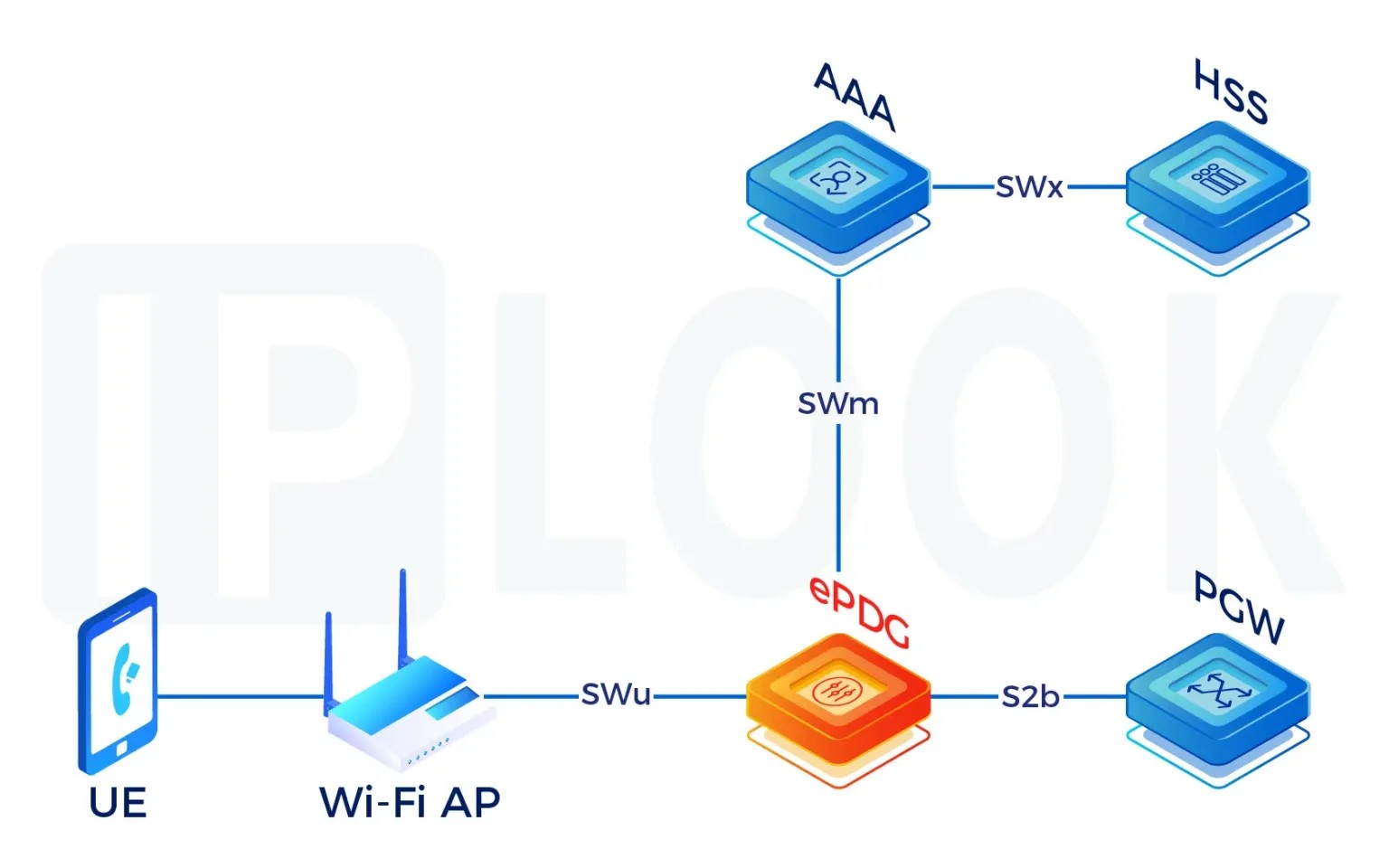
Behind every seamless connection lies a story of infrastructure crafted long before the first data packet traveled. Carriers didn’t just wait for demand—they anticipated it, laying fiber optic cables across continents and upgrading legacy copper networks to handle explosive growth. This quiet, relentless groundwork turned regional hubs into global arteries, ensuring that when the world shifted online overnight, the backbone was already in place.
The real readiness came from a blend of foresight and redundancy. Instead of relying on single points of failure, carriers built overlapping mesh networks, burying cables along diverse paths to dodge natural disasters and construction mishaps. They hardened central offices, deployed power backups, and stress-tested switching systems under peak loads. This obsession with resilience meant that even when parts of the network took a hit, traffic simply rerouted without a user ever noticing.
What often gets overlooked is the cultural shift inside these companies. Field technicians and engineers evolved from reactive problem-solvers into proactive guardians of connectivity. They mapped out capacity months ahead, ran disaster drills long before threats materialized, and collaborated across companies to standardize protocols. This human layer of readiness transformed a passive utility into a living, breathing platform that could scale at the speed of innovation.
Breaking Down the Technical Hurdles for Crystal-Clear Calls
Getting a voice call to feel truly natural is surprisingly hard. Tiny disruptions—a momentary network hiccup, a background murmur—can wrench you out of the conversation. The most persistent challenge is packet loss, where fragments of audio simply vanish en route, leaving unnatural gaps. Even when packets arrive, they may be out of order or delayed, forcing the receiver to piece together a coherent stream in real time, all while suppressing the acoustic echo that bounces back from speakers and microphones.
Jitter—the variation in packet arrival times—demands smart buffering. If the buffer is too short, you risk dropouts; too long, and you add latency that makes people talk over each other. Techniques like adaptive jitter buffers continuously tune themselves, but they have to guess right. Meanwhile, error concealment algorithms step in to mask missing data, reconstructing plausible waveforms from the surrounding sound so your ear doesn't register the loss. It’s a balancing act between speed and fidelity, and the room for error is razor-thin.
Beyond the network, the audio itself poses hurdles. Background noise suppression needs to strip out keyboards, wind, or traffic without chewing on the voice itself. Modern codecs like Opus can gracefully shift bitrates mid-call, but they still face the crunch of squeezing rich sound through narrow pipes. Advances in machine learning are now pushing these boundaries further, learning to separate speech from chaos in ways traditional signal processing could never match. Each improvement brings us closer to that elusive feeling of sharing the same room.
User Experience Gains That Redefine Everyday Connectivity
The way we interact with technology has shifted from isolated tasks to a continuous, ambient presence that adapts to our needs without demanding constant attention. Everyday connectivity now feels less like a tool and more like an extension of ourselves, quietly removing friction from routines we barely notice.
Smart devices no longer just respond to commands—they anticipate patterns, learn preferences, and orchestrate environments that feel personalized yet unobtrusive. The real gain isn't in speed alone, but in how effortlessly the digital world aligns with the physical, making transitions between tasks, places, and devices nearly invisible.
This evolution is redefining what it means to be connected. It's not about being always online, but about a contextual awareness that surfaces relevant information, suggests actions, and even steps back when needed, creating a partnership that respects our attention while enhancing our capabilities.
Overcoming Dead Zones with Wi-Fi Calling Everywhere
Spotty reception can turn a simple phone call into a frustrating game of finding the right corner of the house. Wi-Fi calling steps in as a quiet game-changer, routing calls over your home or office internet instead of hunting for a faint cell tower. It’s not about boosting bars—it’s about working around them, keeping conversations flowing in basements, rural nooks, or concrete-heavy buildings where traditional signals fade.
Unlike clunky femtocells or signal repeaters, Wi-Fi calling requires no extra hardware—just a compatible phone and a familiar network. You dial the same way, and the switch happens automatically when coverage dips, often delivering clearer audio than cellular alone. For anyone who’s ever paced a room mid-call to avoid a dropout, it eliminates that dance entirely, making the idea of a ‘dead zone’ feel obsolete.
What’s often overlooked is how seamlessly it bridges gaps beyond voice. Sending texts, checking voicemail, and even emergency calls (where supported) can piggyback on that same Wi-Fi thread. Offices with thick walls, family cabins tucked into valleys, or apartments shielded by metal-framed windows all gain a reliable connection layer. It quietly redefines what it means to be reachable, without ever needing to glance at a signal meter again.
The Road Ahead: Integration with 5G and Beyond
5G networks are steadily weaving themselves into the fabric of modern infrastructure, but the real transformation lies in how they coexist with emerging technologies. Rather than just faster phones, we're seeing a subtle re-architecture of data flow where edge computing, autonomous systems, and dense IoT meshes begin treating latency as a resource to be shaped, not just minimized.
Beyond 5G, the conversation shifts from speed to symbiosis. Think of networks that sense their environment, adapt topologies on the fly, and allocate spectrum with a precision that today's static allocations can't match. It won't be about a single "G" leap, but about layering intelligence into the air itself—making connectivity invisible, reliable, and weirdly intuitive.
FAQ
VoWiFi, or Voice over WiFi, routes calls through a wireless internet connection rather than the cellular network. This is particularly handy indoors where cellular signals struggle. VoLTE, on the other hand, uses the 4G LTE network for high-definition voice, keeping you connected while using data simultaneously. The main distinction lies in the infrastructure: VoWiFi leverages existing WiFi access points, while VoLTE is built directly into the mobile operator's core.
The driver is twofold: user experience and network efficiency. With the sunset of 2G and 3G networks, operators need modern voice solutions. VoLTE dramatically improves call quality and reduces call setup time. VoWiFi fills coverage gaps in basements and high-rise buildings, which are common in dense urban Chinese cities. Together, they ensure a seamless voice service without dropping calls when moving between networks.
A major challenge is the sheer diversity of WiFi environments – from home routers to public hotspots – which can affect call stability. Interoperability between different device manufacturers and chipset vendors is another headache. Additionally, regulatory compliance and lawful interception requirements add layers of complexity, since voice calls over WiFi must meet the same security standards as traditional cellular calls.
All three major operators – China Mobile, China Unicom, and China Telecom – have been actively deploying both technologies. VoLTE became a standard feature years ago and is now ubiquitous. VoWiFi availability, however, varies by region and device model. Some flagship smartphones from Huawei, Xiaomi, and OnePlus support it, but it's not yet universally enabled on every plan. The rollout is ongoing, with tier-1 cities getting priority.
5G introduces VoNR (Voice over New Radio), which promises even better quality than VoLTE. However, in early 5G deployments, the network often falls back to VoLTE for voice calls. VoWiFi remains critical for indoor coverage because 5G signals at higher frequencies struggle to penetrate buildings. The long-term vision is a converged voice experience where your call hands off smoothly between 5G, LTE, and WiFi without you noticing.
The most noticeable is crystal-clear audio, often in HD or full-HD, which makes conversations feel more natural. Call connection times drop from several seconds to nearly instant. With VoWiFi, you can make calls from areas that were previously dead zones, like underground parking garages or older concrete buildings. It also means you can use data and voice at the same time – checking a map while on a call, for example – without interruption.
RCS, often branded as '5G Messaging' by Chinese carriers, and VoWiFi are part of the same IP-based push to modernize communication. While RCS upgrades SMS with rich media and chat features, VoWiFi ensures voice has a robust fallback layer. Together, they form an all-IP backbone that makes traditional circuit-switched networks obsolete, paving the way for a unified communication suite that works across any access network.
VoWiFi calls are encrypted using IPsec, similar to many VPNs, which secures the data between the device and the carrier's gateway. In China, all voice services, including VoWiFi, must adhere to strict government standards, which include both security and monitoring capabilities. For the average user, the experience is transparent and safe, but the architecture does allow for lawful interception in accordance with local regulations.
Conclusion
China's mobile voice landscape has undergone a remarkable shift with the widespread rollout of VoLTE and VoWiFi, moving beyond patchy legacy networks toward always-on, high-definition calling. Carriers laid the groundwork by densifying 4G coverage and refarming spectrum, while their core networks embraced IMS to anchor both voice over LTE and Wi-Fi. This isn't simply a capacity upgrade—it reflects a deliberate engineering push to eliminate call drop blackspots. By offloading indoor traffic onto Wi-Fi and ensuring QoS end to end, operators tackled interference, handover glitches, and the notorious echo that plagued early trials. The technical lift was heavy, yet the payoff is a calling experience that feels invisible—no more wrestling with signal bars in basements or high-rises.
For users, the transformation means calls that connect instantly with life-like clarity, while data sessions carry on uninterrupted. In elevators, underground garages, and remote villages, Wi-Fi calling stitches coverage gaps into a seamless fabric, often without any user intervention. This reliability reshapes daily habits: video calls hold steady while walking through a mall, and voice notes sync reliably over home broadband. Looking forward, the integration with 5G standalone networks and future 6G architectures will extend these gains, bringing ultra-low latency and native voice over New Radio into the fold. The foundation built today—a unified IMS core bridging multiple access types—positions Chinese operators to deliver voice services that are not just fallbacks but a resilient, converged layer woven into every connected moment.
Contact Us
Contact Person: Shimmy
Email: [email protected]
Tel/WhatsApp: 85253392231
Website: https://www.iplook.com