

Twin Screw Extruder How It Works and Why It Matters
2026-08-06
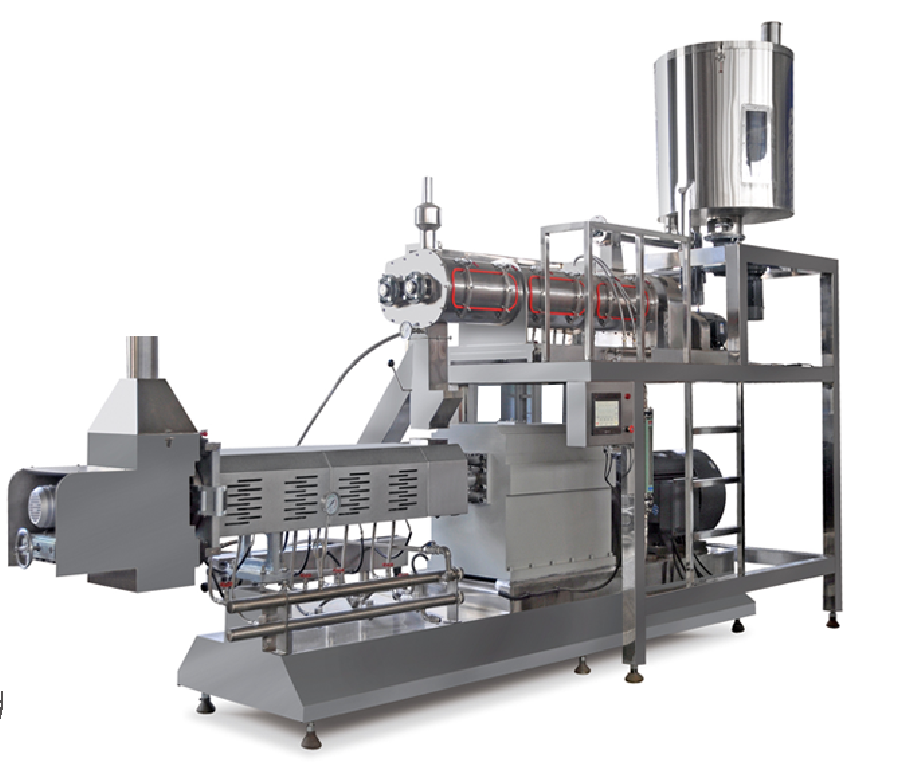
Ever wonder how your favorite puffed snacks get their airy crunch or how pet food pellets maintain consistent nutrition? The answer often lies in twin screw extrusion—a dynamic process that mixes, cooks, and shapes ingredients in one continuous flow. With consumer demands shifting toward healthier and more creative foods, mastering this technology isn’t just an advantage; it’s a necessity. MINGDE has spent years refining twin screw extruder designs that deliver precision, flexibility, and reliability, helping producers turn raw materials into market-ready products with ease.
The Hidden Mechanics Behind Twin Screw Extrusion
Twin screw extrusion isn’t just two screws spinning side by side—it’s a carefully choreographed interplay of forces, material rheology, and machine geometry that often goes unnoticed. The screws don’t simply push material forward; they create a series of pressure gradients, shear fields, and elongational flows that can make or break a formulation. In the kneading blocks, for instance, the high-shear zones aren’t merely melting the polymer—they’re stretching molecular chains, dispersing fillers, and inducing reactive bonds. Understanding how these localized stresses evolve along the barrel is what separates a stable process from one plagued by degradation or unmelted particles.
Beneath the surface, the intermeshing profile of the screws generates a self-wiping action that’s more than just a cleaning mechanism. As the flights rotate, they scrape adjacent surfaces while simultaneously creating controlled leakage flows over the tips. These small, deliberate gaps allow the melt to pass back and forth, constantly redistributing material across the channel depth. This isn’t random—it’s a hidden circulation pattern that evens out temperature gradients and compositional variations, especially when working with heat-sensitive additives or multi-phase mixtures.
What truly escapes the naked eye is the way minor changes in screw design cascade through the entire process. A slight adjustment to the pitch or stagger angle of a mixing element alters not just the local shear stress, but also the residence time distribution and the energy input profile. These shifts can amplify or dampen the thermomechanical history the material experiences, affecting final crystallinity or the dispersion of carbon nanotubes. The hidden mechanics are essentially a dialogue between the screw configuration and the material’s momentary state—a conversation that dictates quality long before the die face.
Why Two Screws Outperform One Every Time
It’s tempting to believe that a single, well-placed screw is enough to handle any fastening task. But in practice, relying on just one fastener introduces a critical weakness: a single point of failure. If that screw loosens from vibration, thermal expansion, or material creep, the entire joint can separate. Two screws, by contrast, create a redundant load path. Even if one begins to back out, the second continues to bear the load, preventing sudden catastrophic failure. This isn't just theoretical — countless field failures in everything from furniture assembly to industrial machinery trace back to the false economy of using one screw where two were needed.
Beyond redundancy, pairing screws dramatically improves resistance to dynamic forces. A lone screw under cyclic loading acts as a pivot point, concentrating stress and accelerating fatigue cracks. Two screws spaced apart clamp the components more evenly, distributing both tensile and shear loads across a broader area. This reduces peak stress at any single thread engagement and is especially critical in applications exposed to vibration, such as automotive brackets, electronic enclosures, or outdoor structures. Engineers know that a well-designed joint with two modestly sized fasteners often outperforms a single oversized screw due to this improved load sharing.
There’s also the factor of alignment and assembly ease. A single screw allows parts to rotate out of position before full tightening, requiring extra fixturing to maintain alignment. Two screws inherently lock the orientation of the assembly during installation. They prevent that maddening twist that shifts drilled holes out of line, making the build process faster and more repeatable. In production environments, this translates to fewer rejected parts and less rework — a practical advantage that compound over thousands of units, yet is often overlooked in initial design reviews.
The Secret Life of Material Flow Inside the Barrel
Material flow inside the barrel isn’t just a simple forward push—it’s a complex dance of heat, pressure, and shear that transforms raw feedstock into a homogenous melt. As the screw rotates, the material experiences a journey from solid conveying to melting and finally metering, with each zone playing a distinct role. In the solids-conveying zone, pellets compact and slide against the barrel wall, generating frictional heat that kickstarts the softening process. The transition to melt is rarely instantaneous; instead, a thin film of molten polymer forms along the heated barrel, gradually eroding the solid bed as it progresses downstream.
Inside the barrel, the material’s behavior defies intuition. The screw’s geometry—flight depth, pitch, and compression ratio—creates areas of intense shear and stagnation. Melt pools form and grow, while unmelted particles swirl in chaotic patterns, sometimes bypassing the intended path altogether. This unpredictability influences product quality in subtle ways: slight variations in residence time can lead to thermal degradation or incomplete homogenization, while trapped volatiles may later manifest as surface defects. Engineers grapple with these hidden dynamics, using simulation and clever sensor placement to peer into the barrel’s secrets, yet the true complexity often remains a mystery, emerging only in the final extrudate.
From Pellets to Perfection: A Processing Powerhouse
Transforming raw pellets into flawless finished goods demands more than just machinery—it requires a finely tuned ecosystem where every stage works in concert. From precise temperature controls to adaptive pressure modulation, the entire workflow is engineered to preserve material integrity while shaping it to exact specifications. This is where engineering instinct meets industrial muscle, ensuring that each pellet reaches its full potential without compromise.
Behind the scenes, a web of automated checks and real-time adjustments keeps the process on track. Sensors track viscosity, density, and shear rates, feeding data back to a central system that tweaks parameters on the fly. Even the smallest deviation triggers an instant correction, preventing waste and maintaining the consistent quality that downstream operations depend on. The line between raw input and polished output blurs into a continuous, self-optimizing rhythm.
What sets this system apart is its ability to handle variability without losing stride. Whether the pellets arrive with subtle inconsistencies or demand a rapid shift in product design, the setup absorbs the challenge and delivers. It’s not just about brute force—it’s about intelligent, responsive processing that turns a simple pellet into a masterpiece, time after time.
Industrial Alchemy: Mixing, Melting, and Reactions Unleashed
The transformation of raw materials into high-value products within modern industry often feels like a form of alchemy, albeit with precise chemical blueprints replacing ancient mysticism. At its core, this process relies on the fundamental operations of mixing and melting, which serve as gateways to controlled chaos at the molecular level. When solids are blended into a uniform mixture or heated past their melting points, the rigid lattices that define them break down, allowing atoms and molecules to rearrange into entirely new configurations. This is where the true magic happens—not in transmuting lead into gold, but in forging stronger alloys, clearer glass, or more reactive catalysts that drive entire sectors of the economy.
Once materials are liquefied or homogeneously combined, the stage is set for a cascade of chemical reactions that would be impossible under ambient conditions. Industrial reactors harness extreme temperatures, pressures, and catalytic surfaces to break stable bonds and stitch together novel ones with breathtaking efficiency. Consider the Haber–Bosch process: nitrogen and hydrogen gases, both largely inert, are mixed and exposed to an iron catalyst at several hundred atmospheres, yielding ammonia—the backbone of synthetic fertilizers. This single reaction, replicated in factories worldwide, now feeds nearly half the global population. Equally transformative is the cracking of crude oil, where long hydrocarbon chains are melted apart at high heat to produce lighter fuels and petrochemical building blocks, unleashing a molecular versatility that literally powers modern life.
But industrial alchemy is not just about brute force. It increasingly embraces subtlety: precision mixing of nanoparticles to create advanced composites, controlled melting in additive manufacturing to print intricate metal parts, and photochemical reactions driven by LED arrays rather than thermal baths. These innovations blur the line between mechanical engineering and chemistry, turning factories into laboratories where new materials are invented as often as they are produced. Whether it’s a turbine blade cast from a single crystal of superalloy or a polymer blended to biodegrade in seawater, the legacy of alchemical curiosity endures—refined by science, scaled by industry, and continuously pushing the boundaries of what matter can become.
Choosing the Right Configuration for Unmatched Results
Every project carries its own demands—there’s no universal setup that guarantees peak performance. Start by mapping out your actual workload: are you dealing with memory-heavy applications, rapid data processing, or a balance of both? This clarity lets you match components like CPU cores, RAM, and storage type to real needs, avoiding both over-purchasing and bottleneck risks. The goal isn’t to stack the highest specs, but to align each element with your daily tasks in a way that feels intuitive and waste-free.
Beyond raw hardware, the operating environment shapes results more than most realize. A configuration that shines under a lightweight Linux distro might stumble with a resource-hungry desktop interface. Similarly, default settings rarely serve specialized workflows—tweaking kernel parameters, caching behaviors, or I/O schedulers can yield order-of-magnitude improvements without any hardware change. Experimentation here, guided by real-time monitoring, often uncovers hidden headroom that makes the difference between an acceptable system and an exceptional one.
Finally, treat your configuration as a living entity rather than a one-time decision. Workloads shift, applications evolve, and new hardware combos emerge; regularly revisiting your choices prevents performance decay. Keep a log of adjustments and their impacts, so you’re not starting fresh each time. This iterative approach, grounded in measured outcomes rather than assumptions, ensures your setup remains fine-tuned for whatever comes next—producing results that consistently exceed expectations.
FAQ
A twin screw extruder uses two intermeshing screws rotating inside a heated barrel to convey, mix, and shape materials. Unlike a single screw extruder that relies on friction and drag for material transport, the twin screw design offers positive displacement, far better mixing, and more precise control over residence time and shear. This makes it ideal for compounding, reactive processing, and handling materials that are hard to feed or sensitive to heat.
The process begins with raw materials—powders, pellets, or liquids—fed into the first barrel zone. The screws convey them forward while external heaters and shear-induced friction melt or soften the material. Along the barrel, mixing elements distribute additives uniformly and break down agglomerates. Any volatiles or moisture can be vented out in a degassing zone. Finally, the homogenized melt is pushed through a die to form the desired shape, then cooled and cut.
Key components include the barrel, segmented screws on parallel shafts, a drive motor and gearbox, heating and cooling systems, a control panel, a feeding system, and the discharge die. The screws are built from modular elements like conveying sections, kneading blocks, and mixing rings that can be arranged to suit specific material and process needs.
It brings unmatched flexibility and consistency to processing complex formulations. From blending fillers into polymers to encapsulating active ingredients in food or pharmaceuticals, twin screw technology cuts production steps, lowers energy use, and improves product quality. It also enables continuous processing, which is far more efficient than batch mixing for high-volume production.
You'll find twin screw extruders across plastics compounding, masterbatch production, food and pet food processing, pharmaceutical hot melt extrusion, and even in biomaterials. They're also essential in recycling and upcycling of mixed plastics, where robust mixing makes it possible to create high-value materials from waste streams.
Co-rotating screws turn in the same direction, creating high shear and self-wiping action that prevents material from sticking and speeds up mixing—great for compounding and devolatilization. Counter-rotating screws turn in opposite directions, generating lower shear but excellent positive conveying, which suits profile extrusion of heat-sensitive PVC or reactive systems where gentle handling is critical.
The arrangement of screw elements directly controls how materials are conveyed, melted, mixed, and degassed. Tightly intermeshing kneading blocks deliver high dispersive mixing, while wide-pitch conveying elements speed up throughput. By reconfiguring these modular components, a single machine can be optimized for entirely different recipes, reducing downtime and expanding what can be produced on one line.
Absolutely. The precise temperature control along the barrel, combined with the ability to design screws that apply minimal shear, lets processors handle everything from delicate vitamins to reactive compounds without degradation. The short, controlled residence times and efficient cooling zones further protect sensitive materials from burning or losing potency.
Conclusion
At the heart of modern polymer processing, the twin screw extruder operates on a fundamentally simple yet ingeniously effective principle: two intermeshing screws rotate within a heated barrel, conveying, melting, mixing, and shaping materials in a continuous, tightly controlled sequence. Unlike single screw machines that rely primarily on friction and drag flow, twin screw systems actively pump material forward through positive displacement, ensuring consistent residence times and superior mixing. The hidden mechanics lie in the intricate geometry of the screws—flights, kneading blocks, and mixing elements—that shear, stretch, and fold the material, breaking down agglomerates and distributing additives with molecular-level precision. This mechanical synergy unlocks processing capabilities far beyond simple melt conveyance, enabling complex reactions, devolatilization, and the incorporation of fragile fibers or high filler loadings without degradation. The secret life of material flow inside the barrel reveals a choreographed journey: solids conveying, melting, melt conveying, and intense mixing zones, each tailored by screw design to optimize thermal and mechanical energy input for the specific material.
Why two screws outperform one every time is rooted in their self-wiping action and modular configurability. The intermeshing screws constantly clean each other, eliminating dead zones and minimizing material stagnation, which leads to faster purging, reduced thermal degradation, and precise temperature control. This makes twin screw extruders the processing powerhouse for transforming pellets into perfection—whether producing masterbatches, reinforced compounds, or reactive extruded products. Industrial alchemy happens here: mixing, melting, and reactions are unleashed simultaneously in a single step, replacing batch processes with continuous, cost-effective lines. Choosing the right configuration—co-rotating or counter-rotating, intermeshing or non-intermeshing, screw profile and barrel layout—is the key to unmatched results. It’s a versatile platform that empowers manufacturers to tailor-make materials with exacting specifications, driving innovation in plastics, food, pharmaceuticals, and beyond, truly making twin screw extrusion a cornerstone technology that shapes the products we rely on daily.
Contact Us
Contact Person: LILY SUN
Email: [email protected]
Tel/WhatsApp: 0086-13969103791
Website: https://www.snackfoodmachinery.com/