

Top 10 Shuttle Rotomolding Machines for Reliable, High-Volume Production
2026-11-16
Shuttle rotomolding machines don’t just shape plastic—they shape production schedules, cost per part, and whether a busy plant hits delivery dates. When volumes climb, small weaknesses turn into expensive bottlenecks: inconsistent wall thickness, slow mold changes, or downtime that quietly erodes margins. That’s why we sorted through ten machines worth shortlisting, weighing throughput, repeatability, and real maintenance feedback from shops running multi-shift operations. One name that keeps surfacing in high-output environments is Rising Sun, but the list includes several builders with distinct strengths. Here’s what earned a spot—and what to look for before you commit.
Where Shuttle Rotomolding Keeps a Steadier Pace Than Rotary Lines
A shuttle setup earns its keep in environments where mold weights, wall thicknesses, and part geometries shift from job to job. Instead of locking every tool to the same timed rotation, each shuttle station can pause in the oven a little longer or move through cooling at its own rhythm. That independence keeps the floor from getting stuck on the slowest mold in the queue.
Rotary lines are built for repetition, and they do well when every cycle looks alike. But once one station needs extra heat or a longer service window, the whole carousel often has to match that lag. Shuttle machines absorb those small delays without turning them into line-wide stoppages, so the overall pace feels less choppy when the product mix is inconsistent.
The steadier pace shows up most clearly between stations. Operators can load one arm while another is still cooling, and a heavy part isn’t competing with a thin-walled container for the same fixed dwell time. That small amount of scheduling freedom reduces queues at the oven doors and keeps the workflow from drifting into a hurry-up-and-wait pattern.
Oven Recovery Rates You Should Watch Before Trusting a Cycle Time
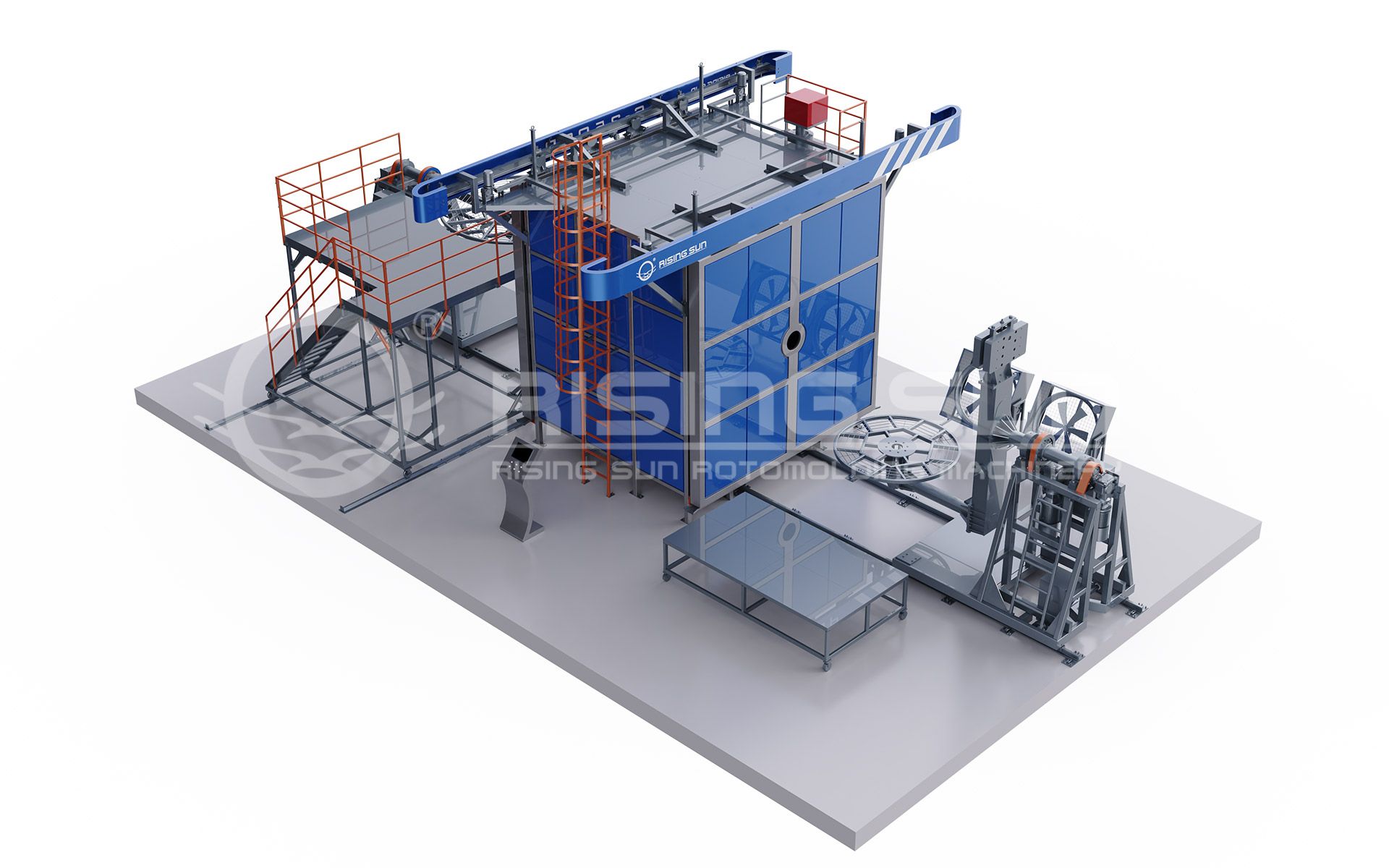
A cycle time on paper only means something if the oven actually gets back to temperature after the door opens. Most thermal processing hiccups happen in that recovery window, not during the steady soak. If the chamber drops 40 degrees when a rack goes in and takes eight minutes to climb back, your real heat exposure is not what the controller’s countdown assumes. Watching the recovery curve tells you whether the displayed time matches what the parts actually feel.
Published recovery figures often come from empty-chamber tests, which flatter the hardware. A cold rack, tooling, or a dense batch of parts pulls far more heat out of the air and surfaces. Before you trust a quoted cycle, run a check with your normal loading pattern. Put a probe near the center of the load and watch how long it takes to stabilize, not just when the air temperature first ticks back to setpoint. That lag is where under-cured or partially dried product hides.
Overshoot is another trap. Some ovens recover quickly by slamming the burners or elements on full, then drift above setpoint before settling. That swing matters for coatings, adhesives, and anything with a narrow process window. If you are comparing ovens, ask for the shape of the recovery curve over repeated openings rather than a single best-case number. A modest but flat recovery often beats a fast one that keeps oscillating.
Dual-Arm Shuttle Designs That Stay Predictable on Third Shift
The real test of a dual-arm shuttle isn't the daytime demo run. It's the 2 a.m. pick after three shift changes, when the only person on the floor doesn't have time to nurse a servo drift or reset a gripper. Designs that stay predictable on third shift tend to share one habit: they don't ask for operator judgment. Each arm returns to a hard stop, follows the same acceleration curve, and waits for the same confirm signal before the next move. When the sequence doesn't change, the shuttle doesn't surprise anyone.
One detail that gets overlooked is how the two arms share a rail. On quieter shifts, dual-arm systems either hold their rhythm or fight the same corner. A predictable design staggers the arm cycles by default instead of leaving that to a controller that may be rebooted mid-shift. Mechanical spacing gives each arm a fixed window, so a hesitation in one doesn't cascade into the other. That keeps drift small, alarm codes rare, and the lead tech asleep at 3 a.m.
Predictability also comes from diagnostics that read like a checklist rather than a puzzle. Third shift often runs without an engineer in the building. If a fault appears, the shuttle should name the sensor or pocket that failed and allow a safe restart without a laptop. Dual-arm designs that keep the I/O map readable and the reset sequence short are the ones that keep the line moving until the day crew arrives.
Mold Changeover Tactics That Keep High-Volume Output From Slipping
Most plants lose more time during a mold change than anyone wants to admit, and it rarely shows up as a single dramatic delay. It hides in waiting for the crane, hunting down the right bolts, or realizing the next mold still needs to be preheated. Pin down a realistic sequence and assign one person to own the handoff between production and the setup crew. When the old mold stops, every tool, clamp, and hose should already be staged at the press, not scattered across the shop floor.
Preheating the next mold to a consistent temperature before it reaches the press removes one of the most common startup hiccups. A cold mold can chew through several cycles just to stabilize, and those cycles add up quickly when you are running thousands of parts a day. Keep a short checklist tied to the specific mold family, not a generic form, so the team verifies water lines, ejector settings, and hot runner connections in the order that actually matters.
Finally, track changeover time from last good part to first good part, and review the numbers weekly with the people doing the work. The goal is not to assign blame but to spot recurring friction such as a shared hoist or a poorly marked manifold that keeps creeping back into the schedule. Small corrections here tend to protect high-volume output better than pushing the press harder once it is running.
Frame and Bearing Wear Points That Quietly Cut Into Daily Throughput
Most throughput losses never announce themselves. A hairline crack near a gusset or an oblong bearing housing can shift alignment just enough to make every cycle take slightly longer, and operators usually compensate by slowing feed rates or adding shims. That tiny adjustment becomes the new normal, so nobody logs it as a failure.
Bearings tend to wear unevenly once the frame starts flexing. Instead of clean rolling contact, the inner and outer races develop polished flats or a faint washboard pattern. The extra friction shows up as heat, but also as a drop in return stroke speed or a need for more torque to hold tolerance. Over a shift, that can easily erase fifteen to twenty minutes of output without a single alarm.
Frame wear is easier to catch if you look at the right places: bolt holes that have begun to oval, paint that keeps flaking around welds, or shim stacks growing thicker under motor feet. Where the bearing seats have lost their press fit, a quick indicator sweep at the shaft shoulder often reveals movement that a vibration sensor will miss. Replacing the bearing alone rarely fixes the issue; the frame pocket has to be bushed, welded, or line-bored first.
A Pre-Purchase Walkthrough for Shuttle Machines in Round-the-Clock Plants
Before signing off on a shuttle machine for a plant that never sleeps, spend at least two full shifts observing how the current material flow breaks down. Look for the gaps that only appear at 3 a.m. — charging stations that sit empty while operators wait, docking bays that jam after a shift change, or battery swaps that eat into the same window every night. Map those interruptions against the shuttle's promised cycle time. If the vendor's spec sheet assumes a clean, uninterrupted floor, it will not survive your reality.
Next, ask for a live demonstration under conditions that mirror your busiest hours, not a rehearsed midday run. Load the shuttle beyond its comfortable weight, run it along paths with uneven joints or tight turns, and simulate a battery failure mid-cycle. Watch how the navigation system recovers when the route is blocked by a pallet left where it should not be. A shuttle that hesitates too long or requires manual override more than twice an hour becomes another problem to manage instead of a solution.
Finally, examine the maintenance access before you commit. In a round-the-clock plant, you cannot afford to pause production for a technician to squeeze behind a guard rail. Check that batteries slide out without special tools, that sensors are reachable from a standing position, and that wear parts like drive wheels can be swapped in under ten minutes. Ask the supplier for the actual mean time to repair from their existing customers who run similar shifts. If they cannot name one, that silence tells you more than any brochure.
FAQ
Shuttle machines use two or more carriages that move between heating and cooling stations instead of one fixed arm. This lets operators load and unload one carriage while another part cooks or cools, so overlapping cycles keep throughput steady without adding extra labor.
Independent oven temperature control, rigid carriage alignment, sealed bearings on direct-drive or chain-drive arms, and automated process controls make the biggest difference. Separate cooling chambers with adjustable airflow also shorten cycle time and reduce warpage on large parts.
Shuttle machines usually give better control over heating and cooling for big tanks, kayaks, and heavy-walled industrial parts. Carousel systems handle smaller parts efficiently, while shuttle designs allow one mold to run at a time with faster changeovers and more predictable wall thickness.
Yes, most shuttle rotomolding machines accept a range of mold sizes through adjustable arms, removable plates, and programmable cycle recipes. Changeover is generally faster than a carousel because the next mold can be staged while the current run is still finishing.
Watch oven burner performance, chain tension and alignment, cooling fan balance, and pneumatic seal wear. Keeping thermocouples calibrated and checking carriage rails and limit switches helps prevent small faults from turning into cycle variation.
Names that come up often in industrial plastics include Ferry Industries, Rotoline, Persico, Reinhardt, Fixopan, and Orex. The right choice depends on part size, automation needs, and local service support, so factory demos and customer references matter more than brand reputation alone.
Automated mold loading, servo-driven arm indexing, recipe-based oven profiling, and remote diagnostics all help. Some systems also include automated mold release spray, temperature data logging, and closed-loop cooling control to keep cycle times repeatable.
Conclusion
Shuttle machines earn their place in high-volume plants less through raw speed and more through repeatability when rotary lines start to drift. A shuttle's stationary mold cart lets operators hold wall thickness within a tighter band across long runs, particularly on parts with deep pockets or asymmetric profiles. What separates the top ten from average builds is how quickly the oven returns to setpoint after the doors open. A sluggish recovery wipes out any rated cycle time advantage. Dual-arm designs with independent carriage control also stay more predictable on third shift, where fewer technicians are around to chase small misalignments.
Mold changeover still tends to be where daily output slips. Machines with tool-free clamp bars and documented cart height references keep a swap from eating half a shift. Frame and bearing wear points deserve equal attention; once the carriage rails start to groove or a trunnion bearing runs warm, the damage shows up as rejected parts rather than downtime alarms. Before a purchase, walk the machine with a dial indicator and ask for bearing temperature logs, not just a demo cycle. That practical check reveals more than any brochure spec about whether a shuttle machine will hold up under continuous production.
Contact Us
Contact Person: Sharon Zhu
Email: [email protected]
Tel/WhatsApp: 8615712666272
Website: https://www.risingsunroto.com