

Thread Button Bit Factories from China: Top 10 Picks for Quality and Reliability
2026-08-23
When it comes to sourcing thread button bits from China, the sheer number of factories can be overwhelming. Quality and reliability vary widely, and one wrong choice can stall your drilling projects. That's why we've narrowed down the top 10 manufacturers that consistently deliver durable bits for hard rock and demanding conditions. In this list, you'll find familiar names alongside hidden gems—and yes, PULANKA is one of them, but not just because of the brand name. Their track record in heat treatment and tungsten carbide selection speaks for itself. Keep reading to see who made the cut and what sets each factory apart.
The Real Difference Between Chinese Thread Button Bit Makers
Walk through any trade show in Guangzhou or flip through a supplier catalog, and the thread button bits from different Chinese makers can look almost identical. Same tapered profile, similar carbide grades stamped on the box, even the packaging carries the same shade of blue. The real difference doesn't show up in a photo or a spec sheet. It lives in the heat treatment curve that nobody publishes, in the way a factory handles the brazing joint when the furnace runs a few degrees hot on a Friday afternoon, and in whether the QC team actually rejects a batch for a hairline crack that most buyers would never notice until the bit snaps underground.
Some makers chase volume, pushing bits out the door with just enough quality to clear customs. Others build for repeat business in hard rock, where a failed bit costs a contractor half a shift and a damaged reputation. That split shows up in the small choices: using virgin tungsten carbide powder instead of recycled scrap, machining the thread root radius to reduce stress risers, or investing in a proper cryogenic treatment instead of just saying they do. You won't find these differences in a headline, but they're exactly what separates a bit that lasts 300 meters from one that dies at 120.
Price quotes from ten different Chinese suppliers might fall within a few dollars of each other, yet the actual cost per drilled meter can vary by a factor of three. The honest difference comes down to whether the maker treats the bit as a disposable commodity or as a precision tool that has to earn its place in a drill string. Ask about their scrap rate, their raw material certificates, or how they handle warranty claims from a mine in Chile. The answers—or the silence—will tell you more than any glossy PDF ever will.
How Top Factories Test for Wear and Impact Resistance
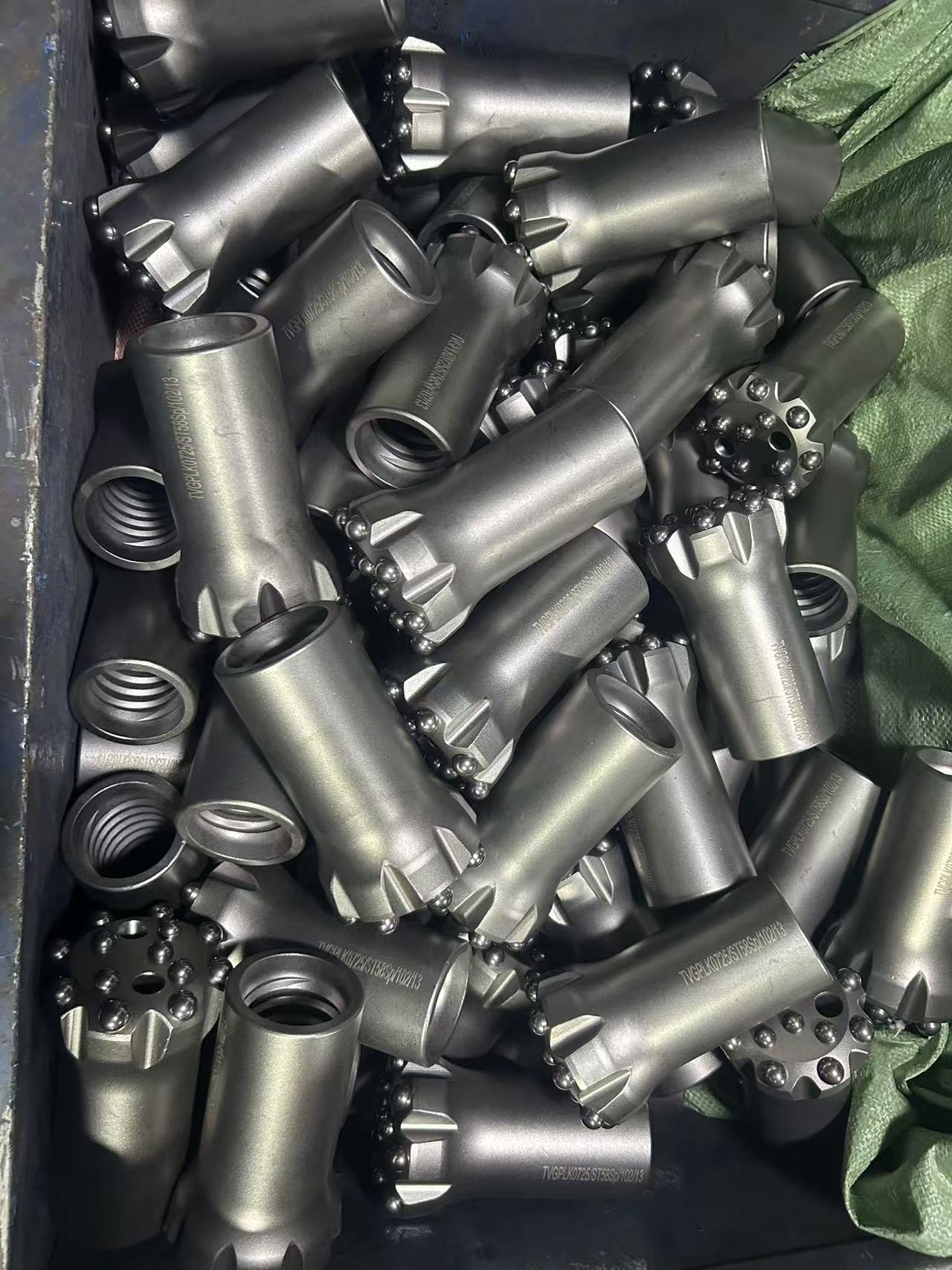
Real testing starts with replicating actual conditions rather than relying on spec sheets. For abrasion, top factories use rotating platform testers like Taber or linear systems such as the Martindale machine, applying standardized wheels or abrasives for thousands of cycles. They track weight loss, visual wear, and coating breakdown at fixed intervals.
Impact resistance gets similar scrutiny. Samples are clamped in drop-weight rigs or pendulum strikers. A weighted dart or swinging arm delivers controlled energy in a single hit, while some lines use repeated low-energy impacts to catch micro-cracking that a single blow might miss. Temperature chambers often run alongside, because polymers and coatings behave very differently at -20°C than at 40°C.
The most useful data comes from pairing lab results with field-correlated failures. Engineers keep physical reference boards from past production runs and test new batches against them side-by-side. If a test doesn't reproduce the exact wear pattern seen in returns or long-term use, they adjust the abrasive media, impact speed, or sample mounting until it does. That closed loop is what separates a genuine quality program from a check-the-box exercise.
Rock Drilling Teams Share What Actually Lasts Underground
Ask any crew that's spent more than a few months on a drill site and they'll tell you the same thing: it's rarely the big, flashy gear that survives. The real workhorses are the ones that get overlooked in the catalog—threaded connections that don't gall after a dozen make-and-breaks, steel that holds an edge in fractured ground, and seals that don't swell every time the water gets a little funky. Down there, the rock doesn't care about your spec sheet.
What actually lasts underground tends to be the stuff designed with a kind of stubborn simplicity. A drifter that can be rebuilt in the field with basic hand tools outlives the one that needs a laptop and a factory-certified tech. Same goes for consumables: teams learn quickly that a slightly heavier bit body often means fewer blowouts in broken formations, even if it costs a bit more up front. The best gear is the kind you stop thinking about because it just keeps turning rock shift after shift.
Veteran drillers also swear by maintenance habits more than any brand name. Greasing threads before they cool, flushing the head after wet holes, and tagging suspect rods before they fail in the hole—those routines keep equipment alive long past its expected service life. Underground, longevity isn't a feature you buy; it's a behavior you repeat until it becomes second nature.
Material Sourcing Shortcuts That Quietly Cut Bit Life
When purchasing teams split carbide blank orders among the lowest bidders, cobalt content and grain size can drift from batch to batch. Even a one-point shift in cobalt percentage changes wear resistance at the cutting edge. The result is a drill bit that holds up fine in mild steel but fails unpredictably in harder alloys, and nobody thinks to check the raw material because the geometry looks the same.
Another quiet shortcut is accepting supplier certificates without any in-house batch testing. Some cheaper carbide rods come from recycled stock with micro-porosity or inclusions that never show up on a routine visual check. Under high spindle speeds and interrupted cuts, those tiny voids turn into fractures. The bit snaps mid-cycle, and the operator blames the tool design, not the sourcing decision.
Coating thickness is another target for savings. A lower-cost vendor might apply a thinner TiAlN layer or skip a pre-cleaning step to speed up turnaround. At first, the bits look identical. But after a few hundred holes in abrasive material, the coating flakes off near the margin, and the exposed substrate wears rapidly. The per-bit price was lower, but the cost per hole quietly climbs.
Spotting a Factory That Invests in Precision Grinding
A precision grinding shop worth its salt doesn't hide its equipment in a dim corner. Walk the floor and look for machines with recent calibration stickers, tidy coolant lines, and operators who actually pause to check wheel wear. If the spindle bearings sound smooth under load and the workholding fixtures show signs of thoughtful maintenance rather than makeshift fixes, you're likely standing in a place that treats grinding as a craft, not an afterthought.
Ask about their approach to surface finish and tolerance, but don't settle for brochure talk. A factory that truly invests will mention specific wheels, dressing intervals, and how they handle thermal drift on long runs. Listen for names like CBN or diamond, and see if they can walk you through how they hold a few microns on a tricky geometry without burning the part.
Finally, watch how they handle inspection. If the QC area has dedicated roundness testers, profilometers, and a culture of recording actual measurements instead of just pass/fail stamps, that's a strong signal. Precision grinding without tight feedback loops is just expensive sanding.
Why Some Chinese Suppliers Outperform on Repeat Orders
The gap often comes down to how well a supplier reads the buyer's unspoken expectations. Top-performing Chinese suppliers don't just follow the spec sheet; they study previous orders, flag potential material shortages before production starts, and suggest small adjustments that cut costs without changing the function. That proactive stance builds trust faster than any sales pitch.
Repeat orders also favor suppliers who treat communication as part of the product. A supplier that confirms every detail in clear English, sends inspection photos without being asked, and gives realistic lead times—even when the news isn't good—removes the anxiety that drives buyers to look elsewhere. Over time, this reliability turns a one-off purchase into a standing order.
Another quiet advantage is flexibility after the first shipment. Suppliers that remember past customization choices, keep the same point of contact, and adjust to seasonal demand shifts become hard to replace. Buyers return not because the price is lowest, but because switching would mean rebuilding all that accumulated understanding from zero.
FAQ
Look beyond the glossy brochures. Ask about the grade of tungsten carbide they use, whether they perform heat treatment in-house, and how they test hardness and impact resistance. A factory tour or a video call showing the production line can reveal more than any certificate.
The better ones are. They usually run batch tests on raw materials and keep detailed production logs. Request a sample first, then compare the delivered batch against the approved sample. Some factories also assign a dedicated quality engineer to each export order.
Many have in-house engineering teams that can adjust face shapes, flute angles, and button counts based on your rock formation. You send drilling data or core samples, and they propose a design and produce a prototype for field testing before full production.
You can find bits for soft, medium, hard, and abrasive formations. Factories often classify their products by rock hardness and recommend specific carbide grades and bit body alloys. Be clear about your ground conditions to avoid premature wear.
Yes, most established factories are comfortable with OEM. You can get your own laser-marked logo, packaging, and even custom color coding. Just confirm the minimum order quantity and whether there are extra charges for artwork setup.
For standard sizes, it is often 15-30 days after deposit. Custom designs or large volumes can extend that to 45-60 days. Always ask whether the quoted lead time includes quality inspection, packaging, and inland freight to the port.
Request the mill certificate for the steel and the carbide grade certificate from the supplier. Better factories will also share hardness test results, impact test values, and sometimes third-party inspection reports. If a factory refuses this documentation, it is a red flag.
They will help with troubleshooting wear patterns, offer re-sharpening advice, and sometimes replace bits that fail due to manufacturing defects. A factory that stays in touch after delivery is much more valuable than one that disappears after payment.
Conclusion
The gap between Chinese thread button bit factories often comes down to material sourcing and precision grinding. Many factories cut corners by using lower-grade steel or recycled carbide, which doesn't show up immediately but quietly shortens bit life. Top performers, by contrast, invest in consistent raw material supply and tight grinding tolerances, ensuring each button sits exactly where it should. This difference becomes obvious when rock drilling teams compare tools after weeks underground: bits from quality-focused factories hold their edge longer, while cheaper options chip or dull fast.
Testing separates the top 10 picks. Reputable factories run wear and impact resistance tests on every batch, sometimes simulating harsh rock conditions rather than relying on lab-only numbers. Drilling crews confirm that bits from these suppliers survive longer in granite and abrasive formations, which is why repeat orders favor a handful of Chinese makers. Another tell is how a factory handles repeat business: those with consistent quality control and honest material certificates tend to outperform suppliers who change specs between shipments. Ultimately, picking a reliable thread button bit factory means looking past shiny catalogs and checking whether the plant invests in grinding precision, strong carbide grades, and realistic field testing.
Contact Us
Contact Person: Elma
Email: [email protected]
Tel/WhatsApp: +86 13738628777
Website: https://www.pulankagroup.com/