

Surge Protective Device How to Choose a Good One
2026-08-10
When a power surge strikes, the difference between a fried circuit board and a protected system often comes down to one component: the surge protective device. Yet with so many options on the market, choosing a good one can feel like navigating a maze. At Chang Song, we believe that understanding the key factors behind performance is the first step to making a smart, lasting investment. Let’s break down what really matters—without the marketing fluff.
What Do Those Surge Ratings Actually Mean for Your Electronics?
Surge ratings can feel like a foreign language when you're scanning the back of a power strip or a surge protector's packaging. You'll see numbers like 1,000 joules or 6,000 volts, and a little voice inside asks, "Is that enough, or should I go higher?" The rating isn't just a random figure—it tells you how much of an electrical spike the device can absorb before it fails. But here's the catch: higher numbers don't guarantee invincibility. They simply indicate the total energy capacity over the lifespan of the protector, not a one-time shield against every lightning strike. Once that capacity is used up, the protection is gone, often without any outward sign.
Take clamping voltage, for instance. This is the threshold at which the surge protector kicks in to divert excess electricity away from your gear. A lower clamping voltage means the device reacts sooner, but it also wears out faster if it's constantly triggered by minor fluctuations. That's why you might see a rating of 330V, 400V, or 500V—lower is generally better for sensitive electronics, but it's a trade-off. Then there's the response time, measured in nanoseconds. This tiny delay matters because even a split-second lag can let a damaging spike slip through. It's like having a bouncer who hesitates at the door; by the time they react, the troublemaker is already inside.
Perhaps the most misunderstood part is the joule rating. People often treat it like a horsepower figure, thinking a 4,000-joule protector is twice as tough as a 2,000-joule one. In reality, joule ratings are cumulative and non-linear. A protector might survive one massive surge, a bunch of small ones, or a mix—each event nibbles away at that total. And here's the kicker: most surge protectors don't warn you when they're spent. So that blinking "protected" light might be a liar. Your best bet is to replace them every few years, especially after known electrical storms, because those numbers on the box are just the beginning of the story, not the whole safety net.
Clamping Voltage Demystified: How Low Should You Go?
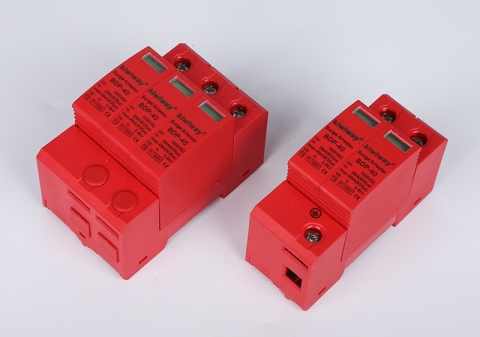
When a transient voltage surge hits your circuit, the clamping voltage of your protection device determines how much of that spike actually reaches your sensitive components. Think of it as a pressure relief valve — the clamping voltage is the threshold at which the device starts to shunt excess energy away. A lower clamping voltage means the protection kicks in earlier, theoretically offering a tighter shield for your circuitry. But in practice, the interplay between the surge’s characteristics and the protection device’s behavior makes “lower is better” a nuanced claim, not an absolute truth.
Pushing for an extremely low clamping voltage can introduce unintended side effects. Many protection devices, such as transient voltage suppressors (TVS) or metal-oxide varistors (MOVs), begin to conduct slightly below their rated clamping point due to leakage current. If you pick a clamp voltage that sits too close to your circuit’s normal operating level, that leakage can worsen over temperature and age, quietly degrading performance or even triggering false resets. Additionally, devices designed for ultralow clamping often sacrifice surge handling capability or exhibit higher capacitance, which can distort high-speed signals. It becomes a balancing act between clamping tightly enough to protect and leaving enough headroom for the circuit to function reliably day in and day out.
A practical approach looks at the worst-case transient you expect and the maximum voltage your downstream ICs can tolerate — often called the voltage overshoot. Allow the clamping voltage to sit comfortably below that damage threshold, yet well above the peak of normal operating voltages plus some margin for tolerance drift. Often, a clamping level that is 10–20% above the nominal operating ceiling still provides effective protection without inviting the pitfalls of excessive leakage or signal interference. The goal isn’t to chase the lowest possible number, but to match the clamp performance to the actual vulnerabilities of your design, ensuring protection stays robust across the full lifecycle of the product.
Response Time: The Hidden Factor in True Protection
When people evaluate security solutions, they often fixate on detection rates or feature lists, overlooking a metric that can make or break real-world safety: response time. A system that eventually spots a threat but takes too long to act is akin to a guard who notices a break-in hours after the intruder has already left. The gap between identification and action is where damage multiplies, and in many cases, that delay renders the protection meaningless.
True protection isn't just about seeing the problem; it's about reacting before the consequences spiral. Milliseconds matter when data is being exfiltrated, systems are being encrypted by ransomware, or unauthorized access is spreading laterally. An instant, automated response can quarantine a compromised endpoint, revoke credentials, or block a malicious IP without waiting for human approval. This shift from passive monitoring to active, near-instantaneous countermeasures transforms security from a forensic tool into a living shield.
Integrating response time into your security posture means prioritizing technologies that close the loop without friction. Look beyond static alarms and ask how quickly a solution can neutralize a threat once it's confirmed. The hidden factor isn't hidden from those who have suffered a breach—they know that every second of hesitation is an invitation for greater loss.
Type 1, 2, or 3? Matching the SPD to Your Setup
Picking between a Type 1, 2, or 3 surge protector can feel like choosing from a menu without any descriptions, but it really comes down to spotting where the danger strikes hardest in your own electrical layout. The heavy hitters are Type 1 devices—they bolt right onto the service entrance or main panel, handling direct lightning hits and massive surges before they ever wander deeper into your wiring. If your building takes the brunt of outdoor exposure, or local codes insist on beefy front-line defense, this is where you start.
Most people live happily in the middle ground with Type 2 SPDs. These install at distribution boards and sub-panels, knocking down the leftover energy from indirect strikes and all the chaos that motors, HVAC systems, and large appliances kick back onto the line. They’re your everyday guardians, and in many homes or commercial spaces, they’re required as the bare minimum. The trick is placing them close to the equipment you care about—long wire runs can let spikes build back up, so don’t tuck them too far out of the way.
When you’ve got delicate electronics that hate even tiny flickers, Type 3 units slide in near the actual outlets. They’re the fine-tooth comb after the bigger filters, catching what leaks through upstream. But they work best as a team—stacking Type 2 and Type 3 together creates a layered shield that handles both the brute force and the subtle junk. Check your panel layout, consider the route from the meter to your most sensitive gear, and choose the point where protection makes the most difference, not just the highest number on the label.
Placement Matters: Don’t Sabotage Your Own Protection
You can have the best gear money can buy, but if it's not sitting where it's supposed to, you're practically inviting trouble. A helmet tilted back like a sun hat leaves your forehead exposed, turning a minor spill into a potential concussion. Same goes for knee pads that have slipped down to your shins during a ride—by the time you hit the ground, they’re just decorative accessories. Protection isn't a checkbox; it’s a constant practice of keeping things exactly where they were designed to absorb impact.
Think of placement as the silent partner to quality. A seatbelt draped loosely across your stomach instead of snug over your hip bones can turn a sudden stop into internal injuries. Even something as simple as a phone case—if it’s not fully clicked on at the corners, that first drop will send the device flying out naked. The difference between walking away and a trip to the ER often comes down to a half-inch adjustment you could have made in two seconds.
The sneaky part is how easily bad placement creeps in. You start a task, everything’s adjusted perfectly, then you bend, twist, or reach, and something shifts. Without a quick check, you’re operating with reduced coverage, betting your safety on a lazy habit. Make it a ritual: before you move, glance and reset. Your body and your equipment will thank you—by actually doing their jobs.
When to Say Goodbye to an Old Surge Protector
That trusty surge protector has been sitting under your desk for years, quietly doing its job—or so you thought. The truth is, these devices don't last forever, and holding onto one past its prime can be risky. If yours has survived a major power event, like a nearby lightning strike or a big electrical surge, the protective components inside might already be fried. Even if the lights are still on, the circuitry that shields your gear could be burned out, leaving everything plugged in dangerously exposed. Consider that a clear sign: it's time to part ways.
Age alone tells a story, too. Most surge protectors have a lifespan of about three to five years under normal use, but that's not a hard rule—it depends on how many hits they've absorbed. Over time, the metal oxide varistors (MOVs) inside degrade with every spike, subtly wearing down until they offer no real defense. If you can't remember when you bought it, or if it's been through several storm seasons without a check, that's your cue. Don't wait for a failure to announce itself; by then, the damage to your electronics might already be done.
Physical clues are the easiest to spot. Cracks in the casing, a loose plug grip, or that faint burnt smell are all red flags. If the indicator light has gone dark—assuming the strip still powers your gear—the protection circuit is likely dead, and you're basically using a fancy extension cord. Swapping it out is cheaper than replacing a fried computer, so when these signs appear, don't think twice. A new surge protector is a small investment compared to the peace of mind it brings.
FAQ
Don't get fixated on joules alone. Pay attention to the clamping voltage—lower means better protection. Check if it has a status indicator so you know when it's wearing out. Also, consider the number of outlets and their spacing; you'd be surprised how often those bulky plugs cover adjacent sockets.
Look at the energy absorption rating, but more importantly, see if it has isolated filter banks to reduce noise between components. You'll want one with at least 3000 joules for a full setup, and ensure it has coaxial or Ethernet protection if you're connecting your DVR or smart TV.
Absolutely, and it's not just semantics. A basic power strip just gives you extra outlets; it offers zero defense against voltage spikes. A genuine surge protector diverts excess voltage away from your gear. Always check for the little 'protected' indicator light—if it's out, the protection is gone, and you're basically using a power strip.
Clamping voltage is the level at which the device starts redirecting the surge. The lower, the better—ideally 330V or less. If it's higher, say 500V, your valuable electronics are already getting zapped before the protector kicks in. It's like having a smoke detector that only goes off when the house is fully ablaze.
It depends on how many hits it's taken. There's no fixed calendar date. Look for models with a fault indicator light; when it goes dark, it's done. In a storm-prone area, you might need to swap it out every couple of years. A dead protector can still pass power, so don't assume it's working just because the lights are on.
Some of them incorporate noise filtration specifically tuned for audio and video systems, which can reduce hum and interference. But don't get hypnotized by marketing. A well-built unit with a good warranty and solid clamping specs from a reputable brand will do the job without the audiophile tax.
You can, but it's tricky. High-power appliances draw a lot of current and can overwhelm a typical protector, potentially creating a fire hazard. Look for one that's specifically rated for heavy-duty loads and has a high amp rating. Often, it's better to plug those direct into a GFCI outlet and use a whole-house surge device for the big stuff.
Conclusion
Understanding the specs behind surge protectors is crucial—it’s not just about the joule rating. Those numbers reflect how much energy the device can absorb before failing, but a high joule count alone doesn’t guarantee safety if the clamping voltage is too high. Clamping voltage determines at what threshold the protector begins to divert excess power; lower is generally better, ideally around 330V for sensitive electronics. Equally hidden is response time: nanosecond-rated devices react faster to surges, but some manufacturers bury this spec. A protector with sluggish response may let damaging transients slip through regardless of its other ratings.
Beyond specs, the type of SPD must match your installation. Type 1 devices handle direct lightning strikes at the service entrance, while Type 2 is installed at distribution panels for everyday surges, and Type 3 provides point-of-use protection. Placement is everything—an SPD at the main panel can’t stop internal surges from large appliances, so layering them is smart. Also, don’t ignore aging: surge protectors silently degrade with each hit. If yours lacks indicator lights or is several years old, swap it out before it becomes a useless power strip.
Contact Us
Contact Person: Tonglun Chen
Email: [email protected]
Tel/WhatsApp: 8618906642555
Website: https://www.cncsele.com