

Specialty Fasteners Solutions for Complex Assembly Challenges
2026-09-02
Complex assembly challenges rarely come with simple answers. When standard fasteners fail under vibration, thermal cycling, or tight tolerances, your entire production can stall. That’s where specialty fastener solutions from Peak Fasten change the equation—engineered to hold when off-the-shelf hardware won’t.
When Standard Bolts Fail: Rethinking Fastener Design for Multi-Material Assemblies
Standard bolts fail in multi-material assemblies more often than designers expect, and the reasons rarely show up on a single-material test rig. When aluminum brackets meet steel frames or carbon-fiber panels sit against magnesium housings, thermal cycling alone can drop clamp load by thirty percent within a few hundred hours. Dissimilar metals also create a galvanic cell at the thread interface, quietly eating away the bolt's protective coating until the joint loosens without warning. The root problem is that a standard bolt assumes the mating surfaces move together, but multi-material stacks expand, contract, and relax at wildly different rates.
What makes this failure mode tricky is that the joint can feel tight during assembly yet lose functional preload once the system reaches operating temperature. Thread friction varies between material pairs, so torque wrenches give a false sense of precision. Micro-sliding between the bolt shank and a soft polymer insert or a thin composite flange generates debris that further reduces clamp force. In many cases, the bolt itself is not defective—it simply was never designed to accommodate the dynamic mismatch at the material boundary.
Rethinking fastener design for these assemblies means moving beyond a one-size-fits-all catalog part. One practical step is to introduce a compliant sleeve or a conical spring washer that absorbs differential expansion before it reaches the threads. Another is to specify a bolt with a tailored coefficient of thermal expansion, such as a titanium alloy for aluminum-to-steel joints, or to apply a ceramic-based isolation coating that breaks the galvanic path. In high-vibration multi-material stacks, a slightly under-head radius combined with a captive polymer bushing can prevent fretting without sacrificing shear strength. The goal is not a stronger bolt but a smarter one—one that acknowledges the joint will move and gives it a controlled place to do so.
Thread Locking Without Chemicals: How Geometry Stops Vibration Loosening
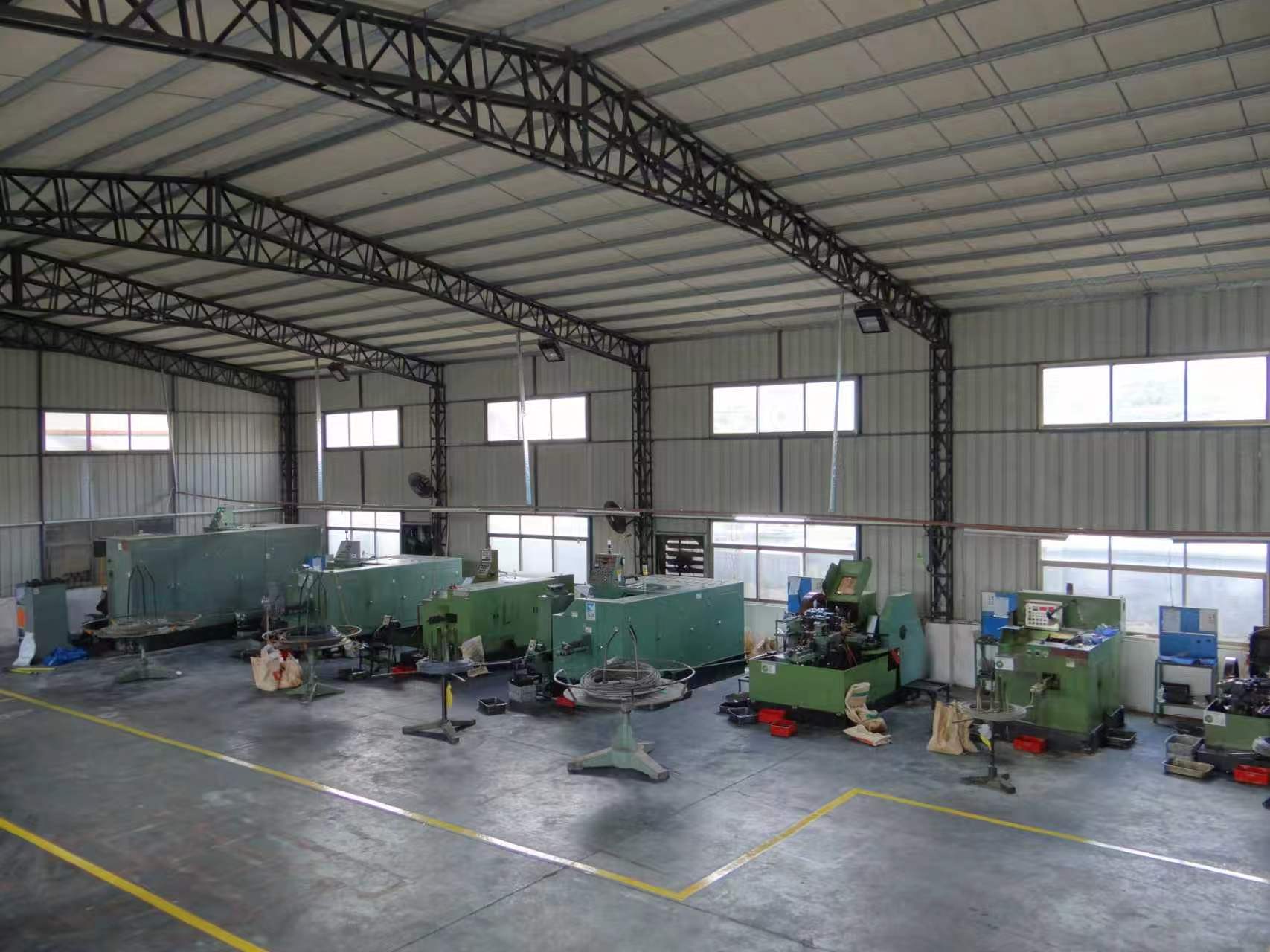
Most bolted joints fail because vibration slowly backs the nut off—unless the thread geometry itself fights back. Instead of relying on liquid adhesives, designers use asymmetric thread profiles, offset pitch diameters, or a wedge ramp at the root of the thread. These features create a controlled interference: the crests of one thread press into the flanks of the mating thread, raising friction without needing a chemical bond. The result is a mechanical lock that stays put even under severe shaking.
Take the Spiralock or similar wedge-ramp design. The female thread's 30-degree wedge redirects the bolt's load to align with its axis, which eliminates the tiny clearance gap typical of standard 60-degree threads. Under vibration, that gap is what allows side-to-side movement and eventual loosening. By closing it through geometry alone, the joint sees less fretting and keeps clamp load longer. Some aerospace fasteners also use a trilobular or oval thread form to achieve the same end—metal deforms slightly at installation, then holds tight.
This approach isn't a cure-all: installation torque goes up, reusability can suffer if the interference is too aggressive, and material pairing matters. But for assemblies where chemical threadlocker would contaminate or fail under heat, geometry-based locking offers a clean, repeatable alternative. It's old physics doing new work—no glue, no patches, just a shape that refuses to loosen.
Lightweighting Demands New Alloys: Titanium and Beyond for Aerospace-Grade Joints
Weight reduction in aerospace structures has pushed material scientists past conventional aluminum and steel choices. Joints, which once relied on nickel-based superalloys for strength, now demand solutions that shed grams without compromising fatigue life or thermal stability. Titanium alloys like Ti-6Al-4V have become the workhorse for brackets and fasteners, but even they face limits when temperatures climb or when every kilogram of fuel burn counts against operational costs.
The search now extends into beta titaniums, titanium aluminides, and even metal matrix composites. Beta alloys such as Ti-15V-3Cr-3Sn-3Al offer higher specific strength and better formability than alpha-beta grades, making them attractive for complex joint geometries. Meanwhile, titanium aluminides challenge the assumption that titanium cannot handle hot sections—their ordered intermetallic structure retains stiffness beyond 700°C, where conventional titanium softens. These materials are not drop-in replacements; they force designers to rethink machining, joining, and inspection methods.
Beyond titanium, additive manufacturing opens doors to gradient alloys and topology-optimized joint shapes that would be impossible to forge or cast. Aerospace suppliers are now printing joints from niobium-reinforced titanium or experimenting with high-entropy alloys that resist hydrogen embrittlement. The common thread is a shift away from monolithic material selection toward application-specific chemistry and microstructure. Lightweighting is no longer just about choosing a stronger alloy—it's about engineering the material at the scale of the joint itself.
From Prototype to Production: Custom Cold Heading Cuts Assembly Steps
Moving a custom cold-headed part from prototype to full production often reveals a hidden bottleneck: assembly. What worked on a handful of bench samples can fall apart when volumes climb. The trick is to treat assembly as a design input, not an afterthought. A slight change in head geometry or a tighter tolerance on the shank can let a part self-locate in a fixture, cutting one or two manual positioning steps. Early collaboration between the cold heading supplier and the assembly engineer pays off quickly here — a simple pre-production run of a few hundred pieces can expose misalignments that CAD models miss.
Tooling strategy also shifts once you scale. Prototypes may be run on single-die headers with generous radii just to prove form and fit, but production cold heading demands multi-station progressive tooling that holds concentricity and length within microns. That shift can inadvertently change how the part seats in a mating component. One way to keep assembly stable is to freeze critical-to-function dimensions during the prototype phase, then adjust only non-functional material areas for tool life or feed speed. This gives the assembly line a consistent part, even as the cold heading process itself evolves.
Finally, don't overlook the human and machine handoff. A custom fastener that falls out of a vibratory bowl at the wrong angle will jam every few minutes, no matter how perfect its dimensions. Prototype runs should include a real feed test, not just a static gauge check. Simple tweaks — like adding a chamfer to the underhead or balancing the head-to-shank mass ratio — can dramatically reduce operator intervention. When those details are ironed out before the production tooling is finalized, the step from prototype to production stops being a troubleshooting marathon and becomes a straightforward ramp-up.
Corrosion Under the Microscope: Coatings That Survive Salt Spray and Thermal Cycling
Salt spray chambers and thermal cycling rigs are blunt instruments compared to the microstructural battles waged inside a coating. Under a microscope, what looks like a uniform film is actually a patchwork of phases, pores, and intermetallic particles—each with its own electrochemical potential. When chloride ions from salt fog wick into these features, they don't simply eat through; they set up thousands of tiny galvanic cells. Thermal cycling adds insult by expanding and contracting the coating at a different rate than the substrate, opening micro-cracks that act as fresh highways for aggressive species. The result is corrosion that starts at the microscale and only becomes visible after the coating has already lost.
Coatings that survive these conditions share a common trait: they are designed to fail gracefully at the micro level before catastrophic loss. For example, sacrificial zinc-rich primers corrode preferentially, but their corrosion products—zinc oxides and hydroxides—can plug pores and block further ingress if the particle packing and binder chemistry are tuned correctly. Similarly, some epoxy-phenolic systems rely on a dense crosslinked network with low free volume, making chloride diffusion tortuous. The key is not just barrier properties but self-healing or self-limiting mechanisms that operate below the resolution of the naked eye. Without that, a coating might pass a 500-hour salt spray test only to delaminate after a few thermal cycles because residual stress concentrated at the interface.
Modern microscopy techniques—SEM, EDS, and electrochemical impedance spectroscopy—have shifted the evaluation from pass/fail to mechanistic understanding. Researchers now watch corrosion initiate at the exact location where a pigment particle touches the steel, or where a micro-void aligns with a scratch. Thermal cycling introduces a fatigue component that accelerates these defects, making adhesion and flexibility as critical as chemical resistance. A coating that survives both salt spray and thermal cycling is rarely the thickest or the hardest; it's the one with the right compromise between electrochemical passivity, mechanical compliance, and interface toughness. That balance is engineered at the micron scale, and only visible when you look closely enough.
Assembly Automation Needs Self-Aligning Fasteners: Reducing Pick-and-Place Errors
On automated assembly lines, even a fraction of a millimeter of misalignment can turn a routine screwdriving operation into a stalled cell. Threaded fasteners are unforgiving: if the male and female threads are not coaxially aligned at the moment of engagement, cross-threading or jamming occurs. Robots equipped with vision guidance can compensate for some of this, but glossy fastener surfaces, poor lighting, and the inherent repeatability limits of end effectors all introduce residual error. The result is a pick-and-place task that fails intermittently, forcing operators to clear jams and rework assemblies.
Self-aligning fasteners address this at the geometric level rather than relying solely on control software. A screw with a pronounced dog point or a nut with a tapered lead-in can tolerate initial lateral offsets and angular skew. As the fastener advances, those guiding features make contact with the mating hole first, generating forces that pull the parts into coaxial alignment before any threads engage. In practice, this means a robot can drop a fastener into a hole even when its position is off by half a millimeter or more, without triggering a high-force alarm or damaging the component.
The practical benefit is a measurable drop in pick-and-place errors, particularly in high-mix assembly where fixture changes and part variations are common. Instead of upgrading to more expensive vision systems or adding compliance devices to every tool, engineers can specify fasteners with built-in alignment forgiveness. It is a simple change on the bill of materials, yet it often yields better uptime than any control loop tuning. For blind holes or parts with delicate finishes, the design must be selected carefully, but the overall trend is clear: fastener geometry can do a lot of the alignment work that automation struggles to perform reliably.
FAQ
Tight spaces, single-side access, mixed materials with different thermal expansion rates, vibration loosening, sealing or electrical isolation requirements, and strict cosmetic constraints. Standard bolts and nuts often can't handle these without extra parts or field modifications. For example, blind holes usually demand rivet nuts or threaded studs that install from one side, while joining plastic to metal might require thread-forming screws designed for polymers.
Look at total cost, not just piece price. If a standard part forces extra drilling, added washers, adhesives, or rework on the line, a custom design often pays for itself quickly. We usually evaluate labor time, scrap rate, warranty claims, and assembly bottlenecks. A custom fastener that eliminates two or three separate components or reduces installation steps by half is almost always a good call.
It depends on the failure modes you're preventing. Marine and chemical settings often need 316 stainless or high-nickel alloys. Aerospace might call for titanium or Inconel for strength-to-weight and temperature resistance. Automotive lightweighting leans on aluminum and high-strength steel. We also watch for galvanic corrosion between the fastener and the base material, so sometimes a coated steel fastener is better than a bare exotic alloy.
Yes, that's often the main benefit. Self-locking, self-tapping, or pre-applied thread-locking patches can eliminate separate washers, lock nuts, or liquid adhesives. Built-in flanges or captive washers reduce part count. Some designs have a clear orientation feature so they can only be installed one way, which prevents line mistakes. The goal is usually fewer touches, fewer parts, and faster cycle time.
Electric vehicle battery packs need fasteners that are lightweight, electrically insulated, and resistant to vibration over a wide temperature range. Medical devices often require tiny, non-magnetic, sterilizable fasteners with high repeatability. Building facades need connections that allow thermal expansion and contraction while staying visually clean. Consumer electronics need extremely small fasteners that can be removed and reinstalled during repair without stripping.
We combine simulation with physical testing. Finite element analysis checks stress distribution and clamp load. Then we run salt spray for corrosion, transverse vibration tests for loosening, thermal cycling for expansion mismatches, and fatigue testing if the joint sees cyclic loads. Torque-tension testing verifies installation consistency. Real-world validation on pilot assemblies is also critical because lab conditions don't capture every line variable.
Be precise about base materials, thickness range, clamp load or torque requirements, operating temperature, exposure to chemicals or moisture, whether the fastener must be removable and how many times, surface finish, and any industry standards. Vague terms like 'strong' or 'corrosion resistant' lead to misquotes. A clear drawing with tolerances and installation access constraints is more useful than a generic part number.
Yes. Some thread inserts and bolts use resilient locking features or special coatings that maintain preload over many cycles. But you need to specify the expected number of installation cycles. A locking mechanism that works for ten cycles may not work for a hundred. For maintenance-heavy applications, we often recommend fasteners with reusable prevailing torque elements or thread inserts that protect the parent material.
Conclusion
Any engineer who has watched a standard bolt loosen inside a mixed-material stack knows the frustration. Aluminum, magnesium, and carbon fiber each pull and expand at different rates, so the joint works against the fastener from the first thermal cycle. Geometry-based locking features, such as serrated flanks or elliptical threads, stop vibration loosening without relying on chemical threadlockers that degrade over time. Lightweighting pushes the same logic into aerospace and EV platforms, where titanium and advanced alloys carry the load but require carefully tuned head profiles and thread forms to avoid cracking. Custom cold heading then compresses what used to be several machining operations into one continuous process, delivering prototypes that move to production with fewer assembly steps.
Corrosion resistance is another place where general-purpose parts fall short. Salt spray, road de-icers, and repeated heating cycles attack plating and can seize bolts inside tapped holes. Specialty coatings formulated for mixed-material joints survive thermal cycling without losing torque retention, and they keep galvanic corrosion from turning a bolted interface into a welded one. On automated assembly lines, self-aligning fastener designs compensate for small robotic placement errors, picking up where vision systems leave off. A slightly tapered lead-in or floating washer may sound minor, but it prevents misfeeds, dropped parts, and rework. Together with vibration-proof thread geometry and alloy upgrades, these solutions address tolerance mismatch, harsh environments, and production speed in a way standard catalogs cannot.
Contact Us
Contact Person: Mason Lv
Email: [email protected]
Tel/WhatsApp: +86 13027998452
Website: https://www.peakfastentech.com