

Reliable Textile Industry Air Compressor Selection Guide
2026-10-10
One contaminated air line can stop an entire weaving floor. Textile production depends on compressed air for spinning, weaving, and finishing—yet many plants discover too late that the wrong compressor brings oil, moisture, or pressure instability. This guide cuts through the noise and focuses on what actually matters: air purity, steady flow, and long-term energy cost. We've drawn on real-world cases and field insights from Seize Air to help you choose a reliable system that holds up mid-shift.
Sizing Your Compressor for Textile Production Surges
Textile plants rarely run at a flat load. A weaving floor might spike when multiple looms start simultaneously, or a dyeing line demands extra air for pneumatic controls during shift changes. Sizing for the average consumption leaves you short during those surges, forcing the compressor to run beyond its rated duty cycle. That shortens motor life and causes pressure drops that make air jets misfire or valves stick.
Start by mapping the worst-case scenario. Note the highest simultaneous air demand across all machines, not just the sum of nameplate CFM. Many textile machines list average flow, but startup peaks can be 20–30% higher. Add a buffer of 10–15% for leaks (which creep up in older plants) and future line additions. Then compare that number against the compressor's output at your working pressure—not the marketing CFM at zero psi.
Storage also helps absorb surges. A properly sized receiver tank can bridge short spikes so the compressor doesn't have to cycle rapidly. For a typical weaving shed, 5–10 gallons of storage per CFM of surge demand is a practical starting point. If surges last longer than a minute or two, consider a variable-speed drive compressor that ramps up when demand hits, rather than a fixed-speed unit that wastes energy during lulls.
Oil-Free Versus Oil-Injected Air for Fabric Safety
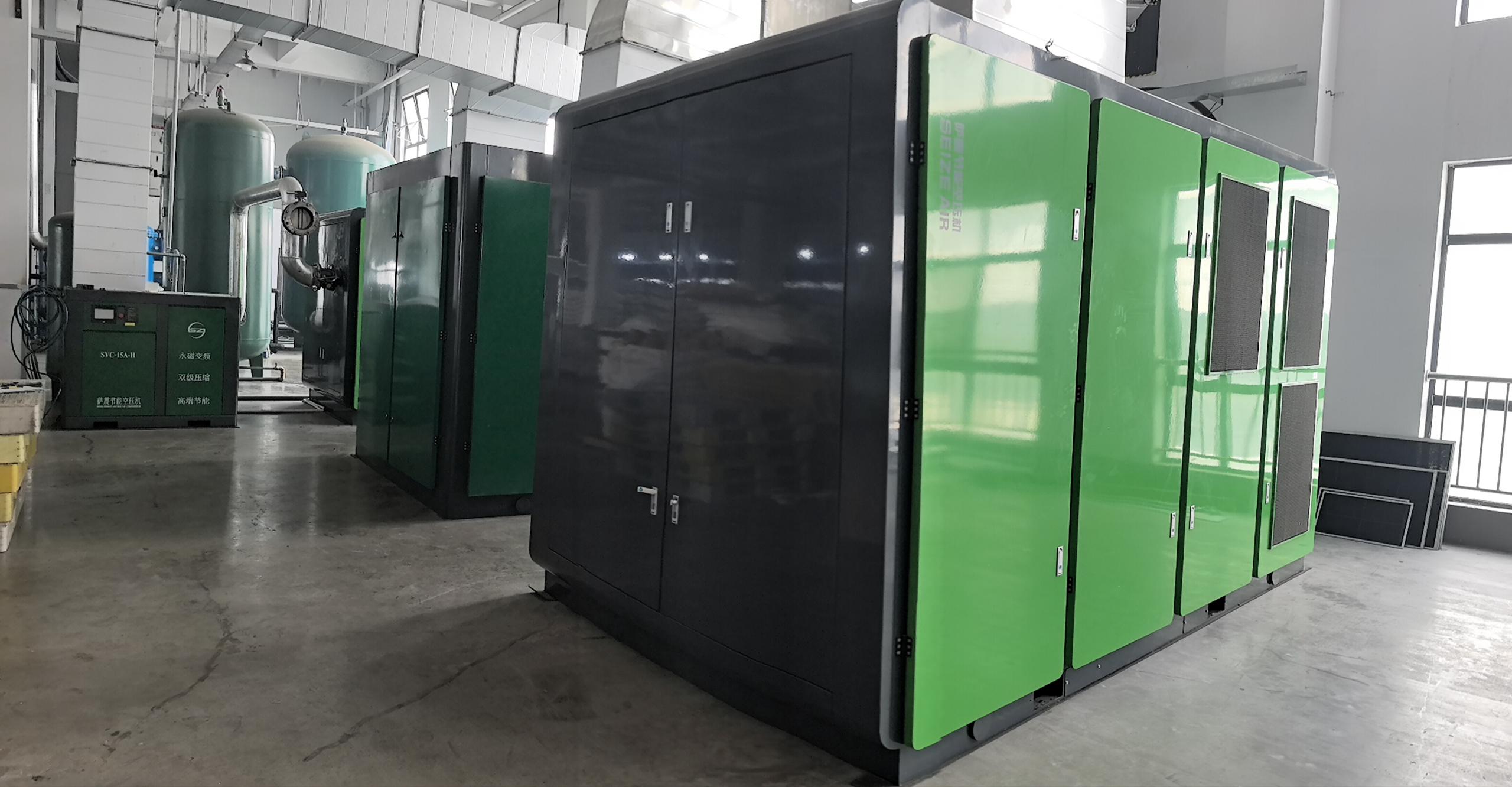
Compressed air systems used in fabric production often rely on either oil-free or oil-injected compressors, and the choice between them has direct implications for material safety. Oil-injected units can introduce microscopic lubricant particles into the air stream, which may settle onto textiles during cutting, weaving, or finishing stages. Even with downstream filtration, trace oil residues can remain, risking stains, odor retention, or compromised dye adhesion. For fabrics intended for medical use, infant clothing, or sensitive-skin applications, such contamination is often unacceptable.
Oil-free compressors, by design, eliminate lubricating oil from the compression chamber, drastically reducing the possibility of aerosolized oil reaching the fabric surface. This makes them a preferred option in cleanrooms, food-grade textile processing, and high-end garment manufacturing where purity standards are strict. While initial equipment costs may be higher and maintenance intervals differ, the safety margin for delicate or high-value fabrics often outweighs the operational trade-offs. Regular verification of air quality—through oil mist testing and dew point monitoring—remains essential regardless of compressor type, but oil-free systems inherently simplify compliance with fabric safety protocols.
Facility managers should also consider cross-contamination from shared air lines or aging seals, which can reintroduce oil even in supposedly clean setups. A thorough audit of the entire compressed air network, not just the compressor itself, helps ensure that fabric safety claims hold up under real production conditions. Documenting air purity levels and aligning them with textile standards such as OEKO-TEX or ISO 8573-1 provides a defensible basis for choosing between these two technologies.
Why Dew Point Controls Loom Uptime
In a weaving shed, the difference between a smooth shift and one punctuated by snapped ends often comes down to a number that never shows up on the production dashboard: dew point. Relative humidity rises and falls with temperature swings, but dew point tracks the actual moisture load in the air. When the dew point drifts too low, cotton and wool yarns lose their suppleness, become brittle, and generate static. Every broken pick or warp end forces a stop, and each stop eats directly into loom uptime.
A stable dew point doesn't just prevent breakage; it changes how yarn behaves at the moment of insertion. High-speed looms rely on predictable friction between yarn and guide surfaces. Too little atmospheric moisture and the yarn's surface resistance spikes, leading to wild tension fluctuations and more frequent fault stops. Conversely, a dew point that runs too high can make yarn sticky, causing wrappers and reed cling. Operators who chase relative humidity alone end up fighting condensation at night and dry fly in the afternoon. Controlling dew point, not RH, keeps the moisture environment steady enough for modern loom speeds.
Maintenance teams also see the payoff in mechanical wear. Dry air encourages dust accumulation and static discharge around heald frames and reed dents, which accelerates component wear and prompts unplanned downtime. Consistent dew point in the recommended band, often between 15°C and 18°C for cotton weaving depending on mill conditions, reduces these failure modes and lets the loom schedule hold. Uptime gains come less from heroic fixes and more from the boring discipline of keeping the air's moisture content flat across all shifts.
How Textile Dust Rewrites Your Filtration Plan
Textile dust is not a single contaminant but a shifting mix of short fibers, sizing agents, dyes, and finishing chemicals. That blend changes how filters load. Instead of a steady cake forming on the surface, these particles tangle into the media, creating uneven airflow and early pressure drop. Any filtration plan built around ordinary particulate assumptions starts to fail under these conditions.
The bigger issue is bridging. Long, flexible fibers catch on pleats and form a loose mat that chokes airflow while still letting finer particles slip through. You end up replacing filters not because they are saturated, but because the pressure drop has climbed too high. That forces a recalculation of replacement intervals and efficiency targets, often in ways that surprise maintenance teams.
Static and humidity add another layer. Dry synthetic fibers pick up charge and cling to frames or bypass seals. Slightly moist cotton or wool dust turns dense and sticky, packing tightly into the media. A workable filtration plan has to account for the specific fiber blend and ambient conditions, not just total dust mass. Prefiltration and wider pleat spacing frequently become necessary far earlier than expected.
Cutting Energy Waste Without Starving the Weave Room
Most weave rooms lose far more energy through compressed air leaks, outdated lighting, and poorly tuned HVAC than through the looms themselves. A quick walk with an ultrasonic detector often uncovers dozens of small leaks that, together, bleed thousands of dollars a year. Fixing those first costs almost nothing and leaves the actual weaving process completely untouched.
Another quiet drain is the habit of running every motor and fan at full speed regardless of demand. Adding variable frequency drives to suction fans or air compressors lets the system breathe with the real-time load, not against it. Operators soon notice the room feels the same, power bills drop, and no loom ever starves for air or vacuum.
Smart scheduling also helps. Instead of keeping idle looms in a ready-to-run state with heaters and control panels lit all night, a staged shutdown and wake-up routine trims standby consumption. The key is to treat energy as a raw material: measure it, find where it disappears, and plug those holes without changing the fabric of production.
Scheduling Maintenance Around Your Shift Calendar
Maintenance that ignores the rhythm of your shift calendar tends to create more overtime than it prevents. Instead of squeezing a full pump rebuild into the middle of a production run, look for the natural lulls that already exist around shift changes, meal breaks, or scheduled line slowdowns. A thirty-minute window at the end of a night shift is often enough to replace filters or grease critical bearings, and it keeps the work from colliding with peak output hours.
Large jobs rarely fit neatly into a single shift, so split them into handoff-friendly chunks. If a conveyor overhaul spans two shifts, leave the second crew a clear starting point and a short list of exactly what remains. Write the next step on the work order, not just in a verbal pass-down, because details vanish when an operator is heading home after twelve hours. This approach cuts the “where do I pick up?” confusion and keeps progress moving without forcing one crew to wait for another.
Use recurring shift patterns to build a maintenance cadence that people can actually remember. If every Tuesday’s day shift starts with a fifteen-minute inspection of the air compressors, it quickly becomes part of the routine rather than an extra task. Anchor preventive checks to the calendar your team already follows, and you will spend less time chasing missed PMs and more time fixing small problems before they turn into downtime during the next shift.
FAQ
Start by checking each loom's rated air consumption, but never rely on nameplate alone. In a typical shed, simultaneous demand can peak when several looms start up or clear a weft break at once. Add 15–20% buffer for leakage, aging nozzles, and occasional manual blow-down. Then convert that total to free air delivery at your operating pressure.
Not always. For air that directly contacts yarn or fabric, like air-jet weaving or texturizing, oil-free is strongly recommended because even minute oil mist causes dyeing defects. But for general cylinder actuation, waste collection, or cleaning blow guns far from the product, a properly filtered lubricated compressor can work if you monitor coalescing filters and dew point.
Aim for a pressure dew point of +3°C to +7°C for most instrument and control air, but if the piping runs through cold zones or the mill is in a humid coastal area, drop to -20°C or lower to prevent condensation that clogs solenoid valves and damages sensors.
Textile plants produce fine lint and fiber dust that rapidly clog intake filters and cooling fins. Place the compressor room away from carding or opening lines, use high-efficiency intake filtration, and consider oversized coolers or ducted fresh air. A machine placed in a dusty corner can lose 10–15% of its flow within a few weeks.
Variable-speed makes sense when air demand swings widely between shifts or steps, like in a plant running different fabric styles with changing loom speeds. If the base load is stable 24/7, a fixed-speed unit plus a smaller trim compressor often gives better reliability and lower maintenance cost.
Properly sized air receivers smooth out pressure pulsations from reciprocating compressors, prevent short-cycling of rotary screws, and cover sudden peaks when multiple looms demand air at once. A good rule is 2–4 gallons of storage per CFM of compressor output, placed close to the point of highest fluctuation.
Look at specific power (kW per 100 CFM) at your actual discharge pressure, not just the motor's efficiency class. Request a heat balance test or CAGI data sheet for your operating point. In textiles, compressors often run 8,000+ hours a year, so a difference of 0.3 kW per 100 CFM can mean thousands in annual electricity.
Monthly inspections should focus on intake filter differential pressure, belt tension if applicable, auto-drain function (lint can clog drains), and oil carryover if using lubricated machines. Also check for air leaks along overhead piping near looms or knitting machines, since vibration from these machines tends to loosen fittings faster than in other industries.
Conclusion
Textile plants rarely run at a flat load, so compressor sizing that works for an average day falls apart when a big order hits. You need reserve capacity that can ride through those surges without short-cycling or dumping pressure in the middle of a warp change. At the same time, the oil question is not just about air quality: lint and size chemicals already stress fabric, and even tiny oil carryover from an oil-injected unit can leave stains that only show up after finishing. For most weaving and knitting rooms, oil-free air is cheaper insurance than a rejected shipment.
Moisture is the quieter killer. If your dew point drifts too high, condensed water reaches the valves and air jets on the looms, causing misfires and rust that maintenance teams chase for weeks. Textile dust makes this worse because it clings to wet surfaces and turns into a paste that blocks filters. That means filtration has to be staged for both dry and wet contamination, and the receiver tank needs regular drains. Energy waste usually comes from running too many compressors at part load, so look at variable-speed options and storage volume rather than adding a small backup that bleeds air. Finally, tie maintenance to the actual shift calendar: schedule filter changes and condensate checks between production runs, not during peak weaving hours, so the system stays reliable without stealing runtime.
Contact Us
Contact Person: Mia
Email: [email protected]
Tel/WhatsApp: +86 19821985894
Website: https://www.seize-air.com