

Reliable Magnetic Levitation Blower Advantages for Modern Industrial Air Systems
2026-11-16
Industrial air systems rarely reward compromise. When throughput, energy consumption, and runtime stability all sit on the same line, conventional blowers start to show their age. Magnetic levitation technology changes that equation—but not every design delivers the same reliability under real operating conditions. That is where the conversation gets interesting. In this post, we look at the practical advantages of modern magnetic levitation blowers and why plants are reconsidering their air supply strategy. Along the way, you will see how Seize Air approaches the engineering details that matter most.
What Actually Changes When a Blower Runs on Magnetic Bearings
The first thing to go is the lubrication circuit. A blower on magnetic bearings no longer needs oil tanks, pumps, filters, or scheduled bearing replacement tied to metal fatigue. The shaft is held in a controlled magnetic field, so wear shifts from mechanical surfaces to power electronics and position sensors. The backup bearings exist only for controlled coast-downs or power loss, not as a normal running surface.
Clearance and damping also stop being fixed mechanical properties. With no physical bearing constraining radial movement, the control loop sets stiffness and damping in software. That means the rotor can pass through critical speeds with different vibration signatures, and the impeller clearance can be tuned around actual thermal growth instead of a conservative bearing catalog value. In practice, this changes how the machine sounds at start-up: less metallic rattle, more of a rising electromagnetic whine before air noise takes over.
The trade-off is that the bearing system now needs continuous power and feedback. If the controller loses position data or a coil driver faults, the shaft drops onto the backup bearings. So the maintenance calendar doesn't disappear; it changes from oil sampling and vibration trending to checking power supplies, cable shielding, and sensor gap voltages. The blower may run more quietly and with less mechanical drag, but it becomes more dependent on clean, stable control electronics than a conventional bearing machine.
Partial Load Efficiency Without Extra Control Complexity
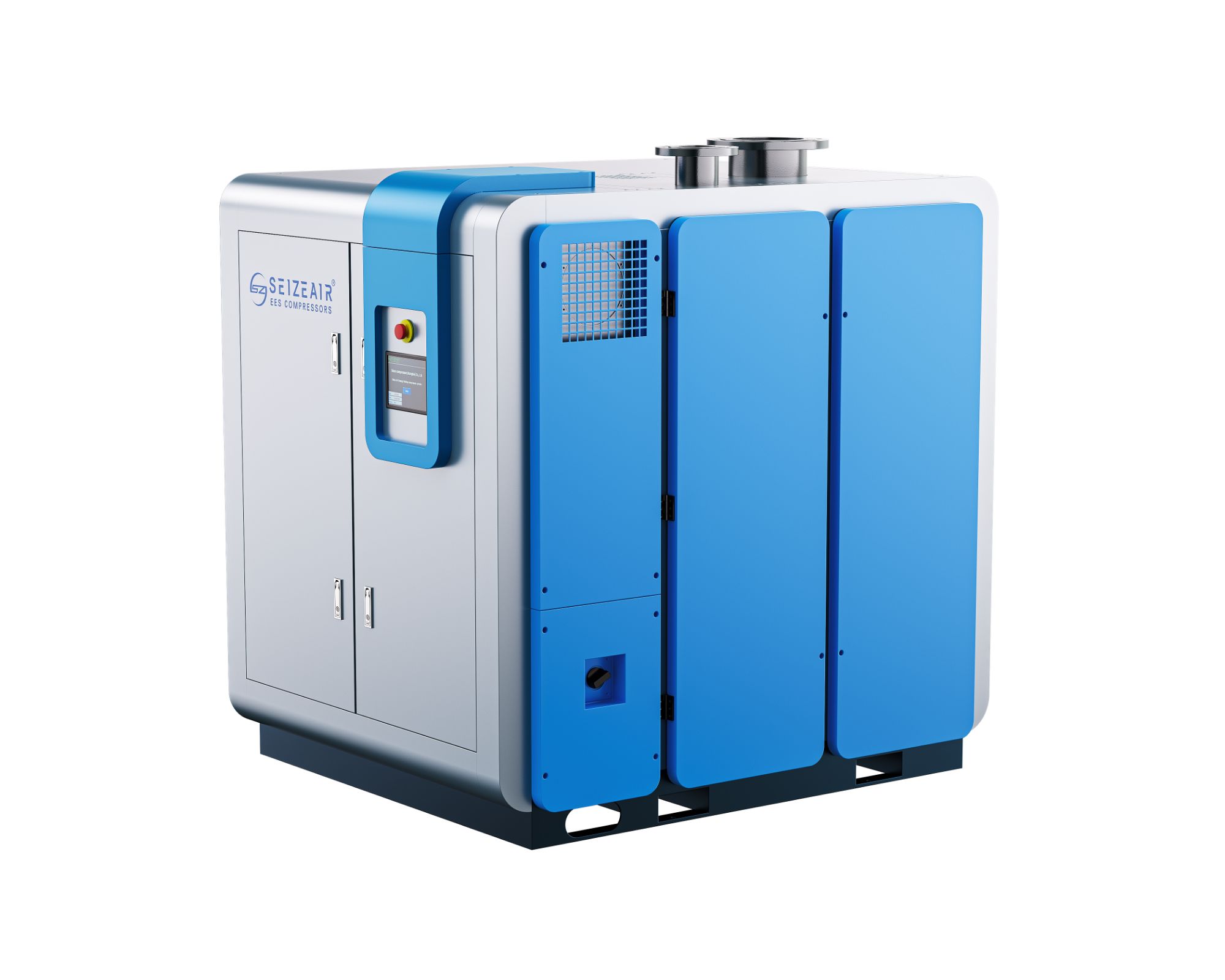
Partial load efficiency often comes with a trade-off: the methods that improve it tend to add sensors, control loops, or tuning overhead. The alternative approach here keeps the operating strategy simple while still capturing most of the available energy gains. Instead of relying on a complex supervisory layer, the system adjusts key parameters through existing feedback channels, so the equipment remains responsive without needing constant recalibration.
At reduced output, losses from fixed-speed operation become more visible. By shifting a limited set of operating points based on thermal or electrical load, the unit can avoid the sharp drop in efficiency that usually appears below half capacity. The important part is that these shifts happen within the normal control range, so no additional hardware is required and the behavior stays predictable for maintenance teams.
The result is a flatter efficiency curve across the operating range, with the biggest improvements occurring where the equipment actually spends most of its time. Because the changes are embedded in the standard controller logic rather than layered on top, commissioning remains straightforward and field staff do not need special training to understand what the system is doing.
High-Speed Air Delivery Without Contact Friction or Lubrication
A thin cushion of compressed air can change how a load moves across a surface. Instead of resting on rollers, rails, or sliding pads, the item floats on a controlled film that separates the moving part from the guideway. Because the two surfaces never touch, there is no rubbing, no heat from friction, and no need for grease or oil. The result is a delivery motion that stays clean, quiet, and remarkably consistent even at high travel speeds.
The absence of contact friction means speed limits tied to bearing wear or lubricant breakdown largely disappear. Acceleration and travel can be pushed higher without the usual maintenance burden, and stopping positions remain repeatable because there is no stick-slip effect to correct. This is especially useful in semiconductor handling, medical device assembly, and food packaging, where even small amounts of lubricant or debris would create problems.
Making the system perform well still depends on details such as air gap stability, supply pressure, and the flatness of the mating surfaces. A badly balanced air film will cause vibration or drift, so the delivery path needs careful engineering rather than simply adding more airflow. When those factors are dialed in, the payoff is a transport method that moves quickly without wearing itself out or contaminating the product.
Why Maintenance Planning Shifts Once Bearings Leave the Equation
Taking bearings out of a machine does far more than simplify the bill of materials. It quietly dismantles the maintenance schedule that most teams have relied on for years. Tasks like regreasing, axial play checks, and scheduled bearing swaps no longer anchor the calendar, so planners have to decide what actually deserves attention. That is harder than it sounds, because the remaining failure modes tend to be less visible and less uniform across installations.
Condition monitoring moves into unfamiliar territory. Instead of feeling a housing for heat or listening to a raceway, technicians end up watching current waveforms, gap sensors, and temperature spreads across stators. Small shifts in coil resistance or power supply ripple can indicate a developing problem, which means the maintenance team needs electrical diagnostic skills that were less critical when the first symptom was usually a noisy bearing. Spares also shift from mechanical consumables to electronic assemblies and calibration tools.
There is also a planning rhythm that has to be rebuilt. A rolling-element replacement could be scheduled around known life curves, but a contactless support system often degrades in response to operating conditions rather than running hours. Two identical machines may need very different interventions depending on load, starts and stops, or ambient contamination. Planning becomes less about fixed intervals and more about interpreting trends, which demands better data sharing between operators, controls engineers, and the people writing the work orders.
Holding Discharge Pressure Steady Through Demand Swings
Demand swings rarely arrive as gentle ramps. A bank of fill nozzles opens, a spray line shuts off, a downstream batch reactor changes phase – and the discharge header feels the hit within a second or two. Fixed-speed machines have no way to absorb that. The pressure climbs on a sudden drop in demand and sags on a sudden rise, which is hard on seals, valve seats, and product consistency. Holding the number steady means controlling what happens in the gap between the disturbance and the machine's response.
A fast pressure transmitter mounted directly on the discharge header usually becomes the backbone of the control loop. Its signal feeds a PID loop that trims pump speed, inlet guide vanes, or compressor speed – but speed changes alone can be too slow for sharp transients. That is where a recirculation line or a small accumulator earns its keep. The recirculation valve cracks open just enough to dump excess flow when demand falls away, while a charged bladder tank supplies a few gallons of stored volume when demand spikes. The combination keeps the header within a narrow band instead of letting it swing through the full range.
For larger systems, staging logic matters more than loop tuning. Running multiple units lets one machine follow the load while others stay at their best efficiency point, and a demand-feedforward signal can give the lead unit an early warning before a major valve opens. The setpoint itself should stay realistic – tightening it beyond what the piping and instrumentation can resolve just causes hunting. A stable discharge pressure usually comes from matching response speed to the actual disturbance, not from pushing the controller gain until the loop oscillates.
The Noise and Footprint Changes That Show Up on the Plant Floor
Walk past a running line after a retool and the first thing that hits you is rarely what you expected. A new servo-driven station may be quieter overall, but the old rhythmic clunk of a pneumatic indexer is gone, replaced by a faint high-frequency whine that only some operators notice. That shift changes how people use sound to read the floor. Workers who once knew a jam was coming because the feeder slowed by half a beat now have to relearn those cues, sometimes from scratch.
Floor space tells another part of the story. The new unit might have a smaller main cabinet, yet its chiller, air dryer, and cable trays spread outward in ways the layout drawings didn't emphasize. Walkways that used to allow two pallet jacks to pass become single-file. The yellow safety lines get taped over and redrawn on a Tuesday afternoon, and the maintenance crew discovers the forklift can no longer swing wide enough to reach a panel door without moving a scrap bin.
Most of the real adjustments happen in these small, unglamorous spaces. A sound that used to warn a team now gets buried under a different pitch, so visual beacons or radio calls replace what was once automatic. Extra square footage for support equipment may be invisible in a spreadsheet but very visible on the floor, where someone has to step around a new hose bundle every time they reach the E-stop.
FAQ
It removes the mechanical contact points that normally wear out. The shaft rides on an active magnetic field, so the main rotating friction is against air rather than metal parts, which leads to lower amp draw, steadier discharge pressure, and a much longer interval between major rebuilds.
Many installations report a 20 to 35 percent reduction in specific power compared with fixed-speed positive displacement machines, especially under partial load. Because the high-speed permanent magnet motor and variable frequency drive follow demand closely, the savings show up across the whole operating day rather than only at full flow.
Yes. Without gearboxes or rolling element bearings, one of the dominant noise sources drops away. A well-packaged unit often runs in the low 70s dBA at one meter, and some plants can eliminate separate acoustic enclosures or reduce the amount of sound damping they would otherwise need.
It matters most when air touches product or reacts in a process. Magnetic bearing blowers do not need oil lubrication at the shaft, so there is no seal leakage path for oil mist into the discharge air. That keeps downstream filters cleaner and avoids contamination risks in food, pharmaceutical, and chemical applications.
Most units use a variable frequency drive and can modulate from roughly 40 to 100 percent of design flow while maintaining respectable efficiency. Some systems allow multiple blowers to share load and stage automatically, which is useful for wastewater plants with large daily swings in air demand.
They are proven in applications where unplanned downtime is expensive. The controller constantly monitors shaft position and adjusts the magnetic field thousands of times per second, so the rotor can ride through minor process upsets. Backup touchdown bearings protect the shaft in the event of a power loss or controller fault.
The electrical and control side usually takes more planning than the mechanical side. Because the blower package is compact and often skid-mounted, it can replace a larger legacy machine in the same room, but the plant should verify voltage, cooling water or air flow, and communication interfaces before preparing the foundation.
The initial purchase price is higher, but the operating profile usually shifts the lifetime cost in favor of the maglev machine. Lower energy use, fewer oil and filter changes, less vibration-related stress on piping, and reduced planned downtime often recover the premium within three to five years in continuous duty.
Conclusion
Switching to magnetic bearings alters more than the bearing housing. The shaft no longer rests on metal surfaces, so the usual wear path, lubricant schedule, and contact friction disappear from day one. That change lets the impeller spin faster without generating heat at the bearings or drawing in oil mist, which keeps the air stream cleaner and reduces parasitic losses. It also changes part-load behavior because there is no bearing drag to manage, so efficiency holds up across a wider operating range without additional control loops or bypass valves. Operators spend less time chasing lube levels and more time watching vibration trends and power draw.
On the plant floor, the differences show up as a smaller machine that does not need the same heavy foundation or acoustic treatment. Demand swings become less disruptive because the control system holds discharge pressure steady by changing rotor speed quickly, not by opening bypass valves or waiting for mechanical parts to respond. Maintenance planning shifts from calendar-based lubrication and bearing replacement to condition monitoring and electronics checks. The package runs quieter, occupies less space, and avoids many of the consumables and failure modes that usually shape air system upkeep. Fewer contact parts also reduce unplanned outages and make operating costs easier to forecast.
Contact Us
Contact Person: Mia
Email: [email protected]
Tel/WhatsApp: +86 19821985894
Website: https://www.seize-air.com