

Push Pull Connector Supplier Selection Guide for Reliable Industrial Connectivity
2026-11-21
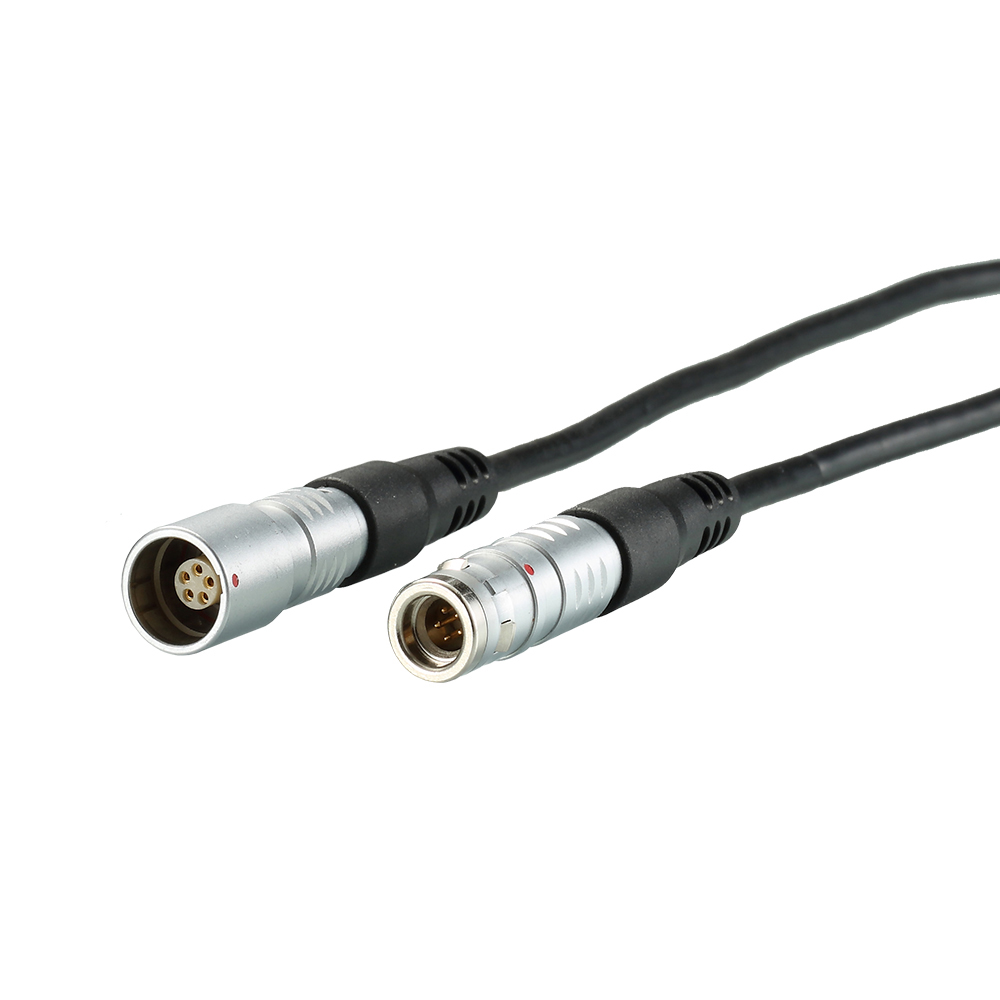
Industrial networks live or die by the smallest contact point. A push pull connector that feels solid on day one can still become the reason for intermittent faults six months later, which is why supplier selection deserves more than a quick spec-sheet comparison. This guide cuts through catalogue noise to focus on what actually keeps connections stable under vibration, dust, and hurried maintenance. Along the way, we look at where REUNION fits into the current landscape and what questions to ask before committing to a supplier.
What Push-Pull Locking Actually Tells You About Reliability
A firm click gets treated as proof of reliability, but that is only a small part of the story. Push-pull locking tells you more in how the connector behaves under side load, cable twist, and repeated handling than in any single pull-out force number. When the outer sleeve is yanked or bumped, a well-designed lock keeps the mating faces from rocking. That rocking is what causes intermittent drops long before a connector ever comes apart completely.
The true test is not whether the latch engages, but whether it tells the person holding it that engagement is complete. Some push-pull designs require a subtle inward press followed by a twist, which can leave a half-mated connector looking finished. Reliable systems avoid that ambiguity. The lock ring should settle into place with no extra effort, and once seated, it should stay quiet under vibration instead of gradually backing off.
Material behavior matters more than initial retention force. After hundreds of cycles, plastic claws can lose their spring, and a connector that once felt positive will start to slide with less resistance. That change in feel is useful information. It points to stress relaxation or wear in the locking element before a failure shows up in the field. Reading that feedback from the mechanism, not just the data sheet, is what separates a genuinely reliable push-pull system from one that only passes a bench test.
The Mating Cycle Number That Should Make You Ask More
We tend to assume that mating happens in a straight line: meet, connect, repeat. But the actual rhythm of attraction rarely works that way. The mating cycle number refers to how many encounters or interactions it takes before two people move from curiosity into a real possibility. It is not a fixed rule, yet noticing the pattern can reveal when someone is genuinely interested or simply passing time. Ask more when the number feels off. If you are always the one restarting the conversation after a gap, or if the cycle keeps resetting without deepening, that is worth examining rather than ignoring.
What makes this number useful is that it shifts attention away from instant chemistry and toward consistency. A single strong moment can feel like proof, but one moment does not build a connection. When the cycle repeats without a change in tone, warmth, or effort, you are likely stuck in a loop of attention-seeking rather than relationship-building. Pay attention to what changes from one cycle to the next. More honesty? More vulnerability? Or just another polite check-in that could have been sent to anyone?
Asking more does not mean interrogating someone. It means becoming clearer about what you are experiencing and what you actually want. If the cycle number keeps climbing but the closeness stays flat, step back and name the pattern for yourself. The goal is not to force a faster timeline, but to stop mistaking repetition for progress. Sometimes the most honest question is not "Where is this going?" but "Am I moving toward something, or just moving in circles?"
Field Failures Rarely Match the Lab Results
Controlled lab tests tend to isolate one or two variables at a time, but equipment in the field rarely sees such discipline. A seal that survives 500 hours of salt spray in a cabinet can still split after a winter of road de-icing chemicals, freeze-thaw cycles, and direct sunlight working the same crack. The sequence and overlap of stresses matter more than their individual intensities.
Sample selection also quietly skews the comparison. Lab specimens are often taken from a single production run, sometimes inspected or preconditioned before testing, while field units come from months of manufacturing spread across tooling changes, supplier substitutions, and operator shifts. What passes in the lab may simply never have contained the flaw that later appears at scale.
None of this makes laboratory testing pointless. The issue is when a report is read as a green light without asking what was not simulated. Returned parts and maintenance records usually tell a more tangled story, and the test plan only gets sharper when those stories feed back into the chamber settings, load cases, and acceptance limits.
Why Cable Retention Is the Supplier's True Character Test
Most suppliers treat cable retention as a secondary check, something to pass on a pull test report. But it exposes how carefully they manage crimp tooling, insulation grip, and contact design under real assembly variations. When retention margins are thin, small shifts in wire gauge or terminal plating show up as intermittent field failures rather than immediate rejects.
A supplier's true character shows in how they discuss the failure modes. Weak retention often hides behind ambiguous test conditions: a clean axial pull on a freshly terminated sample says little about vibration, thermal cycling, or side loading. Ask for retention data across temperature extremes and after multiple mating cycles; suppliers that have done the work rarely hesitate.
The best suppliers treat retention as a process, not a pass/fail number. They track crimp height, strand deformation, and insulation support together, because cable retention is the accumulated result of those details. If that discipline is absent, it tends to show up in retention long before it reaches a formal spec sheet.
A Cheap Connector Can Get Expensive on the Factory Floor
Procurement teams often get rewarded for shaving cents off a bill of materials, yet the connector is rarely the place to do it. A low-cost substitute might match the pin count and pitch on paper, but thinner plating, looser tolerances, and softer housing material show up later as intermittent signals, worn contacts, or cracked latches. By then the savings have already moved onto a spreadsheet, and someone on the floor is left chasing a fault that only appears when a machine warms up.
The real cost shows up in minutes, not dollars per unit. A poorly seated connector on a packaging line sensor can stop an entire shift while an electrician tests cables, swaps I/O cards, and eventually wiggles the harness until the line stutters back to life. That half-hour of downtime, plus the labor spent hunting the problem, can erase a year's worth of the price difference across every connector purchased for that line.
A better connector is not a premium accessory; it is insurance against exactly that kind of unplanned work. Solid contact retention, proper keying, and plating that survives repeated mate cycles keep small electrical problems from becoming production emergencies. When the floor is quiet, engineers can spend time improving throughput instead of hunting down a loose pin that saved less than the cost of a coffee.
Panel Cutouts Are a Long-Term Commitment
Cutting a panel is one of the few steps in a build that cannot be undone with a bit of sanding or a fresh coat of paint. Once the hole is there, every surrounding edge, bracket, and cable run has to live with it. That means the measurements need to be checked against the actual hardware, not just the spec sheet, because small differences in mounting depth or connector placement turn a clean opening into a regret.
The longer the panel stays in service, the more those early decisions compound. A cutout sized for one device can become a constraint when that device gets replaced, repaired, or repositioned. Leaving a little extra room, planning for blanking plates, or running a removable sub-panel from the start tends to age better than a hole tailored to a single piece of equipment.
It also pays to treat the panel as structural, not just cosmetic. Multiple large openings in the wrong places can weaken the sheet, cause vibration, or force awkward internal layouts later. If there is any doubt about placement, waiting or making a smaller reversible opening is almost always less expensive than sourcing a replacement panel and redoing the surrounding work.
FAQ
Look beyond the catalog and ask how the supplier handles mixed power and signal lines in one shell, what kind of strain relief they recommend for continuous flexing, and whether they can provide test data from their own lab instead of only datasheet values.
Mating force, wipe length, and contact resistance under vibration tend to be ignored until a field failure happens. A reliable supplier will be able to talk about those values at the working temperature extremes, not just at room temperature.
Request a sample and run it through your own worst case: hot/cold cycling, cable torsion, dust exposure, and repeated connect/disconnect while the cable is under tension. Suppliers with real application experience usually welcome that kind of testing.
Many field failures start at the cable exit, not the contact interface. A supplier that builds the complete assembly can match the gland, boot, and shield termination to your cable diameter and flex pattern, which reduces variables when something goes wrong.
For industrial settings, nickel or chrome plating over brass can be fine, but if the area sees salt mist or frequent washdowns, you want a supplier that offers stainless steel or a proven corrosion-resistant finish and can explain the tradeoffs instead of just listing options.
A connector family can stay in service for a decade or longer. You need to know whether the supplier commits to form, fit, and function compatibility, how they handle obsolescence, and whether replacement parts remain available after the original order is closed.
Generic answers about IP ratings, no in-house testing documentation, unclear lead times for small repeat orders, or reluctance to provide a sample for your own validation are all signals to keep looking.
Unit cost hides rework, downtime, and premature replacements. A slightly more expensive connector that survives longer and is easier to terminate can reduce overall cost, especially when you factor in field service labor and production line stoppages.
Conclusion
A push-pull connector that snaps firmly into place tells you far more than whether it fits. The locking mechanism itself should resist vibration, incidental tugs, and the subtle wear that accumulates on machinery over years of service. When a supplier publishes an impressive mating cycle figure, dig into the test conditions behind it: clean benches and controlled strokes rarely resemble a dusty packaging line or a wet food-processing floor. Real field failures tend to cluster around housings, strain relief, and alignment drift long before the contact plating wears out. That is why cable retention deserves as much scrutiny as the connector body. If a supplier hesitates to show how the backshell grips the cable under side load or repeated flexing, treat that silence as a warning.
Cost decisions made at the purchasing stage often return as downtime, rework, or intermittent signal faults once equipment is running. A low-priced connector can fail in ways that are expensive to chase because the problem appears as a sensor error or a dropped network node rather than an obvious mechanical break. Panel cutouts raise the stakes further: once punches are made in an enclosure or control cabinet, switching brands usually means adapter plates, custom machining, or a complete panel redesign. The supplier you choose is effectively a long-term partner in your mechanical footprint. Look for one that provides honest retention data, realistic test conditions, and dimensional consistency, not just a catalog number and a low unit price.
Contact Us
Contact Person: Hayley Liang
Email: [email protected]
Tel/WhatsApp: +86 13480625451
Website: https://www.reunion-china.com/