

Professional Yuchai Generator Set: Reliable Power Solutions for Every Need
2026-11-03
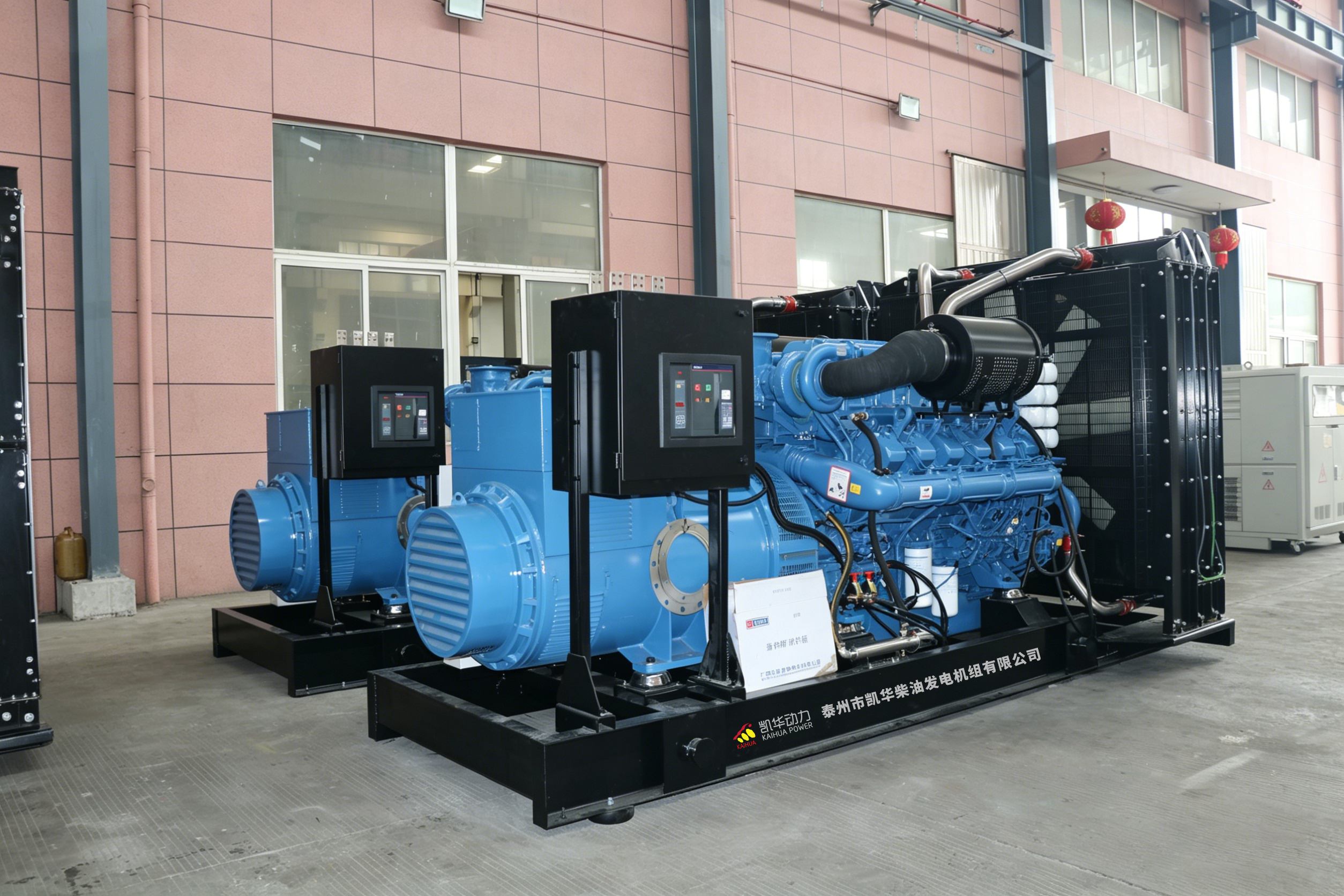
When the lights flicker and the grid lets you down, the right generator makes all the difference. Yuchai generator sets have long been trusted for their rugged build and steady output, but pairing that reliability with a partner who understands your specific power demands changes everything. Hichai Power brings these professional Yuchai units to life—whether you're running a remote site, backing up a hospital, or simply refusing to let an outage slow you down. In this post, we'll break down what makes these sets a go-to for so many industries, and how to choose the one that fits your needs without overpaying for power you'll never use.
Why the Yuchai Power Platform Earns Its Keep
The Yuchai Power Platform has a way of quietly proving itself on job sites where downtime simply isn't an option. Operators who run it day after day talk less about the spec sheet and more about the fact that it starts on the first crank, even after sitting through a cold night. That kind of dependability isn't a marketing claim—it's the result of tolerances held tight during machining and a fuel system calibrated to handle variable loads without complaint.
Maintenance costs stay predictable because the platform's design doesn't demand exotic parts or specialized tools. Local mechanics familiar with older Yuchai models can service the newer ones without a steep learning curve, which keeps fleets moving instead of waiting on back-ordered components. Over a full operating year, the savings in routine upkeep add up in ways that procurement teams notice on the balance sheet.
More than durability, the platform earns its keep by adapting to different applications—whether it's pushing a loader through grading work or powering a generator through a blackout. The torque curve feels broad and usable, so operators don't have to ride the throttle to get work done. That ease of use translates into less fatigue and fewer mistakes, which is value you can't always measure in a spreadsheet.
Voltage Stability When Heavy Loads Kick In
Large motors, compressors, and industrial heaters don't draw power gradually—they demand it almost instantly. When a heavy load kicks in, the sudden rush of current causes the supply voltage to dip. If the source impedance is high or the distribution network is already strained, that dip can turn into a prolonged sag. Equipment downstream may see brownouts, relays can chatter, and sensitive electronics may reset. The real challenge isn't just the magnitude of the drop but how quickly the system can recover. A stiff source with low internal impedance will ride through the surge with barely a flicker, while a weak one will sag noticeably, sometimes for several cycles.
One practical way to assess this behavior is to observe the voltage waveform at the moment of connection. If the fundamental amplitude collapses by more than ten percent and takes several hundred milliseconds to settle, the system lacks adequate short-circuit capacity. Adding capacitor banks near the load can provide a local reactive power boost, but care is needed—too much capacitance can create resonance with the source inductance, causing oscillations instead of stabilization. Another approach is to stagger the start of multiple large loads so their inrush currents don't overlap, effectively spreading the demand over a longer window.
In many facilities, the problem is compounded by long feeder runs and undersized transformers. The voltage at the service entrance may look healthy, but at the far end of a 300-meter cable run, a 50-horsepower motor start can pull the local bus down to 85% of nominal. That's not a nuisance; it's a reliability threat. Upgrading conductors, reducing transformer impedance, or installing a soft starter on the heaviest loads all help. The goal is to keep the voltage envelope within acceptable limits during the first few seconds after a heavy load kicks in—because that's when equipment either survives or fails silently.
Predictable Fuel Costs Without Sacrificing Output
Cutting fuel spend usually meant easing off the throttle or shedding load, which quietly eats into daily output. The old trade-off no longer applies when the engine’s combustion timing and air-fuel mix adjust themselves on the fly. Precise injection pulses and real-time torque management let the machine burn every gallon with intent, keeping work rates steady while the fuel bill stops bouncing around.
Fleet managers used to pad their budgets for surprise spikes at the pump. Now the same job site sees consistent consumption figures week after week, even under shifting terrain and load demands. A smart governor reads the workload and meters fuel in tiny increments, so the engine never overcompensates on light passes or starves on hard pulls. That consistency doesn’t come from limiting performance—it comes from eliminating waste inside the combustion chamber.
The practical payoff shows up at the end of the month. You can forecast operating costs almost to the dollar without ever telling an operator to slow down or take a smaller bite. Machines hold their rated power curve, cycle times don’t stretch, and the fuel log reads like a flat line instead of a roller coaster. Predictable fuel costs stop being a budgeting dream and become just another line item you can trust.
Designed for Harsh Worksites and Weather
From scorching summer heat to freezing winter storms, this equipment doesn't flinch. Every seam, seal, and surface has been tested against the kind of abuse you only find on real job sites—driving rain, cement dust, vibration, and sudden temperature swings. It's built to keep working when the weather turns nasty, so you don't have to waste time covering up or moving indoors.
The housing shrugs off direct impacts from falling debris and tools, while gasketed ports keep moisture and fine particles from reaching critical internals. We didn't just add a rugged skin; we redesigned the airflow paths and drainage channels to handle prolonged exposure without clogging or corrosion. That means fewer shutdowns, less cleaning, and a lot more uptime when the forecast looks bad.
Field crews often tell us the same story: after weeks of rain, mud, and rough handling, this gear still powers on without a hiccup. It's not about surviving a single drop test in a lab—it's about months of unfriendly weather and careless forklift drivers. That's the difference between equipment you hope will last and equipment you forget you're abusing.
Controls You Can Train Anyone to Use
Most interfaces fail the moment you need a manual. The controls worth keeping are the ones someone can learn by watching once—press, twist, slide, done. No layered menus, no hidden gestures. A dial that changes warmth, a button that starts the cycle, a lever that locks the door. These don’t ask for translation; they ask for a hand.
Training someone on a control should feel like showing them where the light switch is. You demonstrate, they repeat, and by the third try it’s muscle memory. That’s why the best designs lean on physical affordances and clear feedback: a satisfying click, a visible change, a position that stays put. If you can hand the remote to a first-time visitor and walk away, the control has done its job.
A Service Network That Reaches Beyond the Cities
Most providers treat areas outside major cities as an afterthought—served by long drives, limited hours, or third-party call centers. This network was designed the other way around. It places compact service points in places other companies ignore: a hardware store in a mountain town, a community hall on an island, a converted shipping container at a crossroads. Each one is stocked with core equipment and connected to a regional team that can dispatch help quickly.
Coverage here doesn't mean a dot on a map. It means a technician arrives before the next harvest, a replacement part reaches a remote clinic before the weekend, and a family's internet stays up through storm season. The network runs on local knowledge—agents who live in the area, drivers who know which roads wash out, and repair teams familiar with older infrastructure. That layer of familiarity removes the usual gap between urban service standards and rural reality.
Expansion does not come from building more glass storefronts. It comes from listening to what each community actually needs, then adapting the model: a weekly visit instead of a daily office, a shared repair hub instead of individual franchises, training local residents to handle first-line fixes. The result is a service network that genuinely reaches beyond the cities, not just in name but in the daily experience of the people it serves.
FAQ
Hospitals, data centers, manufacturing plants, and agricultural operations often rely on these units because they combine steady output with low maintenance demands. The generators are also common in construction and mining sites where grid power is either unstable or completely absent.
The engines are built with reinforced blocks and efficient cooling systems, so they can sustain near-rated output for extended periods without overheating. Regular oil and coolant checks are still recommended, but the design tolerates demanding duty cycles better than many light commercial alternatives.
Yes, most models accept signals from standard ATS panels and can start, transfer, and stop without manual intervention. This makes them practical for backup power in buildings where downtime must be kept to a minimum.
Air filter replacement, fuel system checks, and battery condition are the most important items. Keeping the cooling fins clear and testing the starter circuit monthly also prevents many common startup failures.
Smaller models come with skid bases or trailer options, while larger units are typically installed in weatherproof enclosures with forklift pockets. The control panels are often protected against dust and moisture, so relocation does not require special handling beyond standard lifting.
Many sets are available with sound-attenuated canopies that bring noise down to conversation level at a short distance. For especially tight environments, additional exhaust silencers and vibration isolators can be fitted at the factory.
Diesel is the primary fuel across most of the range, offering a good balance of storage stability and energy density. Larger installations may also support biodiesel blends, but the exact ratio depends on local fuel quality and engine specifications.
Conclusion
The Yuchai generator set earns its reputation on job sites where downtime isn't an option. Its power platform is built to handle heavy loads without flinching—when a big motor or compressor kicks in, voltage stays steady instead of sagging, so your equipment runs smooth and your crew stays safe. Fuel consumption is predictable too; you won't be surprised by a spike in diesel costs just because you needed full output for a few hours. And these units are tough: sealed panels, heavy-duty frames, and cooling systems designed for dust, mud, and extreme heat or cold mean they keep working long after lesser gensets would quit.
Operation is refreshingly straightforward. The controls are laid out so clearly that a new hire can learn the basics in a morning—no cryptic menus or multi-step sequences just to start the engine. Should something go wrong, Yuchai's service network extends well beyond major cities, with local technicians and parts depots in smaller towns and remote industrial zones. That kind of support matters when you're running a mine, a farm, or a construction site hours from the nearest metro area. In short, this generator set isn't just a backup—it's a dependable partner for any power need, day after day.
Contact Us
Contact Person: Ms. Lu
Email: [email protected]
Tel/WhatsApp: 8618917899306
Website: https://www.hichaipower.com