

Professional Ozone Generator: A Complete Guide to Safe and Effective Odor Elimination
2026-11-16
When musty basements, lingering smoke, or stubborn pet odors refuse to fade, ordinary air fresheners just mask the problem. A professional ozone generator offers a real solution—but only if you know how to use it safely and effectively. This guide breaks down everything you need, from how ozone works to crucial safety steps. You'll also discover why LUFUTATECH generators are trusted by professionals for reliable odor elimination without the guesswork.
What Happens to Odor Molecules When Ozone Gets Involved
When ozone meets an odor molecule, the encounter is rarely gentle. Ozone is a powerful oxidizer, and it tends to tear apart the chemical bonds that give many smelly compounds their distinctive character. Double bonds, sulfur groups, and aromatic rings are common targets. As those bonds break, the original molecule fragments into smaller pieces—often carbon dioxide, water, and simple, low-odor byproducts. The smell doesn't get masked; it gets dismantled at the molecular level.
Not every odor surrenders to ozone at the same rate. Some molecules, like those from smoke or cooking oils, break down quickly because they contain reactive sites ozone can attack easily. Others, such as certain ammonia-based smells, resist oxidation and may require longer exposure or higher concentrations. After the reaction, unused ozone naturally reverts to ordinary oxygen, so there's no lingering chemical residue—just air that no longer carries the original scent.
Matching Generator Output to the Smell You're Actually Fighting
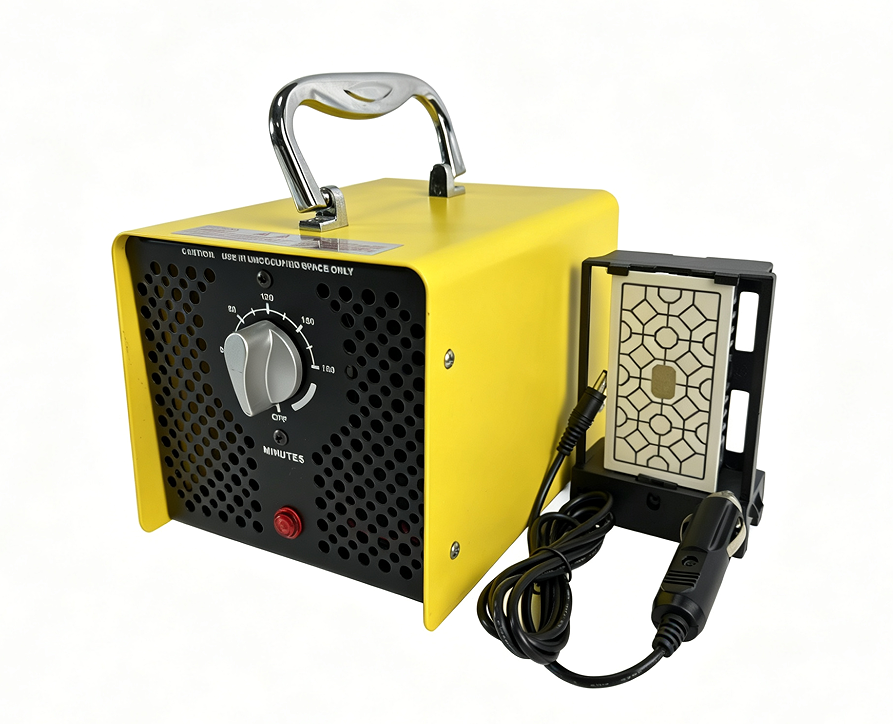
Running an ozone generator at full blast for every odor problem is like using a flamethrower to light a candle. The output level needs to match the specific type and intensity of the smell you're dealing with, otherwise you're just wasting energy and potentially creating new issues. A musty basement smell from mild mildew, for example, requires a much lower ozone concentration and shorter treatment time than the lingering stench of cigarette smoke soaked into drywall. Understanding the chemical nature of the odor—whether it's from organic decay, pet urine, smoke residue, or cooked food—will guide you toward the right output setting rather than relying on a one-size-fits-all maximum.
Start by assessing the source area's size and the odor's persistence. A small bathroom with a light odor might only need 30 minutes at a low to medium output, while a 500-square-foot apartment that housed heavy smokers could demand several hours at a higher setting but still below the machine's peak. The key is to avoid over-saturating the space, which can leave behind that sharp, metallic ozone smell that lingers for days and requires airing out. Instead, begin with a conservative output, treat the area, then check if the original odor is gone or merely masked. If it's still detectable, increase the output incrementally rather than jumping to extremes.
Ultimately, matching generator output to the smell means treating the machine as a precision tool, not a blunt instrument. Keep notes on what settings worked for different odor types in your space—this turns guesswork into a repeatable process. Remember that certain odors, like those from deep-set pet accidents or fire damage, may require multiple lower-output sessions rather than one intense blast, because the source is embedded and releases odor gradually over time. By tuning the output to the actual fight you're in, you'll get faster, cleaner results and avoid the harsh after-effects of ozone overkill.
Why Treating an Empty Room Changes the Outcome
An empty room isn’t just silence and bare walls—it’s a mirror. When we face a space with no distractions, our mind starts filling the void with what we’ve been avoiding. The outcome shifts because absence forces presence: without external noise, we have no choice but to listen to our own thoughts, our own hesitations, our own hidden expectations.
Treating that emptiness as something meaningful changes the dynamic entirely. Instead of trying to escape the quiet, we begin to work with it. Each decision made in that space carries more weight, because there’s nothing to hide behind. The room becomes a collaborator rather than an obstacle, and that subtle shift often determines whether we freeze or move forward.
What feels like a lack—no people, no feedback, no stimulation—can actually be the most honest condition we’ll ever create in. The outcome isn’t just about what we produce; it’s about who we become when no one is watching. And that quiet transformation is often the real result.
How to Know When the Machine Has Run Long Enough
Most operators rely on a gut feeling, but that habit leads to either premature shutdowns or wasted hours. A better approach is to watch for the first signs of stable output. If the vibration pattern has settled into a steady rhythm and the temperature readings haven't shifted by more than a couple of degrees in the last fifteen minutes, the machine has likely finished its warm-up cycle and entered its productive window.
Listen for changes in sound as well. A machine that's still settling will produce occasional sharp ticks or a wandering hum. Once those irregularities disappear and the noise becomes uniform, the internal components have expanded to their working clearances. At that point, pushing it further adds little value unless your specific process demands a longer thermal soak.
Finally, compare the current output against the baseline you recorded during the last successful run. If the dimensional tolerances, surface finish, or cycle time match those references within a narrow band, there's no technical reason to keep waiting. Running beyond that point only consumes energy and puts unnecessary wear on bearings and seals.
Protecting Lungs, Plants, and Rubber During Ozone Exposure
Ground-level ozone forms when sunlight drives reactions between nitrogen oxides and volatile organic compounds, and it attacks more than just lungs. It also enters leaf stomata, causing cell damage, and it speeds up the cracking of natural and synthetic rubber. The first step in protection is timing: ozone peaks in the afternoon on hot, sunny days, so shifting strenuous outdoor work or exercise to the early morning or evening lowers inhaled dose.
For lungs, a properly fitted N95 or elastomeric respirator helps reduce ozone and some precursor particles, but staying indoors with windows closed and running an air cleaner with activated carbon is often more practical. Plants can be shielded by choosing ozone-tolerant varieties—some snap bean and clover cultivars show clear differences in foliar injury—and by applying ethylenediurea (EDU) to high-value crops or ornamental beds in smog-prone regions.
Rubber components need different care. Ozone attacks unsaturated bonds in the polymer, causing surface cracks that widen under flexing. Tires and seals are typically protected with antiozonants such as p-phenylenediamines, but you can extend service life by using wax-based coatings, keeping spare hoses and belts in sealed bags away from electric motors, and avoiding storage near ozone generators or air purifiers that produce ozone.
Ventilating at the Right Time Without Undoing the Treatment
Timing ventilation around treatment sessions takes more instinct than instruction. If you open windows immediately after a procedure, you risk pulling active compounds out of the room before they settle. Instead, wait until the treatment has fully absorbed or cured, then introduce a slow cross-breeze rather than a harsh draft. This keeps the therapeutic environment stable while still refreshing stale air.
Many people overcorrect by sealing the space for hours, only to create a heavy, saturated atmosphere that stalls progress. The trick is to ventilate in short, gentle pulses—maybe five minutes every couple of hours—using a low fan pointed away from the treated area. This removes lingering vapors without stripping the beneficial layer you just applied. Watch the room’s humidity and temperature as cues; if condensation builds on surfaces, open a vent slightly, but never all at once.
For stubborn smells or chemical residues, consider passive ventilation through an adjacent room or a cracked window overnight. The goal is balance: enough air exchange to keep the space breathable, yet not so much that you undo the careful work of the treatment. Practice reading the room’s feel—if your eyes water or the air feels heavy, adjust sooner next time. Small adjustments beat dramatic swings every time.
FAQ
It pumps out ozone, a highly reactive gas made of three oxygen atoms. When those molecules bump into odor-causing compounds, they tear apart the chemical bonds through oxidation. That changes the smelly substance into something non-odorous, so the odor is destroyed, not hidden. Because ozone is a gas, it drifts into gaps, fabrics, carpets, and ductwork where liquid sprays or filters can't reach.
Remove all people, pets, and plants. Cover or unplug sensitive electronics, as ozone can speed up corrosion on some metals. Close windows and doors to keep the gas concentrated in the target area. Set a timer if the machine has one, and block off the room so nobody walks in. After the cycle finishes, wait at least two to four hours before entering, then open windows and doors and air the space out for 30 minutes or more.
Yes, but a smaller unit or shorter run time is wise. Place the generator on the floor or seat, run an extension cord so you can keep the doors and windows shut, and let it run for 20 to 40 minutes depending on the odor strength. Then open all doors and the trunk for at least 30 minutes. Avoid running it for hours in a car, since high ozone can degrade rubber seals and upholstery over time.
Only if the source is removed. Ozone destroys existing odor molecules, but it leaves no lasting barrier. If the cause is still there, such as mold, pet urine, or smoke residue, the odor will return. For lasting results, clean or remove the source first, then use ozone to neutralize what's left in the air and surfaces.
Most professional units put out between 5,000 and 10,000 milligrams per hour, which produces a high enough concentration for serious odor jobs. That level is unsafe for people and pets to breathe, which is why rooms must be empty. A small household air purifier with ozone typically emits far less and won't fix deep-set smells. The right approach is a strong generator run for a short period in a sealed, unoccupied space, followed by thorough ventilation.
Yes. Natural rubber is particularly vulnerable and can become brittle or cracked. Some plastics, certain fabrics, and leather may fade or weaken with repeated exposure. Ozone can also tarnish metals, especially silver and copper, and cause oxidation on electronics. If you're treating a room with valuable artwork, rubber fitness equipment, or vintage electronics, either remove them or limit the treatment time.
A professional ozone generator is built to flood a space with high-output ozone, usually several thousand milligrams per hour, and is meant for unoccupied rooms. A household air purifier with an ozone feature typically produces a tiny fraction of that, often under 50 milligrams per hour, and is designed to run while people are present. The purifier might help with mild odors, but it won't touch deep-seated smells from smoke, mold, or pet accidents.
Some people notice a sharp, chlorine-like scent right after the cycle. That's residual ozone breaking down. Open windows and use fans to speed up the process. Most of the ozone converts back to regular oxygen within 30 minutes to a couple of hours. If the smell still bugs you, wait a bit longer before using the room, and avoid using air fresheners to mask it, since that just adds more chemicals.
Conclusion
A professional ozone generator doesn't mask smells; it tears apart the volatile compounds responsible for them. When ozone meets odor molecules, the extra oxygen atom breaks chemical bonds, turning stubborn organics into simpler, less offensive byproducts. That reaction works best in an empty room—closing doors and removing people, pets, and plants gives the gas room to circulate and react without interference. Output sizing matters too: a small unit in a large, smoke-saturated hallway won't keep up, while an oversized machine in a car or closet wastes ozone and risks residue. You match the milligram-per-hour rating to the space and the severity of the smell, not just the square footage.
Timing is less about a fixed clock and more about watching the concentration drop. Most professional units need 30 to 90 minutes for moderate odors, but severe contamination like pet urine or fire residue may require repeated cycles with airing between. Safety hinges on evacuation and post-treatment ventilation. Lungs, rubber seals, and leafy plants are vulnerable to oxidation, so keep them out during treatment. Afterwards, open windows and run fans until ozone levels fall below 0.05 ppm—usually 30 to 60 minutes. Ventilating too early undoes the work; too late leaves irritants lingering. The right sequence turns a powerful oxidizer into a tool you can trust rather than a hazard you're guessing at.
Contact Us
Contact Person: Paul Luo
Email: [email protected]
Tel/WhatsApp: 0086-19966314501
Website: https://www.lufutatech.com