

Polyurethane Sandwich Panel Production Line Manufacturer: What to Look for in a Reliable Partner
2026-11-21
Choosing the right polyurethane sandwich panel production line manufacturer can quietly decide your project’s ceiling. A machine that looks solid on paper may still drag down output, insulation consistency, or long-term service support. Before you commit to a supplier, it pays to look beyond glossy brochures and focus on the details that actually affect daily production. In this guide, we break down what separates a dependable partner from an expensive gamble, drawing on the field experience of YI ZHOU TECHNOLOGY and the practical questions every buyer should ask.
Core Density Stability for Polyurethane Foam at Full Line Speed
Maintaining a consistent core density in polyurethane foam becomes noticeably harder once line speed reaches full output. Small deviations in raw material temperature, mixing energy, or nucleation gas loading that are easy to absorb at lower speeds turn into visible density shifts because the reaction profile no longer matches the conveyor travel time. The foam may begin to rise too early or too late, leaving the center of the block either under-packed or over-packed even when the overall board weight looks acceptable.
At full line speed there is less room to correct with conveyor angle or pour pattern alone, so attention usually shifts to the balance between catalyst activation and surfactant strength. A slightly stronger gel catalyst can stabilize the rising cell walls sooner, but if the blow reaction lags, the core can still pull away and create a softer center. Some lines also benefit from trimming the nucleation air in small increments rather than adjusting chemical temperatures, because gas level changes affect the core density profile faster and with fewer side effects on surface skin quality.
Operators who track density from opposite edges of the slab often catch center drift earlier than a single core sample would show. Splitting a block at regular intervals, measuring the middle band, and comparing it to the target range under full speed conditions gives a clearer picture than relying on average density alone. When a correction is made, it is usually better to move one variable at a time and wait for the change to work through the entire line before judging whether the core has actually stabilized.
Metering Units That Hold Tolerances as Raw Material Lots Change
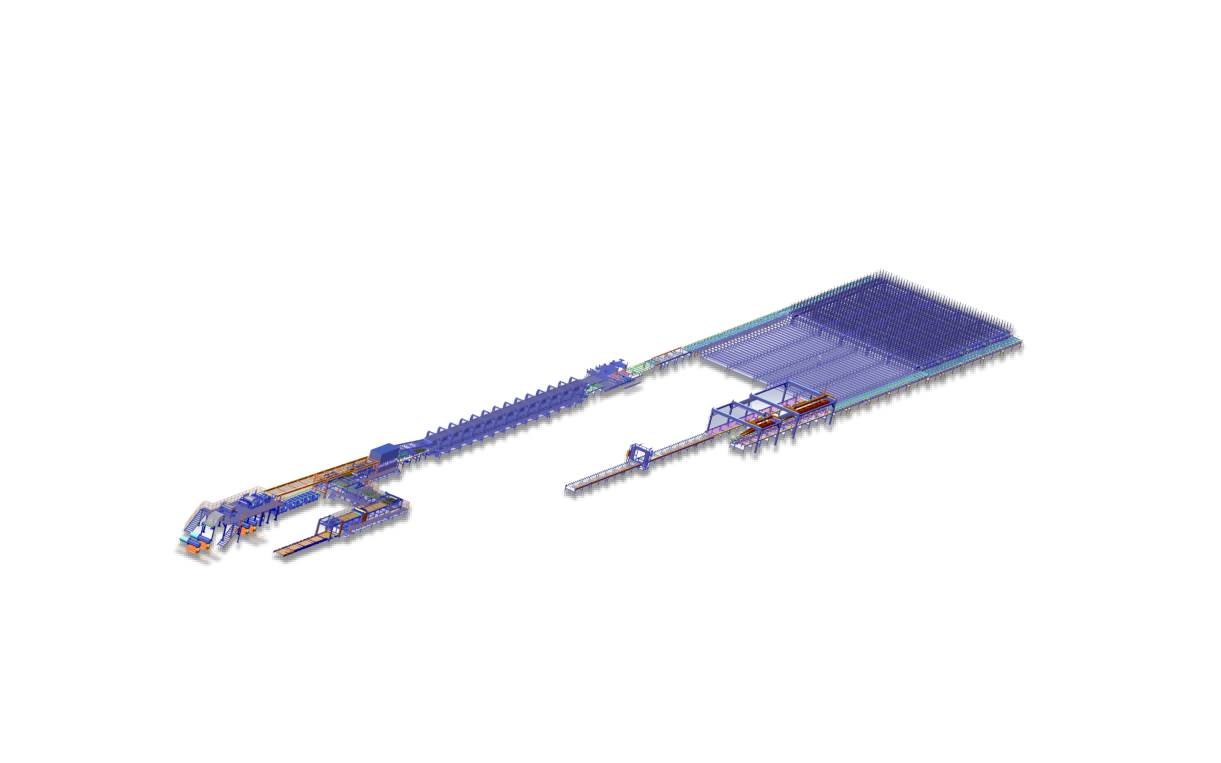
When raw material lots shift, the metering units that hold tolerances become the quiet backbone of a stable line. These units don’t just sit there—they adjust their stroke, speed, or dwell based on the actual properties of the incoming lot. One batch might flow a little slower; another might pack differently. The equipment reads those differences and compensates, keeping the dispensed volume within a narrow band without an operator constantly chasing dials.
What makes this work is not a single setpoint but a mix of mechanical repeatability, sensor feedback, and a control loop that learns the lot’s character early in the run. Instead of relying on a universal calibration, the system compares current output against a reference curve stored from previous good batches. Any drift—whether from particle size, moisture, or bulk density—gets corrected in real time. The tolerances stay tight because the unit treats each lot as its own condition, not as a generic input.
In practice, operators see fewer rejections and less downtime for recalibration. The real advantage is that the metering unit no longer assumes a perfect raw material. It accepts the lot-to-lot variation and works with it, which is exactly what production usually hands you. That shift in thinking—from fighting variability to accommodating it—is what keeps the numbers steady when the feedstock refuses to stay the same.
Flat Panels Begin With Frame Straightness and Roller Alignment
Flat panel quality is usually blamed on coatings, adhesives, or press settings, but the real trouble often starts with a frame that is slightly twisted and rollers that no longer share a common plane. A frame that is out of straightness by only a millimeter can pull the web sideways or create uneven pressure across the panel width, and the result shows up later as edge curl, waviness, or bond failure.
Check the frame with a machined straightedge and feeler gauges along the load-bearing rails before mounting any rollers. Then align each roller relative to the frame, not just to the roller next to it. Use a dial indicator at both ends and rotate the roller through a full turn to catch runout that static measurements miss. The goal is to get all rollers parallel in both the horizontal and vertical planes, with no soft foot under the bearing housings.
After the initial setup, run a narrow scrap strip at low speed and watch which way it drifts. A slow wander usually points to a slight angular misalignment; a repeating buckle often comes from one roller sitting higher than its neighbors. Recheck alignment after temperature swings and maintenance, because thermal expansion can shift bearing centers enough to undo a careful setup.
Quick Changeovers Without Sacrificing Core Bond Strength
Swapping fixtures or adhesive grades usually forces a trade-off: speed comes up, bond performance drifts down. The real issue is rarely the new setup itself. It is the small changes in surface prep, open time, and clamping pressure that slip in when operators rush. Locking down those variables before the changeover begins keeps peel and shear values from moving, even when the line is back at full rate within a single shift.
One practical approach is to treat changeover as a controlled process, not a scramble. Pre-stage the exact substrates, application temperatures, and cure schedules for the next run. Use quick-release tooling that returns to the same position and pressure every time. Then verify the first joints off the line against a short mechanical test, not just a visual check. That way the switch happens fast, but the bond still carries the load it was designed for.
It also helps to keep the core adhesive or welding parameters untouched during rapid transitions. Adjust the things that are meant to move, like jig inserts or feed rates, while holding the bonding interface itself stable. Teams that separate changeover variables from bonding variables tend to get both speed and strength without quietly accepting a weaker joint.
Installation Support That Leaves Your Operators Confident
Few things slow a rollout faster than equipment that arrives with sparse instructions and no clear path for questions. Our installation support starts before the first crate is opened: a dedicated technician walks your team through pre-install checks, power requirements, and site layout details that are easy to miss in a manual. Operators get straightforward answers in real time, not a ticket queue, so the first shift feels prepared instead of guessing.
Once the system is in place, we stay on-site long enough to run real production scenarios with the people who will use it every day. Adjustments to sensors, calibrations, and workflow settings are handled alongside your operators rather than behind a closed panel. That hands-on handover gives them a chance to ask the practical questions that only come up when they are standing at the controls.
After start-up, support continues through direct access to engineers who know your configuration. Remote diagnostics can resolve most issues without waiting for a service visit, and when a site visit is needed, the same technician who helped with the install is usually the one who arrives. That continuity makes operators more willing to flag small problems early, because they know the response will be useful rather than generic.
Spare Parts and Field Service After the Handover
Once the equipment leaves the factory floor, the real test of the handover begins. A spare parts list that looked tidy on paper quickly proves its worth when a drive unit fails on a remote site and the nearest warehouse is six hours away. The focus shifts from what was supplied to what can actually be reached, replaced, and returned to service without a long silence from the machine.
Field service after handover tends to succeed or fail on small, unglamorous details: whether the hydraulic fittings match the installed piping, whether the right torque values are printed in the manual, and whether a technician can identify the failed module without opening three unrelated panels. Teams that keep a running log of field replacements and adjust their stock profiles accordingly are usually the ones that avoid the familiar scramble for a discontinued sensor or a control board with an eight-week lead time.
The most useful support often comes from treating the handover not as a finish line, but as the start of a feedback loop. Notes from site visits, photos of worn parts, and failure patterns gathered by service crews feed back into both inventory decisions and design changes. In that sense, spare parts availability and field service are not separate obligations; they are the clearest signal of whether the original delivery was built for real operating conditions.
FAQ
Ask for engineering drawings, photos from past installations, and contact details of line operators. A genuine builder usually has its own assembly workshop and in-house design team, and can modify frame dimensions, roll stations, and cutting systems instead of only offering a fixed catalogue.
Look closely at the metering unit for the polyurethane foam, temperature control on the double belt press, and synchronization between the facing unwinders and the cutting saw. Small deviations in mix ratio or belt temperature often show up later as uneven density, surface waves, or edge trimming problems.
The double belt should maintain stable pressure and temperature across the full width, with heating zones that can be adjusted independently. Pay attention to side sealing because leaks there affect raw material use and panel edge quality more than many buyers expect.
A well-integrated control system keeps line speed, foam output, and saw position coordinated, which reduces transition waste when changing panel thickness or length. It also gives operators better fault diagnostics instead of forcing them to chase mechanical issues across separate stations.
They should provide installation supervision, commissioning, operator training, and a clear spare parts list with realistic delivery times. The most useful partners also stay available for remote troubleshooting and can supply updated control programs or mechanical upgrades when the product range changes.
A good manufacturer will adapt roll-forming profiles, cutting length, stacking layout, and sometimes the application method for different metal facings. Avoid lines that are only designed around one narrow range of thickness and width if your market requires frequent product changes.
Check ventilation around the foaming station, guarding on moving sections, emergency stop layout, and whether the line can handle approved blowing agents safely. A responsible supplier will be direct about emissions limits, operator exposure, and local compliance instead of treating those as afterthoughts.
Include energy consumption of the heating system, expected foam waste during start-up and size changes, spare parts cost, and downtime risk from poorly matched components. A slightly higher initial price often pays back quickly if the line reaches stable output faster and needs less rework.
Conclusion
Choosing a polyurethane sandwich panel production line manufacturer means looking beyond catalogue specifications. A dependable partner builds lines that hold foam core density steady even when output is pushed to the rated speed. This is not a minor setting, because density drift quickly shows up as weak spots, surface irregularities, or excess resin use. The metering side matters just as much. Raw material lots shift, viscosity changes with temperature, and a well-engineered metering unit should keep ratio and throughput inside narrow limits without constant manual correction. Flat panels do not start in the press alone; they begin with a straight frame and properly aligned rollers. Small misalignments there become visible later as thickness variation, edge curl, or face delamination once the line runs at full speed.
Changeover performance is another signal. A supplier who treats speed and bond strength as a trade-off will leave you chasing adhesion problems after every product switch. The better approach is quick tooling or recipe changes that still let the core develop full bond strength. After commissioning, support defines the relationship. Installation should be more than a checklist: the vendor’s technicians ought to train operators until they can diagnose common faults, adjust parameters, and handle daily start-up confidently. Finally, look at what happens after handover. Spare parts availability, local stock, and field service response times matter when a line stops. A manufacturer with a structured service network and parts that fit without modification saves production days over the life of the equipment.
Contact Us
Contact Person: Sophia Jiang
Email: [email protected]
Tel/WhatsApp: +86 17367381818
Website: https://yzwelding.com/