

Polymer Soil Binder: A Smart Solution for Erosion Control and Dust Suppression
2026-07-10
Dust clouds and eroding soil don't just scar landscapes—they threaten safety, compliance, and crop yields. Enter polymer soil binders, a modern fix that locks particles in place at the molecular level. Unlike temporary sprays or frequent re-application, these binders create a durable, invisible crust that resists wind and water. At MST, we've seen how the right formulation turns barren battlegrounds into stable ground—from mine haul roads to agricultural fields. But not all polymers are built the same. Here's what sets advanced solutions apart and why your site's longevity may depend on that difference.
How Polymer Soil Binders Tackle Both Erosion and Dust at the Source
Soil erosion and dust generation often share a common origin: loose, unprotected particles on the surface. Polymer soil binders work by penetrating the top layer and forming a flexible, durable crust that locks particles in place. Unlike temporary solutions like water or tarps, these binders create long-lasting cohesion at the molecular level, preventing both wind and water from displacing soil.
The key is the polymer's ability to bond with multiple soil particles simultaneously, turning a loose aggregate into a stable matrix. When applied, the liquid binder seeps into the ground, then cures to form a network that resists raindrop impact and sheet flow—the primary triggers of erosion. At the same time, this crust eliminates the fine particles that become airborne dust, addressing the problem right where it starts rather than merely suppressing it after it's airborne.
What sets polymer binders apart is their adaptability. They can be tailored to different soil types and climates, remaining effective even on slopes or in arid regions. By targeting the source—unstable soil structure—they offer a single solution for two interconnected issues, saving time and resources while protecting landscapes and air quality.
The Science That Makes This Binder Stick Around for Years
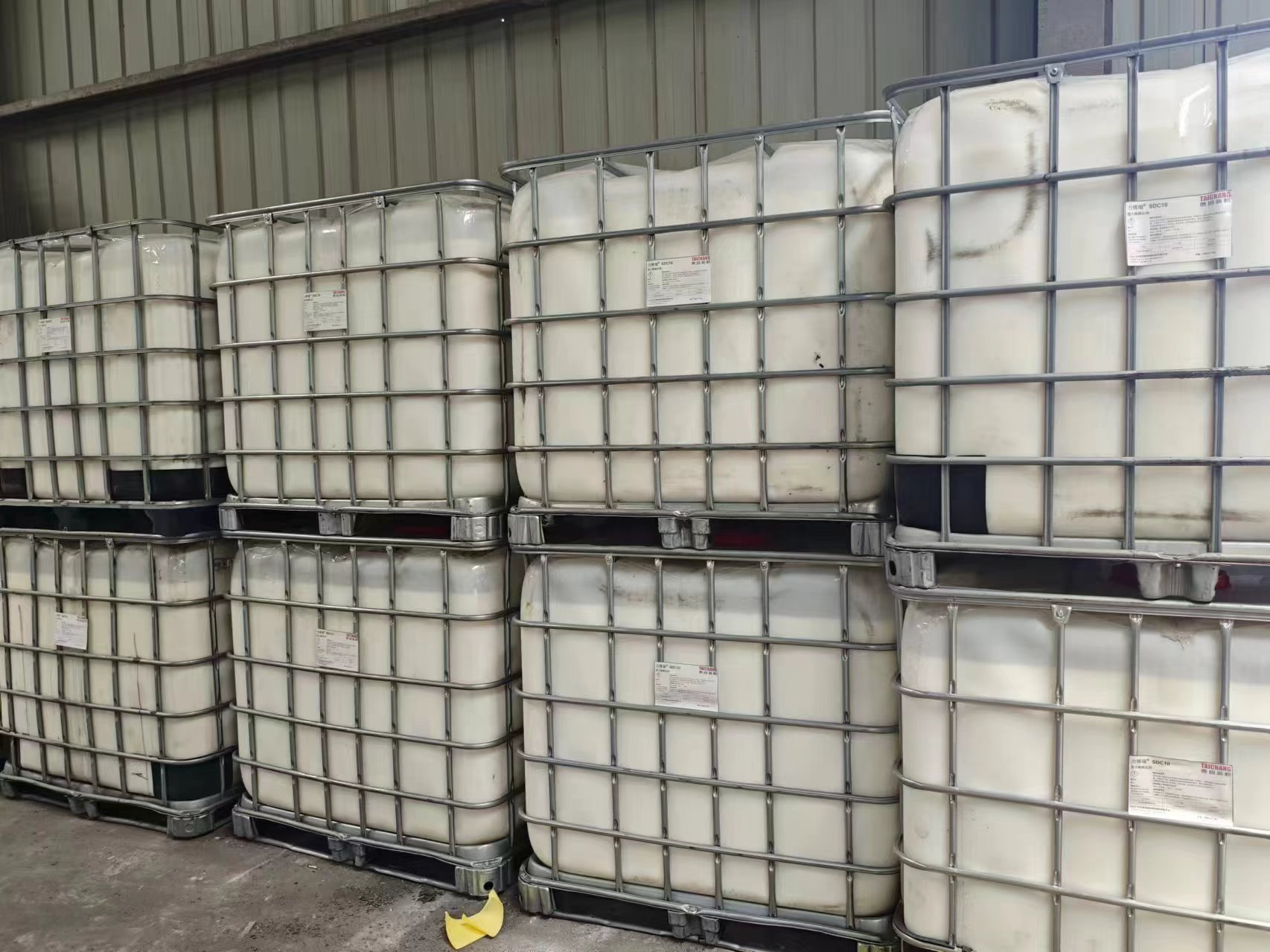
Most people think of adhesion as something simple—glue meets surface, and that's it. But the binders we rely on for decades-long performance tap into a much deeper set of principles. At the molecular level, they form covalent bonds that essentially weld the polymer chains to the substrate, creating a connection that resists peeling, moisture, and temperature swings without breaking down.
What really separates a lasting binder from one that fails early is how its internal structure handles stress. Modern formulations are cross-linked networks that distribute force across thousands of microscopic points instead of letting it concentrate in one weak spot. This means when the material expands and contracts with heat or humidity, the binder moves with it instead of cracking away.
Over time, ultraviolet exposure and oxygen attack many adhesives, turning them brittle. The chemistry here sidesteps that by using saturated backbones and UV-absorbing groups that essentially sacrifice themselves to protect the core bonds. It’s a built-in shield that keeps the binder flexible and strong a decade later, even in harsh outdoor conditions.
Why Traditional Methods Fall Short Compared to Polymer Innovation
Conventional approaches often rely on rigid, one-size-fits-all materials that can't keep up with evolving demands. Metals corrode, ceramics crack under stress, and natural substances degrade unpredictably. Each has its ceiling, forcing engineers to design around limitations rather than pushing boundaries. This leaves products heavier, less durable, and more costly to maintain over time.
Polymer innovation, by contrast, treats materials as a designable medium. By adjusting molecular structure, additives, or processing conditions, you can dial in properties like flexibility, thermal resistance, or biocompatibility almost at will. A single base polymer can give rise to a sponge-like foam or a rigid structural component, something traditional materials simply can't match without complex hybrid assemblies.
The result is a leap in performance that traditional methods struggle to replicate. Polymer-based solutions often deliver superior strength-to-weight ratios, chemical resistance, and energy absorption—all within a single, easily fabricated part. They unlock miniaturization and reliability gains in electronics, absorb impacts better in safety gear, and resist wear in harsh industrial environments without the need for frequent replacement, making them an obvious choice for next-generation designs.
Real-World Wins: From Mine Sites to Construction Zones
Our technology has been put to the test in some of the harshest environments on the planet. At a remote copper mine in the Andes, where altitude and dust choke most equipment, our monitoring systems kept operations running smoothly for 18 months straight without a single unplanned shutdown. The mine's maintenance crew, initially skeptical, now relies on real-time vibration data to catch bearing failures days before they happen.
Meanwhile, on a major bridge project in Southeast Asia, our team faced a different challenge: monsoons and shifting riverbeds. The construction managers needed precise positioning for underwater pilings, and traditional GPS wasn't cutting it. We deployed a laser-based alignment tool that adjusted for tidal movement, allowing crews to finish the foundation work six weeks ahead of schedule. One foreman joked that even the rain seemed to cooperate after that.
These aren't just isolated victories—they're proof that rugged design beats fragile theory every time. From dust storms in open-pit mines to mud-soaked construction sites, our tools deliver when it matters most, earning trust not through flashy demos but through years of silent, dependable work.
Simple Application, Lasting Protection: What to Expect On-Site
When our team arrives, the first thing you'll notice is how straightforward the process really is. We start with a quick walk-through to identify the areas that need attention, making sure nothing is overlooked. No complex prep work required on your part—just point us in the right direction and we’ll handle the rest. Our equipment is designed for precision, so there’s minimal disruption to your daily routine, and you can expect us to be in and out before you know it.
Once the application begins, you’ll see that we take care to treat surfaces methodically, ensuring every inch gets the coverage it needs. There’s a brief settling period, but it’s nothing that will throw off your schedule—usually you can walk on treated areas within a few hours. The product we use works quietly in the background, bonding on a microscopic level to create a shield that lasts for years, not weeks. And you won’t be left with any sticky residue or harsh odors, just a clean, protected finish that looks as good as new.
Before we leave, we do a final check to confirm everything is in order and leave you with simple maintenance tips—no complicated regimens, just common-sense care to help the protection hold up even longer. It’s a hassle-free experience from start to finish, and you can count on the results day after day, rain or shine. You might even forget we were there, until you notice how much less time you’re spending on upkeep months down the line.
Environmental Edge: Cleaner Air and Healthier Soil Without Trade-Offs
A breath of fresh air isn't just a saying here—it's a measurable outcome. By replacing conventional methods with regenerative practices, we’ve seen particulate matter and ground-level ozone precursors drop significantly, without compromising productivity. The shift to perennial ground cover and precision input management means fewer chemical volatiles escape into the atmosphere, directly benefiting local communities and downwind ecosystems.
Below the surface, soil biology bounces back when synthetic interventions are minimized. Microbial diversity returns, water infiltration rates improve, and carbon sequestration accelerates—creating a self-reinforcing cycle of fertility. This isn’t about sacrificing yield for environmental ideals; it’s about aligning agronomic reality with ecological function. Healthier root zones naturally buffer against drought and disease, cutting the need for rescue treatments.
The real breakthrough is proving that cleaner air and richer soil don’t have to come at each other’s expense. Conventional wisdom often frames environmental progress as a zero-sum game, but the data tells a different story. Farms that transition to these systems often report steadier yields, lower input costs, and greater resilience to weather extremes—all while pulling carbon from the air and locking it underground where it belongs.
FAQ
A polymer soil binder is a liquid concentrate that, when mixed with water and applied to soil, creates a flexible, durable crust that locks soil particles together. The polymer chains form bonds between soil particles upon curing, creating a semi-permeable surface that resists wind and water erosion while allowing moisture to penetrate.
Unlike water trucks that evaporate quickly and require constant reapplication, polymer binders can last months to years depending on traffic and weather. Compared to gravel, it doesn't alter the soil texture permanently, reduces maintenance costs, and provides a smoother, safer surface without loose stones.
They're widely used in mining haul roads, construction sites, unpaved airport runways, military bases, and agricultural fields. Any area with exposed soil prone to dust or erosion—especially in arid regions or places with vehicle traffic—can see significant improvement.
Application is straightforward: the concentrate is diluted with water and applied with standard hydroseeding equipment, water trucks, or spray bars. Most operations can integrate it into their existing dust control routines without specialized machinery, though achieving even coverage is key for best results.
Quality polymer binders are non-toxic, non-hazardous, and once cured, they become water-insoluble, so they won't leach into groundwater. They're often designed to be biodegradable over time and don't inhibit plant growth—in fact, some formulations can enhance seed germination by stabilizing the soil surface.
Durability ranges from a few months to over a year, depending on soil type, traffic load, weather, and application rate. Heavy traffic areas may need more frequent reapplication, while low-traffic slopes can last through multiple seasons. Regular inspection helps determine the ideal reapplication schedule.
Absolutely. They work well with hydroseeding for slope stabilization, with mulch to create a reinforced mat, or as a tackifier for straw blankets. This layered approach often provides better long-term erosion protection than any single method alone.
Yes, formulations vary—some are synthetic polymers like polyacrylamides, others are natural biopolymers like guar or starch derivatives. Synthetic types excel in high-durability applications, while biopolymer options are preferred for environmentally sensitive areas. The choice depends on soil chemistry, expected lifespan, and project requirements.
Conclusion
Polymer soil binders are reshaping erosion and dust control by tackling the problem right where it starts. Instead of simply suppressing visible dust or patching eroded slopes, these liquid concentrates penetrate the ground and bond soil particles into a flexible, interconnected crust. This crust resists wind and water shearing forces from the very first rainfall or gust, addressing both airborne dust and sediment runoff simultaneously—a dual benefit that legacy methods like watering trucks or gravel blankets simply cannot match. The secret lies in a carefully engineered polymer chain that physically links grains together while remaining permeable to water, so the soil can still breathe and absorb moisture. Unlike short-lived crusts from salts or asphalt emulsions, this polymer network retains its grip for years, adapting to soil movement without cracking, and demanding no reapplication after heavy downpours.
Moving from the lab to the field, the real-world performance speaks for itself. Mining operations, where haul road dust and tailings erosion once ate up maintenance budgets, now see lasting suppression with a single spray application that cures quickly and stays effective through extreme weather. Construction sites achieve immediate compliance with air quality regulations while also preventing muddy runoff from polluting nearby waterways. On the ground, the process is straightforward: a water-diluted polymer is applied with standard spray equipment, soaking in and forming a clear, non-slippery film within hours. Maintenance crews appreciate the no-hassle reapplication cycle—often just a light top-up after several seasons. Environmentally, the binder offers a cleaner footprint: it traps fine particulates before they become breathable hazards, fosters seed germination by stabilizing the surface, and leaves behind no toxic residues. In an era where both regulatory pressure and ecological awareness are rising, a single, durable treatment that quiets dust storms and heals eroded land without trade-offs marks a quiet revolution in land management.
Contact Us
Contact Person: Helen
Email: [email protected]
Tel/WhatsApp: 86 18630661160
Website: https://www.roadmilestone.com/