

Investment Casting Service: Precision Manufacturing for Complex Metal Parts
2026-11-16
Every breakthrough in modern engineering starts with the quiet precision of a single component. When designs demand intricate geometries and metallurgical perfection, investment casting steps in as the unsung hero—turning molten metal into near-flawless, complex shapes that machining alone can’t achieve. From aerospace turbine blades to surgical instruments, the process bridges imagination and reality with remarkable repeatability. Yet not all providers treat casting as a craft. That’s where Supreme Machinery changes the conversation—blending time-tested foundry expertise with rigorous process control to deliver parts that consistently outperform expectations. If you’ve ever wondered how the most demanding industries eliminate assembly steps, reduce waste, and still hold micron-level tolerances, the answer lies in a method that’s been refined over centuries but never stops evolving. Let’s uncover what makes precision investment casting a strategic advantage—and why your next project deserves a partner that refuses to cut corners.
How the Lost-Wax Process Shapes Complex Geometries
At the heart of the lost-wax method lies a peculiar freedom: the wax doesn't care how complex your design is. You can carve, print, or assemble a pattern bristling with undercuts, paper-thin walls, and internal channels that would be unthinkable in any direct machining approach. Since the wax is melted away later, there's no need to worry about tool access or part ejection – the mould simply inherits every intricate detail. Sculptors and engineers alike exploit this by building up forms layer by layer, blending organic textures with precise mechanical features, all in a material that holds its shape until the ceramic shell takes over.
The real magic, however, happens when the wax vanishes. The ceramic shell, built through repeated dipping and stuccoing, captures even the faintest surface ripple. As molten metal floods the cavity, it faithfully reproduces geometries that would stump any subtractive process – spiral cooling channels that snake through turbine blades, hollow struts with varying wall thickness, or interlocking parts cast as a single piece. The process doesn't just replicate shapes; it allows the metal to flow into spaces where logic says it shouldn't go, turning a disposable wax ghost into a permanent metallic reality.
But complexity here isn't just about shape – it's about control. Because the wax can be manipulated while soft, joined while warm, or dissolved strategically, designers can create assemblies that eliminate fasteners and weld lines. They can taper walls to save weight, embed texturing so fine it looks woven, or cast lattice structures that would collapse under their own weight in any other medium. The lost-wax process doesn't merely tolerate complexity; it actively rewards those who push geometric boundaries, offering a rare bridge between a sculptor's intuition and an engineer's precision.
Achieving Tight Tolerances Without Secondary Machining
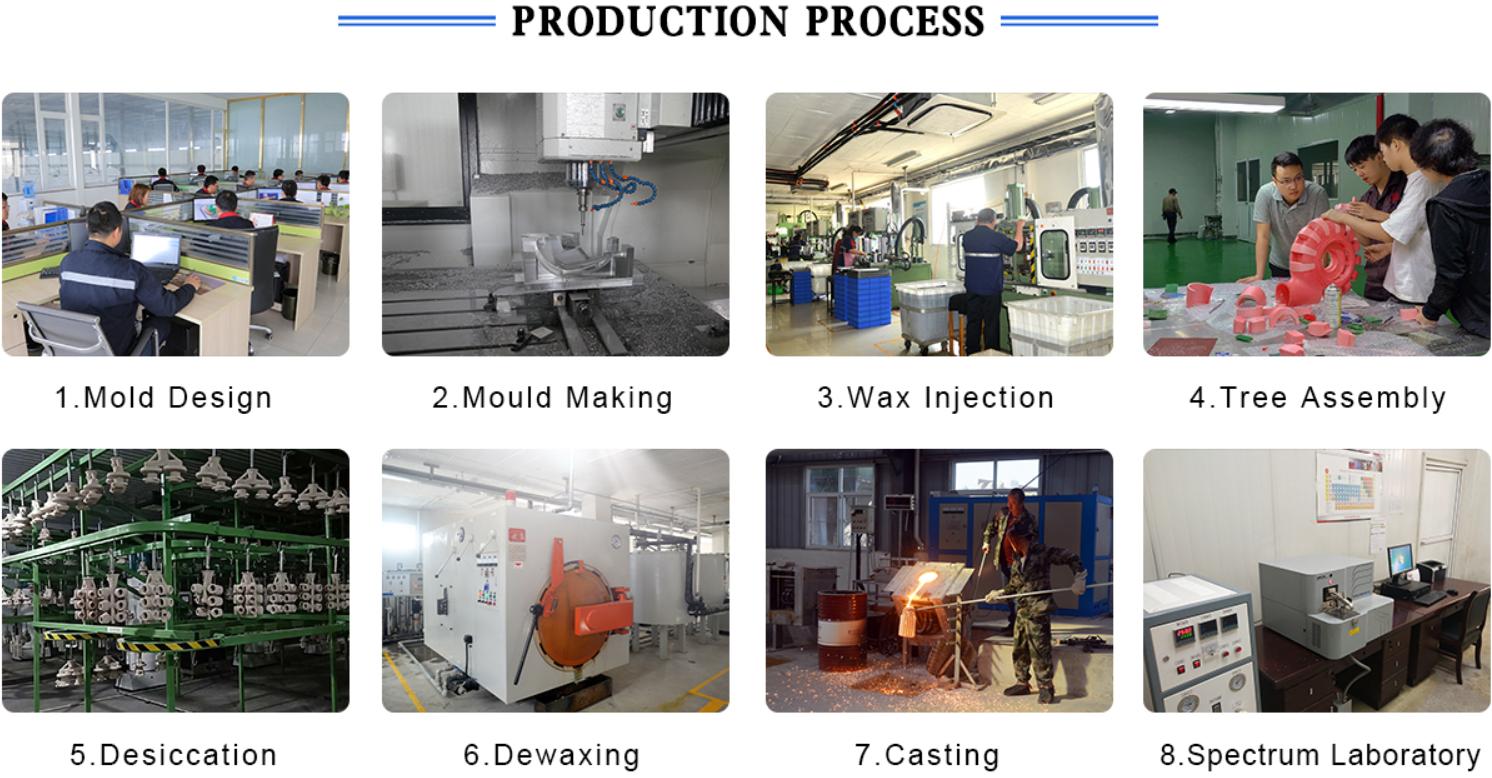
Manufacturing parts to exact specifications often brings secondary machining to mind, yet it's entirely possible to hold tight tolerances directly from the primary process. The key lies in synchronizing machine capabilities, tooling precision, and environmental stability. For instance, modern CNC equipment with high-resolution feedback systems can compensate for thermal drift in real time, preserving accuracy throughout production runs. By embedding such controls, shops minimize deviations without resorting to costly post-process adjustments.
Tool selection and fixturing play equally critical roles in eliminating extra steps. Custom workholding solutions that reduce part deflection, combined with advanced cutting tools designed for consistent wear patterns, keep dimensional variation remarkably low. Equally important is the adoption of in-process measurement systems—probes and laser scanners that verify features immediately, allowing the machine to self-correct before a part ever leaves the fixture. This closed-loop approach renders separate finishing operations unnecessary for many complex geometries.
Material choice and process planning further reinforce the ability to skip secondary machining. Selecting inherently stable materials and optimizing roughing and finishing toolpaths to manage residual stresses prevents distortion after material removal. When engineers meticulously balance these variables from the outset, high-precision features emerge straight from the spindle. It shifts the focus from fixing inaccuracies later to building them out of the process entirely, saving time and preserving design integrity.
Material Versatility for Demanding Environments
Material versatility isn’t just about having options—it’s about knowing which combination of polymers, metals, or ceramics will hold up when temperatures swing from subzero cold to blistering heat, or when chemical exposure eats away at lesser substances. Early in the design phase, engineers often work with families of materials like PEEK, PTFE, or advanced nickel alloys, balancing corrosion resistance against mechanical load. This proactive selection turns environments that would quickly degrade standard components into ordinary operating conditions.
Beyond picking the right base material, surface treatments and composite structures push versatility even further. A thin ceramic coating on a stainless steel part can dramatically extend its life in an abrasive slurry, while a fiber-reinforced polymer housing might shed weight without sacrificing impact resistance. These hybrid approaches let you tailor performance layer by layer, so the same product platform can serve a deep-sea application one month and a high-purity chemical process the next, with only minimal redesign.
The real test of material versatility often shows up in validation, not just data sheets. Running identical seal geometries in hot sulfuric acid, then in a cryogenic nitrogen stream, exposes subtle failure modes that theoretical compatibility overlooks. Teams that lean into this kind of parallel testing quickly learn which sacrifices—slight swelling for better seal, or reduced ductility for higher hardness—are worth making. That hands-on insight is what converts a theoretically versatile material into a proven solution across genuinely hostile settings.
Streamlining Production from Prototype to Full-Scale Runs
Moving from a hand-assembled prototype to a production line humming at full capacity is rarely a simple flip of a switch. The process demands a sharp focus on material behavior under different speeds and temperatures, tooling durability, and operator touchpoints that were invisible in the lab. Early on, we’ve learned to run small-batch validations not just to check if a product works, but to deliberately break the process and find where it wobbles. It’s those wobbles—like a seal that cures too slowly at a higher throughput or a fixture that drifts by half a millimeter after fifty cycles—that define whether a seemingly perfect prototype can survive a 10,000-unit week.
One practical shift that’s saved us weeks of back-and-forth is treating the pilot line as a collaborative design review rather than a downstream order-taking phase. Instead of handing off frozen specs to manufacturing, engineers stay embedded with the line team long enough to spot where tolerances can be relaxed without sacrificing function, or where a simple chamfer could prevent a jam. This overlap has led to redesigns that took half a day to implement but eliminated whole categories of rework. It also teaches designers to think in terms of process capability indices instead of just nominal dimensions, which is a muscle that only builds with exposure to real-world variability.
When the final ramp-up begins, we anchor decisions to data from the middling runs—not the polished golden samples. Tracking defect distributions, cycle-time consistency, and tool wear early on gives a true picture of stability. Often, the biggest breakthroughs come from questioning legacy workflows, like swapping a manual inspection step for an inline sensor that catches drift before it becomes scrap. The goal isn’t just to hit output targets, but to build a line that can absorb minor disruptions without an engineering rescue squad on standby. That resilience is what separates a one-time production sprint from a genuinely streamlined full-scale operation.
Why Surface Quality Matters in Precision Casting
Surface quality in precision casting goes far beyond aesthetics. Any imperfection on the cast surface—be it a tiny pit, a crack, or uneven roughness—can act as a stress concentrator. Under load, these seemingly minor flaws can initiate cracks that grow silently, eventually leading to premature part failure. In applications like aerospace turbines or medical implants, such failures aren’t just costly; they can be catastrophic.
A fine surface finish directly influences how a part behaves in service. Reduced friction, better sealing capabilities, and superior fatigue resistance all trace back to how well the metal was formed at the mold interface. For components that move against one another or must hold pressure, a smooth, consistent skin minimizes wear and prevents leakage paths that rougher surfaces would create.
The casting surface also dictates what comes next in manufacturing. Each extra pit or scale patch that needs grinding, filling, or polishing adds labor, time, and unpredictability. A near-net-shape surface cuts post-processing steps drastically, preserving dimensional accuracy and keeping project timelines tight without sacrificing mechanical properties.
Real-World Uses Across Critical Industries
From emergency rooms to factory floors, advanced systems are quietly reshaping how critical sectors operate. In healthcare, image analysis tools flag subtle anomalies in scans that even seasoned radiologists might overlook, while real-time data streams from wearables help nurses prioritize patients before alarms ring. Financial institutions rely on pattern-matching engines that catch fraudulent transactions mid-swipe, learning from each attempt to stay ahead of increasingly clever schemes. These aren't distant prototypes—they're embedded in daily workflows, adapting to messy, unpredictable human environments without needing constant hand-holding.
Heavy industry has seen an equally practical shift. On sprawling construction sites, sensor-fed platforms predict equipment fatigue days in advance, letting crews swap out a worn bearing during planned downtime instead of rushing to fix a collapsed crane. In agriculture, ground-level cameras paired with weather feeds guide irrigation down to the square meter, cutting water use without sacrificing yield. The common thread is that these tools disappear into the background, surfacing insights exactly when someone needs to act, rather than adding another dashboard to check.
What makes these applications stick isn't just the technology, but how naturally they fit into existing judgment calls. A logistics coordinator doesn't want to second-guess a rerouting suggestion during a snowstorm; they need it to arrive with clear reasoning and a confidence level they can weigh against their own experience. The most adopted systems understand that, treating automation as a conversation rather than a decree. This quiet, context-aware support is what turns a proof-of-concept into something that people actually rely on when minutes matter.
FAQ
We start by creating a wax replica of the part you need, then coat it in ceramic slurry to build a hard shell. Once the shell is cured, the wax is melted away, leaving a perfect cavity. Molten metal gets poured in, and after it solidifies, we break away the ceramic to reveal the near-net-shape component. It sounds ancient—and it kind of is—but modern controls make it incredibly repeatable.
For standard features, ±0.1 mm is routine, and with a bit of process tuning we can hold ±0.05 mm on critical dimensions. The real advantage is that you get that precision across complex geometries that machining would struggle to access, often without any tooling marks in corners.
Definitely realistic for prototypes. Tooling costs are relatively modest because we don't need permanent hard dies, and single-digit quantities are common. The same wax pattern approach means you can test form and fit with the actual metal before committing to a larger batch—plenty of R&D departments work with us that way.
The process handles a huge range: carbon steels, tool steels, stainless, aluminum, nickel alloys, copper-based alloys, even some superalloys. The only real limit is the metal's melting point and its reactivity with the shell material, but our furnace capabilities cover nearly everything an engineer would specify for structural or corrosive environments.
When internal passages, undercuts, or blended curves start stacking up, machining often means multiple setups, fixtures, and still leaves seams. Investment casting gives you those features in one piece, right out of the shell. It also lets you consolidate assemblies—weldments become a single cast part, which saves time and eliminates potential leak paths.
As-cast finish is typically around 125–150 RMS in microinches, which is already smoother than basic sand castings. With controlled shell materials and proper gating, surfaces come out uniform and scale-free. If you need mirror-like areas, we can apply localized polishing or a gentle blasting step, but many engineers accept the natural texture because it behaves predictably under loads and coatings.
We record process parameters for each pour—metal temperature, shell preheat, solidification time—and often run a sacrificial sample for first-article inspection. Non-destructive checking like X-ray or dye-penetrant can be slipped into the flow without slowing things down. Since the wax pattern dies and ceramic build-up are tightly controlled, part-to-part repeatability is remarkably stable.
Conclusion
Investment casting stands out as a remarkably adaptive manufacturing method, especially when designs demand intricate internal channels, thin walls, or complex curved surfaces that would stump conventional machining. The lost-wax process begins with a disposable pattern, giving engineers the freedom to combine multiple components into a single near-net shape, which drastically cuts assembly time and welding steps. This approach routinely holds dimensional tolerances within ±0.005 inches per inch, often removing the need for supplementary grinding or milling. Beyond simple accuracy, the ceramic shell and controlled pouring sequence yield a smooth surface finish that reduces turbulence in fluid-handling components and improves fatigue life in load-bearing parts—details that matter a great deal in aerospace actuators, surgical instruments, and high-pressure valve bodies.
Material choice is another powerful lever. Foundries working with investment casting routinely pour carbon steels, duplex stainless steels, nickel-based superalloys, and cobalt-chrome, matching the alloy to the environment rather than compromising the design to suit the material. This versatility makes it possible to move from a handful of prototype wax patterns to full-scale production using the same shell-building and pouring parameters, preserving consistency while shortening lead times. In practice, you will find these castings inside turbine engines, orthopaedic implants, food-processing machinery, and military optics—anywhere that reliability under thermal shock, corrosion, or cyclic loading is non-negotiable. The combination of geometric freedom, metallurgical integrity, and repeatable surface quality keeps investment casting at the centre of precision manufacturing, bridging the gap between a complex digital model and a metal part that simply works.
Contact Us
Contact Person: Paul
Email: [email protected]
Tel/WhatsApp: 8615067447509
Website: https://www.spironcasting.com