

High-Quality Textured Vegetable Protein Production Line: A Complete Buyer's Guide for Food Manufacturers
2026-08-15
If you're planning or upgrading a high-quality textured vegetable protein production line, you already know the gap between pilot-scale results and full commercial runs can be brutal. Texture drift, uneven hydration, and energy waste often trace back to line design choices made too early. This guide covers the practical buyer questions—what to check in extrusion, drying, and control systems—and shows how MINGDE addresses them without the usual sales fluff.
What Separates a Dependable TVP Line from the Rest
A dependable TVP line doesn't earn its reputation from a glossy spec sheet. It proves itself over months of continuous operation, holding critical parameters steady when lesser equipment starts to drift. Temperature fluctuations, screw wear, and subtle changes in raw material moisture can silently degrade product texture, yet most failures only surface after the damage is done. The right line accounts for thermal expansion and wear margins from the very first design review, so the same expansion ratio and fiber structure remain intact thousands of hours later.
Process visibility is another quiet differentiator. Operators shouldn't have to guess what's happening inside the barrel or rely on end-of-batch sampling to catch a problem. A robust TVP line places sensors at every meaningful transition point and presents the data through an interface that doesn't require an engineering degree to interpret. When a slight deviation appears, the system flags it early enough for a minor adjustment, not a full production halt. That kind of active feedback transforms daily operation from firefighting into routine tuning.
Maintenance practicality often gets ignored until the first unplanned shutdown. If swapping a worn die or screw segment demands hours of disassembly and special tooling, even the smartest control system becomes a liability. Dependable lines lean on modular construction, with wear parts positioned for quick replacement during scheduled windows, and some even support hot-swapping of critical components. These are small engineering choices on paper, but on the plant floor they determine whether the line is a reliable asset or a constant source of overtime.
Core Components That Directly Affect Product Texture
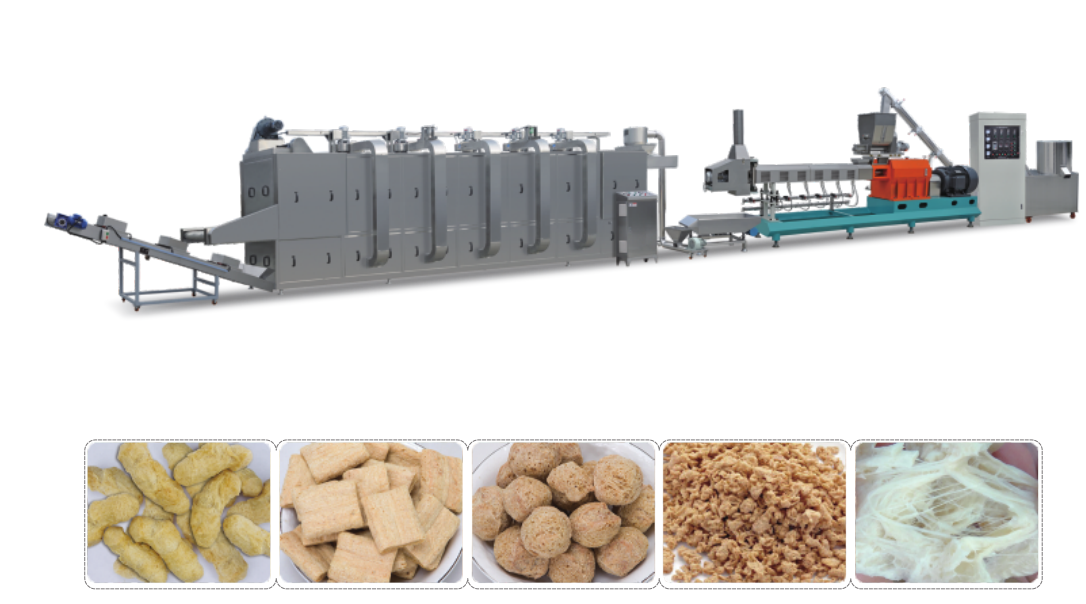
Texture rarely comes from a single ingredient; it emerges from how certain components behave under processing conditions. Fats and oils, for instance, do far more than add richness—their melting profiles dictate whether a spread feels silky at room temperature or waxy when chilled. Replacing solid fats with liquid oils in a formulation can collapse the entire mouthfeel, which is why developers often blend fractions to hit a precise slip point.
Hydrocolloids and modified starches function as the quiet architects of viscosity. A tiny shift in xanthan gum concentration might turn a pourable sauce into a clinging glaze, while the choice between native and cross-linked starch determines whether a filling survives freeze-thaw cycles without weeping. These ingredients interact with water availability, so their effect depends heavily on the surrounding matrix—adding the same gum to a high-sugar system can yield a completely different result than in a low-solids beverage.
Proteins and insoluble fibers contribute more than nutrition; they create structure through aggregation and capillary action. In plant-based meats, for example, the alignment of pea protein fibrils under shear is what mimics muscle striations, while microcrystalline cellulose prevents ice crystal growth in frozen desserts. Even small amounts of these components can override expectations, making texture a negotiation between chemistry and processing rather than a fixed recipe outcome.
Preconditioning and Moisture Control: The Overlooked Variables
Most production schedules treat preconditioning as a formality, but it actually sets the stage for how a material will behave later. A composite panel or coating substrate straight from a cold warehouse can carry a different moisture profile than the shop air suggests. If you skip the conditioning window, the surface may feel dry while the core still holds excess water. That hidden gradient often shows up weeks later as warping, poor bond strength, or delamination at the edges.
Moisture meters give a quick reading, but they rarely capture what is happening below the first few millimetres. For thicker sections, the real variable is the time needed for vapour to move through the material. A common mistake is to measure the surface, hit a target number, and start coating or laminating. The better approach is to track weight change over consecutive days or to use in-situ probes at different depths. Only when the readings stabilise across the thickness can you trust that the material is truly equilibrated with the surrounding environment.
Another overlooked detail is that preconditioning does not end once the process begins. Changes in shop humidity during a long run can reintroduce moisture into already-dried stock. Keeping a simple log of ambient temperature and relative humidity near the work area helps you spot those swings before they affect the final product. It may seem like extra effort, but the cost of rework from skipped moisture control almost always exceeds the time spent waiting for proper conditioning.
Adapting the Line for Soy, Pea, and Emerging Protein Sources
Reworking a line that once handled dairy or meat for soy, pea, or newer proteins rarely comes down to swapping one ingredient. Soy slurries often carry higher viscosity and can foul plate heat exchangers if the hold times aren't adjusted, while pea protein isolates tend to bind water differently and may need gentler pumping to avoid shear damage. The first practical step is mapping each stage—hydration, mixing, thermal treatment, drying—against the specific protein's behavior rather than assuming a universal setting.
Homogenization pressures that work for dairy can shatter the gel structure of certain plant proteins or create off-textures in extruded products. For example, fava and mung bean concentrates may require lower shear mixing and longer hydration windows to fully develop functionality. In some facilities, bypass lines and variable-speed positive displacement pumps offer a middle ground, letting operators shift between soy and pea runs without a full CIP cycle.
Emerging sources like chickpea, lentil, or fermentation-derived proteins add another layer: they often arrive as wet biomass or partially defatted flours with different particle sizes. A line set up for spray drying soy isolate might clog on a mycelium-based slurry unless the homogenizer valve geometry is changed and the dryer feed solids are lowered. Trial runs with small batches, plus real-time viscosity and pH monitoring, usually reveal where the bottlenecks sit before full production commits to a new protein.
Budget Planning Beyond the Initial Equipment Quote
When reviewing a capital equipment purchase, the quoted price rarely tells the whole story. Installation, calibration, operator training, and any necessary facility modifications can add 15–30% to the upfront figure before the equipment ever runs a single cycle.
Operational costs tend to surface later but hit harder. Consumables, preventive maintenance contracts, software licenses, energy consumption, and even the labor hours spent on troubleshooting all need a line in the budget. Without those numbers, a 'good deal' can quietly become a recurring drain.
Smart teams also set aside a contingency fund for the unexpected—shipping damage, delayed permits, or a learning curve that slows production in the first quarter. Building that buffer into the plan from day one prevents panic spending and keeps the project timeline intact.
Questions to Ask Before You Sign a Supplier Agreement
Before you sign, dig into the actual pricing mechanics. Ask how rates are calculated, whether there are volume discounts or price-lock periods, and what triggers additional charges like rush fees, storage, or minimum order penalties. Request a sample invoice based on a typical order so you can spot costs that never made it into the quote. This is where hidden expenses tend to surface.
Next, clarify what happens when things go sideways. How much notice do you need to give to cancel without paying a fee? Does the agreement automatically renew, and if so, when is the last day to opt out? These exit details are easy to overlook in the excitement of a new partnership, but they determine how trapped you'll feel if the supplier underperforms.
Finally, ask about liability and protection. If the supplier ships defective goods or misses a critical deadline, what remedies do you actually get—credits, replacements, or the right to walk away? Also confirm who covers legal costs if their product causes harm to a third party. Getting these answers in writing before signing saves you from discovering the gaps only after a problem occurs.
FAQ
It comes down to how tightly the line controls three variables: temperature across the barrel zones, moisture injection uniformity, and residence time distribution. High-end lines use segmented screw configurations and dynamic cooling dies so you can shift from a fibrous chicken-like shred to a spongy beef chunk without swapping out major hardware. Cheap lines often rely on manual adjustments that drift during long runs.
Not reliably. The cooling die is what aligns the protein melt into a laminar flow and prevents expansion, which is essential for a dense, muscle-like bite. Without it, you get puffier, snack-style textures more suited to cereal or pet food. Look for a die with independent temperature zones and a short, heated transfer pipe from the extruder.
Aim for 300 to 600 kg per hour of dry feed. That range balances labor costs and capital expenditure. Below 200 kg/h, you may struggle to cover the cost of an operator and quality lab. Above 800 kg/h, the line becomes harder to manage during recipe changes, and your downstream freezing or drying needs to be equally fast.
Soy protein concentrate and isolate remain the most forgiving because they hydrate evenly and build viscosity predictably. Pea and fava bean proteins are catching up but often require stricter temperature control to avoid off-flavors. Always request a trial run with your actual raw material, not the supplier's benchmark sample.
Ignoring screw and barrel wear patterns. By the time output drops 10%, the damage is already done. Schedule wear measurements every 500 hours and keep a spare set of screw elements for the kneading zones. Also, never shut down with product still in the die—it carbonizes and contaminates the next batch.
Yes, especially around utilities and floor space. A high-quality line may need a dedicated chilled water loop, compressed air at 7-8 bar, and a dust extraction system for protein powder handling. Some suppliers quote the extruder only, leaving you to source the feeding, cutting, and drying modules separately at a premium.
Request a detailed mass balance for your target recipe, including water and steam consumption per kilogram of finished product. Ask how many hours their testing facility has logged with your chosen protein type. And get a written guarantee for texture consistency across a 24-hour continuous run—not just a two-hour demo.
Conclusion
A dependable TVP production line rarely announces itself through glossy brochures. It shows up in the details that matter after months of continuous runs: extrusion barrels that hold consistent temperature across all zones, screw configurations you can adjust without pulling the whole line apart, and cooling dies that don't choke when you switch from a dense soy chunk to a delicate pea mince. Those are the differences you only notice when production stops and your maintenance team isn't cursing the manufacturer.
Texture starts before the extruder. Preconditioning time, steam pressure, and water distribution matter as much as barrel temperature or screw speed, yet they get skimped on most quote sheets because they're hard to see in a floor plan. If you're running multiple protein bases—soy, pea, fava, or blends—the line needs to handle different moisture absorption profiles without forcing you to change screw geometry every shift. Beyond the initial equipment price, budget for spare wear parts, utilities, and the inevitable trial batches that don't make product spec. And before signing any supplier agreement ask about their response time for screw replacements, whether they'll run a pilot on your raw material, and who owns the process data when you tweak settings. A good supplier will answer those without blinking.
Contact Us
Contact Person: LILY SUN
Email: [email protected]
Tel/WhatsApp: 0086-13969103791
Website: https://www.snackfoodmachinery.com/