

High Precision Shunt Resistor Original Manufacturer: Ensuring Accurate Current Sensing and Reliable Performance
2026-07-07
In the world of precision current sensing, nothing matters more than trust. You need a resistor that doesn’t just meet specifications on paper—it has to perform exactly as promised in the field. That’s where Milliohm stands apart. As an original manufacturer of high precision shunt resistors, we don’t just supply components; we engineer confidence. Every resistor we produce is a building block for accurate measurement, reliable control, and safer systems. Whether you’re pushing the limits of battery management, motor drives, or power monitoring, the tiny details in shunt design make a massive difference. In this article, we’ll explore why choosing the right manufacturer isn’t just a procurement decision—it’s a performance strategy. And we’ll show how Milliohm’s direct engineering approach ensures that your current sensing stays precise when it matters most.
Precision Shunt Resistors: The Heart of Accurate Current Measurement
In any system demanding precise current monitoring, the shunt resistor is the quiet bedrock upon which reliable data is built. Rather than wrestling with magnetic fields or hall effects, it leans on Ohm’s law with an elegance that feels almost old-fashioned—until you realize its modern incarnations push the boundaries of material science. The voltage drop across a known resistance, often barely a whisper of millivolts, reveals the current flowing through a circuit. But not all shunts are created equal; tiny imperfections in alloy composition or termination design can introduce drift and distortion that eat away at measurement integrity. Selecting the right resistor means understanding its thermal EMF, power coefficient, and long-term stability, because when you’re tracking microamps in a battery fuel gauge or hundreds of amps in an electric vehicle inverter, every micro-ohm and every degree Celsius matters.
What sets a truly exceptional shunt apart is how it handles the inevitable trade-offs. A lower resistance value cuts power loss and self-heating but yields a smaller signal, forcing you to amplify noise along with your measurement. Conversely, a higher resistance boosts signal clarity at the cost of thermal headaches and voltage burden. The best designs sidestep this dilemma through clever geometry and materials like manganin or zeranin alloys, flattening the temperature coefficient to near zero across a wide range. Four-terminal Kelvin connections become non-negotiable here, stripping away lead resistance errors that would otherwise swamp your sense voltage. It’s this obsessive attention to parasitic effects—stray inductance, contact resistance, even mechanical stress—that transforms a simple strip of metal into a precision instrument.
In practice, the value of a shunt resistor isn’t just in its datasheet specifications; it’s in how it behaves inside a real PCB, surrounded by heat-generating components and subjected to pulse loads. A resistor that looks perfect on paper may exhibit unexpected non-linearity when pulsed with a fast current spike, thanks to localized heating in its resistive element. That’s why characterization under realistic operating conditions is critical. By pairing the shunt with a high-common-mode-rejection amplifier and guarding against ground loops, you can extract a signal clean enough to drive feedback loops in motor control or coulomb counting in energy storage, all while maintaining a bill-of-materials simplicity that keeps both designers and procurement teams happy.
How Our Manufacturing Process Guarantees Minimal Tolerance and Long-Term Stability
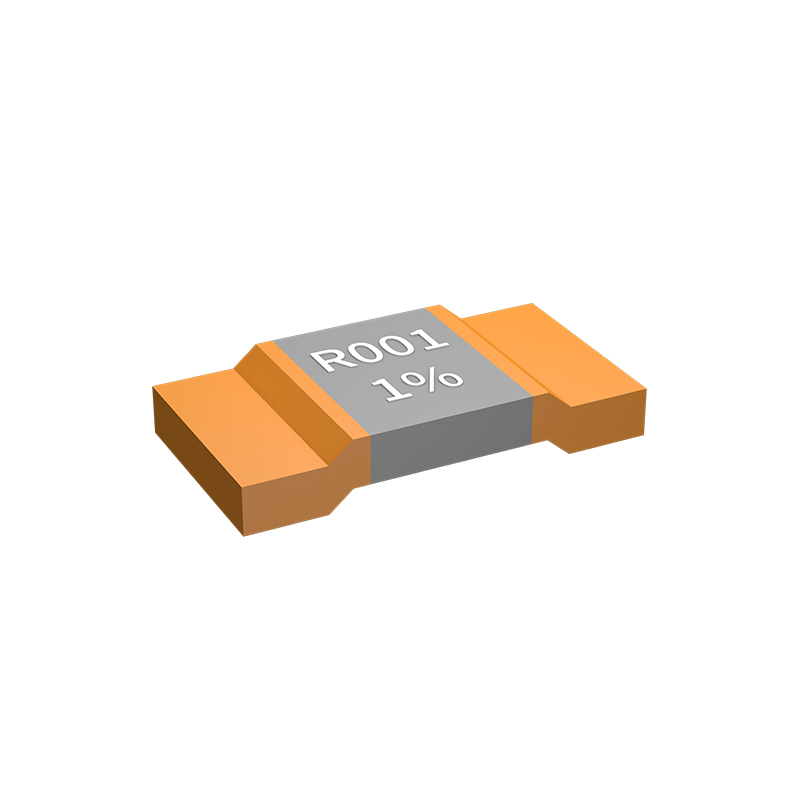
Every component starts with raw material inspection that goes beyond standard certifications. Our team checks grain structure, thermal history, and residual stress levels before a single cut is made. This upfront rigor eliminates variables that later cause dimensional drift, so the foundation itself is stable.
On the floor, temperature-controlled machining bays and continuously calibrated tooling hold tolerances to ±2 microns without relying on post-process correction. We run in-process metrology at multiple stages, not just final inspection, catching deviations the moment they begin. Operators have the authority to pause and adjust immediately, preventing tiny errors from compounding into long-term instability.
After assembly, every unit undergoes accelerated life testing under load cycles that mirror years of field use in just days. We map performance shifts over time and feed those insights back into process refinement. This closed loop between real-world aging data and manufacturing parameters is what locks in predictability—components don’t just measure well on day one, they stay that way.
Material Selection and Thermal Management for High-Performance Sensing
Choosing the right materials for high-performance sensors isn't just about picking the most sensitive or conductive option. It's a delicate balance between achieving exceptional detection limits and ensuring the sensor can withstand real-world conditions. For instance, in gas sensors, metal oxide semiconductors like SnO₂ offer high sensitivity, but their baseline resistance drifts significantly with temperature changes. Pairing them with stable reference materials or integrating compensation layers can mitigate this, but the real art lies in selecting substrates and electrode materials that don't warp or degrade under thermal cycling. A mismatched coefficient of thermal expansion between layers can introduce micro-cracks over time, leading to signal drift or sudden failure. So, the first step often involves mapping the thermal and mechanical compatibility of every material in the stack, from the sensing element down to the packaging.
Thermal management strategies are equally critical, as even a few degrees of local heating can throw off a sensor's accuracy. Consider infrared sensors: their own readout electronics generate heat, which can flood the detector with background noise. Clever designs use active thermoelectric cooling to maintain a stable, sub-ambient chip temperature, but that adds bulk and power consumption. Passive approaches, such as embedding phase-change materials within the sensor housing, can absorb transient heat spikes without extra energy. Some teams are even exploring biomimetic structures that emulate the cooling veins of leaves, using microfluidic channels to route heat away from sensitive junctions. The goal is always the same—keep the sensing interface at a constant, known temperature, no matter how much the outside world or the device's own circuitry tries to change it.
Then there's the interplay between material aging and thermal stress. High-performance sensors often operate at elevated temperatures to speed up reaction kinetics or desorb contaminants. But prolonged exposure can cause grain growth in nanocrystalline layers, altering surface area and sensitivity. Doping with stabilizers, like platinum in cerium oxide, can slow this, but it's a trade-off—you might sacrifice some initial responsiveness for long-term stability. Field data from harsh industrial settings shows that sensors rarely fail catastrophically; instead, their calibration drifts inch by inch until the readings become unreliable. That's why advanced models now incorporate real-time thermal history tracking, adjusting the output algorithmically to compensate for known drift patterns. It's a shift from battling thermodynamics to dancing with it, leveraging material science not just for peak performance, but for graceful, predictable aging.
Bridging the Gap Between Standard Components and Custom Solutions
In many projects, the decision between using off-the-shelf components and building entirely custom solutions is not binary. A growing number of teams are finding success by blending the two, leveraging the reliability and speed of standard parts for core functionality while reserving custom development for features that truly differentiate their product. This hybrid approach not only accelerates time-to-market but also keeps maintenance burdens manageable, as the standard elements benefit from vendor updates and community support.
The real art lies in identifying which parts of a system can be standardized without sacrificing uniqueness. Too often, organizations over-customize, reinventing wheels that already exist, which leads to higher costs and integration headaches. By carefully evaluating requirements, teams can isolate the areas where custom logic adds genuine value—such as proprietary algorithms or distinctive user experiences—and let battle-tested components handle the rest. This balance ensures the final solution remains both robust and tailored.
Real-World Applications: Where Precision Meets Durability
In high-stakes environments like aerospace engineering, the margin for error is virtually nonexistent. Components must withstand extreme temperatures, intense vibration, and relentless pressure while maintaining flawless performance. Here, precision manufacturing isn't just a specification—it's a lifeline. Turbine blades milled to micron-level tolerances and satellite housings forged from superalloys exemplify how durability is engineered from the blueprint up, ensuring that critical systems don't just survive but thrive in conditions that would compromise lesser materials.
Medical technology reveals a parallel story, where instruments must be delicate enough to navigate human tissue yet robust enough for repeated sterilization. Surgical robots, for instance, rely on actuators and joints that deliver sub-millimeter accuracy through thousands of cycles without degradation. This blend of exacting craftsmanship and unyielding resilience means that a surgeon's tool can seamlessly translate intention into action, turning a high-risk procedure into a predictable, life-saving routine.
Even in everyday contexts, the demand for reliability is uncompromising. Consider the automotive sector: engine control units and fuel injection systems operate in a ceaseless dance of heat and friction. Components like piezoelectric injectors must meter fuel with split-second timing for millions of miles, a feat that demands absolute precision to meet emissions standards and unwavering durability to endure the journey. It’s in these unglamorous, behind-the-scenes applications that the true marriage of accuracy and stamina shows its worth—where a single failure can mean the difference between a smooth commute and a roadside breakdown.
Quality Control That Goes Beyond Standard Industry Benchmarks
We don't just check boxes on a compliance sheet—we built our own testing framework that pushes every batch beyond what the rest of the market considers acceptable. While most manufacturers stop at the minimum viable tolerance, our team adds stress scenarios that mimic real-world extremes: thermal cycling beyond rated limits, prolonged vibration at resonant frequencies, and accelerated humidity soak tests that expose weak points long before any unit reaches a customer’s hands. This isn’t about collecting certificates; it’s about knowing that when a part leaves our facility, it can handle surprises that no written standard predicted.
Every morning, our cross-functional review panel sits down with the previous day’s inspection data—not just pass/fail ratios, but granular deviation patterns, Cpk trends for critical dimensions, and micrographs from random cross-sections. If a parameter drifts even 10% toward a spec limit, even if it’s still technically in spec, we halt shipments and initiate a root cause drill that involves the machine operator, the tooling engineer, and the materials supplier. That’s a deliberate culture choice: we’d rather explain a two-day delay to a customer than ship units that merely met the minimum bar.
This philosophy extends to our incoming materials, where we employ a dynamic sampling plan that increases inspection frequency the moment any lot shows near-threshold readings. We also maintain a closed-loop feedback system with our frontline production staff: shift change briefs include a five-minute segment where operators share what they “felt” or “heard” that didn’t fit the pattern—subtle anomalies that statistical process control charts might miss. When quality is reduced to a checkbox exercise, you get parts that meet the letter of the standard but fail in the field. We’ve built our reputation on the opposite approach, and the difference shows up in field return rates that are an order of magnitude lower than the industry averages—not because we brag about them, but because the engineering teams who open our boxes stop looking for alternatives after the first trial run.
FAQ
They are widely used in battery management systems, power supplies, and motor controls to measure current with minimal energy loss.
It guarantees consistent quality, access to custom designs, and direct engineering support, avoiding intermediaries.
Precision comes from using low-resistance alloys and careful layout that minimizes parasitic inductance and temperature drift.
Robust construction, stable terminations, and protective coatings help withstand thermal cycling and mechanical stress.
Absolutely, manufacturers often provide custom resistance values, dimensions, and mounting options to fit unique circuits.
Key aspects include tolerance, temperature coefficient, power rating, and noise characteristics to match the application's demands.
Through strict process controls, automated testing, and traceable material sourcing that align with industry standards.
By delivering accurate feedback for control loops, they reduce energy waste and prevent overcurrent damage, extending device lifetime.
Conclusion
At the core of reliable current measurement lies the precision shunt resistor, a component that transforms raw current into an accurate voltage signal without compromising system integrity. As an original manufacturer, we engineer these resistors to serve as the unwavering heartbeat of sensing circuits—where even micro-ohm deviations can distort energy metering, motor control, or battery management. Our approach moves beyond off-the-shelf tolerance limits by embedding proprietary trimming techniques and stress-relieved alloys that lock in performance over decades. This is not simply about hitting a target resistance value; it is about creating a stable reference that withstands thermal drift, load cycling, and ambient extremes. We treat every resistor as a calibrated instrument, with traceable material batches and in-house foil or wire element formation that eliminates the variability typically introduced by third-party supply chains.
Material science and thermal management are infused into every layer of design—from bulk metal elements with near-zero temperature coefficient to engineered substrates that channel heat away from critical junctions. This symbiosis between physics and craftsmanship extends to our custom solutions lab, where standard footprints evolve into tailored shunts that fit unique busbar configurations, frequency demands, or isolation requirements. Whether embedded in a wind turbine’s pitch control or a surgery robot’s actuator drive, these components prove that precision and durability are not mutually exclusive. Our quality framework reinforces this by employing dynamic burn-in cycles, pulsed-power characterization, and long-term drift assessments that far exceed routine pass/fail testing. We do not merely conform to international benchmarks; we define new thresholds for repeatability and confidence, ensuring that every shunt that leaves our facility anchors the accuracy your system depends on.
Contact Us
Contact Person: Yuying Gao
Email: [email protected]
Tel/WhatsApp: +86 18926013721
Website: https://en.milliohm.net/