

Export Warehouse Racking Solutions for Optimized Global Logistics
2026-08-07
In the fast-paced world of global trade, efficient warehousing can make or break your supply chain. Export warehouse racking solutions are not just about storage—they're the backbone of streamlined logistics. At Lanyuda, we understand that optimized racking translates directly to faster order fulfillment, reduced costs, and a competitive edge in international markets. Dive into how the right racking design can transform your export operations from chaos to clockwork.
Maximizing Vertical Space for Export Efficiency
Every extra layer of cargo stacked in a container or warehouse rack directly trims freight costs and speeds up order fulfillment. When floor space is limited, the only direction left is upward. Warehouses that install taller racking systems can store the same volume of goods in half the footprint, leaving room for faster pick-and-pack workflows. On the shipping side, careful stacking patterns reduce the number of containers needed per order—less dead air means better cube utilization and lower per-unit tariffs. It’s not just about stuffing boxes tighter; it’s about designing load plans that keep goods stable and accessible, so handlers spend less time rearranging and more time moving shipments out the door.
Making vertical space work for export starts with containers and pallets built for the purpose. Collapsible bulk bins, stack-only totes, and custom-designed crates can double or triple the load a single bay can hold without compromising ventilation or weight limits. In the warehouse, narrow-aisle lift trucks and vertical lift modules bring top-shelf inventory within easy reach, turning what was once dead overhead space into active pick faces. Even small changes, like standardizing box heights to match rack dimensions, can eliminate awkward gaps that waste volume and slow down inventory counts. The result is a operation where goods flow from receiving to staging with fewer machine moves and less handling downtime.
Tailored Racking Configurations for Diverse Cargo
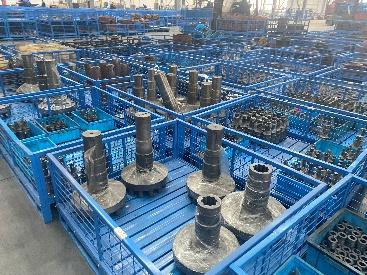
Every warehouse contends with a mix of items—from bulky pallets to slender piping, and from fragile cartons to heavy drums. Off-the-shelf racking rarely meets these varied demands without wasting space or compromising accessibility. That’s where configurations built around your actual inventory come into play. By analyzing load dimensions, weight distribution, and picking frequency, we design systems that assign every SKU its ideal location. Deep-reach setups swallow double-pallet depths for dense storage, while cantilever arms suspend long materials safely overhead. The result isn’t just more capacity; it’s a workflow where each rack face, shelf pitch, and bay width works as hard as your team does.
Dynamic storage needs call for adaptable racking. A bay that holds seasonal overstock in winter might convert to pick-face replenishment in summer. Our configurations plan for this flux with adjustable beams, clip-in decking, and modular add-ons that change without requiring a complete tear-down. We factor in future growth as well—reserving upright capacity or designing layouts that accept bolt-on extensions. This means your system evolves alongside your product line, whether you’re rotating through short-run batches or scaling to new SKU counts.
Safety and handling speed are baked into the layout, not just tacked on later. Clearances around forklift turns, rack protection at aisle ends, and ergonomic pick heights all stem from your specific cargo profiles and equipment specs. Unstable loads get purpose-built cradles or mesh decking; high-turn items sit at golden-zone levels to reduce bending and reaching. By treating every pallet position as a deliberate decision rather than a default slot, we eliminate the hidden time thieves—excess travel, double handling, and mis-picks—that eat into margins. The outcome is a racking ecosystem where diverse cargo finds its right home, day after day.
Streamlining Global Supply Chains with Smart Storage
Modern logistics networks face mounting pressure to deliver faster, more reliably, and with greater flexibility. Smart storage systems have emerged as a cornerstone for reshaping these networks, turning static warehouses into dynamic hubs that respond in real time to shifting demand. By integrating automated retrieval, intelligent sorting, and sensor-driven inventory tracking, companies can slash lead times and eliminate bottlenecks that once plagued cross-border operations. The result is a supply chain that breathes with market pulses, recalibrating stock levels and routing decisions without manual intervention.
Beyond speed, the true value of intelligent warehousing lies in its ability to synthesize data across the entire supply chain. With cloud-connected platforms, inventory visibility stretches from raw material suppliers to last-mile delivery vans, enabling predictive restocking and reducing costly overstock or stockouts. This coherence turns supply chain management from a reactive process into a proactive orchestration, where storage decisions upstream prevent congestion downstream. It's not just about storing goods; it's about strategically positioning them in the flow of commerce.
Adaptability separates smart storage from conventional setups. Flexible robotic systems can be reconfigured for new product lines in hours, not weeks, while AI-driven analytics forecast regional spikes weeks ahead. This agility proves invaluable when navigating geopolitical shifts, sudden tariff changes, or supplier disruptions. As global trade evolves, those who treat storage as a strategic lever—not a cost center—will build resilience that competitors can't easily replicate.
Ensuring Load Integrity Across International Transits
Maintaining load integrity during international transits is not just about securing cargo—it’s a layered discipline that starts long before containers are sealed. Every shipment demands a tailored approach, factoring in route-specific risks like port handling roughness, vibration from rail segments, and moisture exposure during ocean legs. This means selecting the right dunnage, blocking, and bracing materials that can withstand dynamic forces without shifting. For instance, using anti-slip mats between palletized layers and ensuring that weight is distributed evenly across the floor can prevent the domino effect of cargo collapse, which often goes unnoticed until the doors open at destination.
The handover points between carriers are where loads are most vulnerable. International transits often involve multiple modes—truck to vessel, vessel to rail—each with its own handling culture and equipment. Without a clear chain of accountability, a well-packed container can leave one terminal and arrive at the next with internal damage. Smart shippers now embed condition monitoring tools like shock loggers or tilt indicators that record rough handling. These tiny devices tell a story of what happened mid-transit, so disputes are resolved with facts, not finger-pointing. They also help refine packaging methods for future lanes.
Ultimately, protecting a load across borders hinges on communication between all parties. Detailed loading plans, photographs of the stowage arrangement, and pre-specified lashing points leave little room for error. When everyone—from the warehouse supervisor to the receiving crew—knows the load’s center of gravity and pressure points, they handle it with the respect it requires. This collaborative mindset, combined with periodic audits of packing procedures, builds a safety net that goes beyond compliance, turning load integrity into a shared operational standard rather than a box-checking exercise.
Reducing Handling Costs with Strategic Warehouse Layouts
Warehouse layouts often become an afterthought, but the way you arrange your floor can quietly drain your budget through unnecessary handling. Every extra step a worker takes, every pallet shifted twice, adds up to real money over time. A strategic layout isn't just about fitting more racks—it's about choreographing the flow of goods so that your most active SKUs sit right where picking happens, and slow movers don't clog premium space. When you cut out that silent waste, the savings show up fast on the bottom line.
Think about how often your team handles the same item before it actually ships. Without a thoughtful layout, products get received, moved to bulk storage, transferred to a forward pick area, then finally packed and staged—a journey that might cross the entire facility twice. By designing zones that match velocity and slotting items based on real order data, you can collapse those touches into a simple, direct path. The result isn't just lower labor costs, but less equipment wear, fewer errors, and a team that isn't exhausted by end of shift.
Technology can help, but it's the physical design that sets the ceiling on efficiency. Start by mapping your actual order profiles and travel patterns—heat maps of movement often reveal surprising bottlenecks. Then, be willing to break conventions: put packing stations in the middle of high-velocity zones, create dedicated cross-dock lanes for top sellers, or use vertical space to compact inventory closer to dispatch points. The key is to treat layout as a living system that evolves with your product mix, not a static grid. Even small adjustments can strip out thousands of wasted motions each month, and that's money you stop burning just to move things around.
Scalable Racking Systems for Growing Export Demands
When export volumes spike, storage solutions must keep pace without requiring a complete overhaul. Scalable racking systems are designed with modularity at their core, allowing businesses to add bays, levels, or accessories as order books fill. This flexibility means you can start with a configuration that matches current throughput, then seamlessly expand upward or outward to accommodate new product lines or larger shipment batches. Instead of over-committing to fixed infrastructure, companies invest incrementally, aligning storage capacity with real market demand and avoiding costly idle space.
Beyond simple addition of shelves, modern scalable setups integrate features like adjustable beam heights, interchangeable decking, and boltless connectors that let warehouse teams reconfigure layouts on the fly. These systems shine in facilities managing high-mix export orders—where pallet dimensions, load weights, and access patterns shift week by week. By eliminating the need for specialist tools or prolonged downtime, they turn racking from a static structure into a dynamic logistics asset that actively supports faster turnaround times and more accurate order fulfillment during peak export cycles.
FAQ
These are industrial storage frameworks built to handle shipments destined for overseas markets. They're common in freight forwarding hubs, distribution centers, and manufacturers that ship internationally. The racks need to support pallets, crates, and oversized items while staying stable under the demands of high-volume cross-border logistics.
It mainly comes down to smarter space usage and smoother workflows. By tailoring rack configurations—like push-back or drive-in systems—you reduce aisle congestion and speed up loading. That means containers get filled faster and orders hit their departure windows without last-minute scrambling.
Selective pallet racking gives easy access and works for mixed loads. Cantilever racks handle long, odd-shaped export items like pipes or lumber. For dense storage, drive-in racks maximize cube space. The best choice depends on your product mix, turnover rate, and whether you're using FIFO or LIFO inventory management.
Absolutely. Export racking often has to comply with stricter international seismic and safety standards. The finishes might need extra corrosion resistance for maritime climates. Also, the rack designs frequently accommodate non-standard pallet sizes or direct container loading, which isn't as common in domestic setups.
Yes, customized solutions like adjustable cantilevers or modular decks give you flexibility. For example, you can reconfigure beams to create bays that fit awkwardly crated machinery. It prevents having to floor-stack those items, which would eat up valuable square footage and complicate picking.
Start with load capacity—both weight per level and total bay capacity. Factor in future growth and the variety of pallet types you'll encounter. Check floor quality and ceiling height. Also, consider seismic zones and local building codes. Finally, think about how the layout will interact with dock doors and container staging areas.
Properly secured goods on sturdy racks reduce movement during handling. When you pick and pack from a stable system, items are less likely to shift or collapse inside a container. Some racking setups even allow direct loading into sea containers, minimizing extra touches and lowering the chance of impact damage.
Conclusion
Navigating the complexities of international trade demands a storage infrastructure that goes beyond mere containment. The very architecture of export warehouses dictates the rhythm of fulfillment, where every inch of vertical space can be converted into a competitive advantage. By adopting high-reach racking systems and dynamic storage mezzanines, facilities transform dusty overheads into active inventory zones, slashing the footprint needed for peak-season buffer stocks. This upward expansion isn't just about floor area ratios—it's a deliberate strategy to shrink retrieval times while accommodating the erratic cadence of global demand. Meanwhile, no single racking formula fits the kaleidoscopic nature of export cargo. Perishables in climate-controlled gradients, oversized machinery on cantilever arms, and fragile consumer goods within gravity-fed carton flow lanes each require engineered pathways that preserve product integrity from packing to port.
The connective tissue of a painless supply chain lies in how intelligently that stored inventory communicates with the world outside. Smart storage ecosystems lace radio-frequency tracking into shelving uprights, feeding live data into inventory management dashboards so that order pickers never wander—they glide. This digital backbone doesn't just accelerate throughput; it hardens load security for the long hauls across oceans and borders, with seismic-braced frames and load-stabilizing netting systems that turn containerised shipments into fortress units. Strategic layout paradigms further dissolve handling costs by positioning fast-moving export SKUs along the shortest path to staging docks, while slower reserves drift to the perimeter. And as emerging markets flare and trade volumes spike, modular racking architectures snap into new configurations without breaking operational stride. The result is a breathing warehouse organism that flexes to the exporter's ambition, rather than forcing the business into rigid steel constraints.
Contact Us
Contact Person: Johnny
Email: [email protected]
Tel/WhatsApp: +86 18151010686
Website: https://lydstorage.com