

Ergonomic Office Chair Supplier: How to Choose the Right One for Your Workspace
2026-10-05
Choosing the right ergonomic office chair supplier can make or break your workspace comfort and productivity. Too many businesses settle for generic chairs that leave employees aching by noon. If you're evaluating suppliers, you need more than a catalog—you need a partner who understands posture, durability, and long-term value. That's where OFCJNS comes in. In this guide, we'll walk through the key factors to consider before committing, so you don't end up with a warehouse full of regrets.
Match the Chair to the Way Your Team Actually Sits
Most teams have a few people who lean back during calls, a couple who hunch over laptops, and at least one person who perches on the edge like they're about to sprint to a meeting. Buying a row of matching chairs ignores that reality. Instead, watch where your team naturally gravitates—maybe the couch in the corner gets more use than the desk chairs, or the tall stools by the window are always occupied. That tells you more about what to buy than any catalog description.
If your team works in short bursts and constantly swivels between screens, chairs with smooth casters and a relaxed recline will get used far more than stiff conference models. For people who spend hours in deep focus, a firmer seat with adjustable lumbar support beats a plush lounge chair that looks great but leaves them slouching by 3 p.m. The point isn't to pick one perfect chair—it's to map seating options to the rhythms already present in the room.
Before you order anything, spend a few days noticing how people actually sit. Do they pull chairs away from desks to face each other? Do they end up standing around a high table even when chairs are free? Those patterns are your real spec sheet. Chairs that support those habits will get used, moved, and adjusted; chairs that fight them will just collect jackets.
Look Past the Adjustability Claims to the Mechanisms Underneath
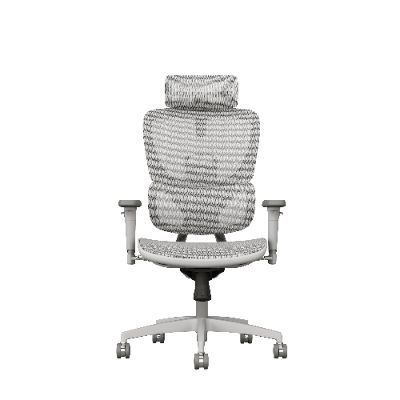
A chair with fifteen knobs and levers sounds impressive, but count the moving parts and you're still only seeing the surface. What actually matters is how those knobs connect to the frame, whether the tilt mechanism uses a cheap friction hinge or a properly counterbalanced spring, and if the lumbar support is a thin plastic plate bolted to the backrest or a flexible polymer rib that follows your spine. Manufacturers love to list adjustability as a feature, yet many of those adjustments are either redundant, poorly executed, or simply there to pad the spec sheet.
Take seat depth adjustment, for example. Some chairs let you slide the seat pan forward, but if the mechanism is a flimsy plastic latch with half an inch of play, you'll feel it wobble every time you shift weight. A better approach uses a steel rail with a locking lever that engages cleanly, holding the position without creaks or drift. The same goes for armrests: the number of directions they move means nothing if the underlying joint uses soft bushings that sag after three months. Look underneath the upholstery, and you'll quickly separate a genuinely ergonomic design from a marketing gimmick.
Before buying anything adjustable, try this: ignore the label and push, pull, and rock each moving part with a bit of force. Does the mechanism feel solid, or does it flex and rattle? Can you feel where the tension comes from — a real spring, gas cylinder, or just a screw tightened against plastic? The best designs don't need to brag about being adjustable because the underlying hardware does the work quietly, keeping you comfortable long after the shiny brochure has been recycled.
Compare Foam Density and Fabric Wear Ratings for Long-Term Comfort
Foam density tends to get overlooked until the couch starts to feel like a deflated air mattress. A low-density foam, say around 1.5 pounds per cubic foot, might feel cloud-soft on the showroom floor, but after a year of nightly TV marathons it compresses into a permanent valley. Higher-density foam—2.0 pcf or above—holds its shape far longer, providing consistent support under the seat and back. That doesn't mean you need rock-hard furniture; a medium-density core with a softer comfort layer strikes a better balance for everyday lounging.
Fabric wear ratings are equally easy to misread. A fabric rated for 15,000 double rubs on the Wyzenbeek test is fine for a guest bedroom, but it will start pilling or showing threadbare patches quickly in a family room. Jump up to 40,000 or 50,000 double rubs and you get a fabric that shrugs off kids, pets, and constant shifting. The catch is that some high-wear fabrics feel more like canvas than cotton, which can undercut the cozy factor. Look for a tight weave with a soft hand—plenty of performance fabrics now offer both durability and a warm touch.
Here's the real comparison: foam density dictates how the seat feels after two years, while fabric wear rating dictates how the surface looks and feels after the same span. Pair a high-density foam with a low-wear fabric and you'll have a comfortable but shabby-looking piece. Pair a soft low-density foam with a bulletproof fabric and the cover will outlast the cushioning. For long-term comfort, aim for at least 1.8 pcf foam in the seat core paired with a fabric rated 25,000 double rubs or higher. That combo handles daily use without turning your sofa into a park bench.
Verify Weight Ranges and Seat Dimensions for Every Body Type
A single “average” body model rarely survives contact with real users. Start by pulling hip width, sitting depth, thigh thickness, and body weight from your target population’s anthropometric data—not just the 50th percentile, but the 5th percentile female through the 95th percentile male. Build a verification matrix that lists those ranges next to each seat dimension, including cushion width between armrests, seat depth, and clearance under the front edge. This forces the design conversation away from a vague “standard size” and toward measurable fit for the smallest and largest people who will actually sit down.
Run seated trials with at least five distinct weight groups: very light, light, mid-range, heavy, and maximum rated. Use pressure mapping to check for hot spots under the ischial tuberosities and along the outer thighs. Watch how the cushion compresses at the upper weight limit—if the foam bottoms out against the frame, the seat depth and width effectively shrink. Have testers of different body types enter and exit repeatedly, noting any pinching at the hip or rubbing at the armrests. Adjust foam density, side bolster angles, and front edge profile until the pressure stays below discomfort thresholds across all groups.
Weight ranges interact with seat dimensions in ways that static drawings miss. A heavier occupant sinks deeper, which can rotate the pelvis and reduce effective lumbar contact; a lighter occupant may sit too high and slide forward because the cushion never compresses enough. Check that the seat width leaves at least a finger’s width of space at the outer thighs for the highest weight rating, and that the seat depth does not create pressure behind the knees for shorter legs. Locking mechanisms on adjustable seats should hold position without creep at both the minimum and maximum loads, with a 10–15% safety margin beyond the labeled rating. Only after those extremes pass can you trust the seat to fit every body type in between.
Ask About Assembly, Delivery, and What Happens If a Chair Arrives Damaged
Before you checkout, don't hesitate to ask how the chair arrives in the box. Some models come nearly fully assembled, while others require you to attach the backrest, arms, and base. A quick message to the seller can save you an afternoon of guesswork. Ask if they include printed instructions with clear diagrams or if there's an online video you can follow. Many smaller brands are happy to send a link, and that alone can make the difference between a smooth setup and a frustrating hour with mismatched bolts.
Delivery details matter just as much as the chair itself. Find out whether the carrier will bring the box to your door or leave it at the nearest depot. Ask about signature requirements, especially if you live in an apartment building or a house with a porch visible from the street. If the estimated window is vague, request a tracking number so you can plan to be home. A few sellers even offer white-glove service for an extra fee, which includes unpacking and assembly in your room of choice.
If the chair shows up with a cracked armrest or a torn seat cushion, act fast. Take clear photos of the damage and the original packaging before you move anything. Then contact the seller with a straightforward message: what arrived, what's broken, and what you'd prefer—replacement parts, a full return, or a partial refund. Most reputable companies will send out a new component without making you ship back the whole chair. Just be polite and specific, and keep every email in case you need to escalate.
Negotiate a Trial Period or Flexible Return Policy Before Committing
Don't wait until the invoice is in front of you to raise the issue of a trial run or an easier return path. Most suppliers have some wiggle room, but they rarely lead with it. Instead of accepting the standard all sales final line, ask what happens if the product or service falls short after the first few weeks. A simple question like 'Can we test this with one department first?' or 'What's your policy if we need to send back the unused portion?' often opens a conversation that a rigid purchase order never will. Get the answer in writing, because a verbal promise from a sales rep won't protect you when an invoice goes to accounting.
If a free trial isn't on the table, shift the terms rather than giving up. Offer a paid pilot that converts to a full contract only if specific metrics are met—shorter setup time, fewer errors, or a certain level of team adoption. Some vendors will agree to a 30-day return window if you cover shipping or restocking, which is usually cheaper than being stuck with the wrong tool. You can also ask for a swap option instead of a cash refund: exchanging for a different model or service tier feels less risky to the seller and still gives you an exit if the first choice doesn't fit. The key is to define 'success' before you sign, using numbers you already track, not vague impressions.
Be careful that the return or trial clause covers more than the core price. If you've paid for installation, training, or custom setup, ask whether those fees are refundable or credited toward a replacement. Otherwise a 'flexible' return policy can still leave you holding useless onboarding costs. And don't treat the negotiation as a standoff—frame it as a way to speed up a decision you both want. Sellers are often more willing to agree to a trial or return window near the end of a quarter, when closing a deal matters more than holding every line item firm.
FAQ
Pay attention to how they handle smaller details like spare part availability and whether they answer product questions without pushing you toward the most expensive model. Dependable suppliers tend to be specific about materials and adjustability instead of relying on vague comfort claims.
Ask for the technical sheet and look for lumbar support that shifts both up and down and in and out, seat depth that can be moved, and backrests that recline in stages. If the supplier can't provide this information quickly, that's a warning sign.
Only if your team includes a wide range of body types or work styles. Having options for armrest height, seat width, and upholstery becomes valuable then. For a small, similar-sized team, a well-designed standard model may be enough.
Find out whether they repair or replace specific components, how long the coverage lasts, and whether you can get a replacement part shipped without returning the whole chair. Also ask how long a typical support ticket takes to resolve.
Absolutely, especially for ten or more workstations. A week of real use in your office reveals pressure points and adjustment friction that product photos and spec sheets never will.
Look at their history with companies of your size, read comments that mention repeat purchases, and ask directly about their lead times and inventory. A supplier that shares clear timelines and doesn't overpromise is usually safer.
Not necessarily. Some expensive chairs charge for brand prestige rather than meaningful adjustability. Compare the actual ergonomic features, weight capacity, and warranty length instead of letting price drive the decision.
They forget to check the availability of replacement parts down the road. A chair that can't be repaired easily after a cylinder or armrest wears out becomes an expensive problem. Ask whether components for that model are stocked locally or shipped quickly.
Conclusion
Choosing the right ergonomic office chair supplier goes far beyond browsing catalogs and picking the sleekest design. Start by observing how your team actually sits throughout the day—do they lean forward, recline, perch on the edge, or cross their legs? A chair that matches those real-world postures will always outperform one that merely looks adjustable. Then, dig into the mechanics hidden beneath the marketing claims: test the tilt tension, lumbar depth, and armrest tracking yourself, because many chairs advertise “full adjustability” yet fail to hold position after a few weeks. Pay close attention to foam density and fabric wear ratings too—low-density foam flattens within months, and cheap upholstery pills or tears under daily use. Long-term comfort depends on materials that resist compression and abrasion, not just plushness on day one.
Equally important is verifying seat dimensions and weight ranges for every body type on your team. A chair that fits a 5'2" employee may be unusable for someone over 6'4", so check seat depth, width, and armrest clearance against your actual workforce. Before placing an order, ask the supplier detailed questions about assembly, delivery timelines, and what happens if a chair arrives damaged—will they send a replacement part or require a full return? Finally, negotiate a trial period or flexible return policy. A trustworthy supplier should let you test chairs in your own workspace for at least 14 days, because even the most impressive spec sheet cannot predict how a chair feels after eight hours. Real confidence comes from hands-on use, not from glossy brochures.
Contact Us
Contact Person: Diff Wang
Email: [email protected]
Tel/WhatsApp: +8613650281199
Website: https://www.ofcmeshchair.com/