

Electronic Expansion Valve Company Selection Guide for HVAC Professionals
2026-11-29
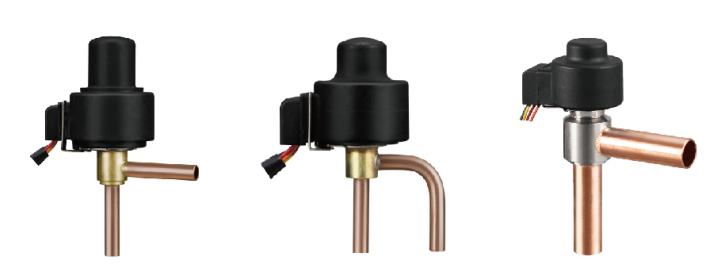
Selecting an electronic expansion valve is less about picking a part number and more about predicting how a system will behave at 4 a.m. on a January morning when the load is nothing like the design sheet. This guide is written for HVAC professionals who care about that difference. It walks through the selection criteria that actually decide field performance—capacity, modulation, refrigerant compatibility, and control stability—without the usual catalog filler. Along the way, HONGSEN offers a manufacturer’s view grounded in application, not just product promotion. If your current selection process feels like an educated guess, the next sections will help you replace it with something more reliable.
Separating Real Capacity Claims from Catalog Marketing Numbers
A catalog number rarely reflects what a battery or power bank delivers after conversion losses, voltage sag, and thermal throttling. The printed figure is usually measured at the cell level under a gentle discharge rate, not at the output port or under a heavy load.
Marketing teams also favor the largest defensible number because it makes a product easier to compare on a shelf. In practice, the useful energy depends on output voltage and the efficiency of the boost circuit, so a 20,000 mAh bank may only transfer about 12,500 mAh to a phone once the 3.7V cell voltage is stepped up to 5V or higher.
A more reliable approach is to look for watt-hour ratings and test conditions that specify cutoff voltage, temperature, and discharge current. If a brand refuses to publish those details or only cites milliampere-hours without context, the gap between the label and actual performance is worth treating with suspicion.
Why Low-Load Stability Tells You More Than Full-Load Ratings
A power supply can look flawless on paper when every rail is loaded to its nominal limit. Yet most electronics spend very little time at those peaks. A desktop machine idles, a radio runs at a fraction of its rated draw, and an LED driver sits near minimum output for hours. Under those conditions, the full-load specification says almost nothing about how clean or steady the rail actually remains.
Low-load operation pushes a converter into regions where control loops relax, switching frequencies shift, and feedback circuits lose resolution. Some units begin to pulse, producing ripple that never appears in a 100% load test. Others let the output creep upward as regulation becomes less strict, or they emit mechanical noise from inductors that only becomes audible when the switching pattern changes. These behaviours can cause sensor drift, flicker, or unexplained reboots long before a supply overheats or shuts down.
Checking stability at 5%, 10%, and 20% load therefore reveals more about the engineering behind a product than a single maximum-power figure. It shows whether the designer compensated for discontinuous conduction, whether the output capacitor choice suits the entire operating range, and whether the feedback loop remains predictable when current demand drops. In many real systems, that quiet, lightly loaded state is where the power supply actually lives.
Questions That Reveal a Vendor’s Refrigerant Testing Depth
Real testing depth rarely shows up in a brochure. Ask a vendor to describe the last time a refrigerant batch failed, what they found, and what they did with the remaining cylinders. If the answer is a long pause or a vague "we reject bad material," you are likely looking at a brokerage operation, not a testing program.
Follow with questions about instrumentation. A legitimate depth of testing includes gas chromatography calibrated for common refrigerants and contaminants, plus routine checks for moisture, acidity, high-boiling residue, and non-condensable gases. The vendor should be able to tell you which method they use, how often they run standards, and whether their equipment covers the full range of blends you actually buy.
Finally, ask how sampling works before a cylinder leaves the dock. Do they pull from the liquid phase after the cylinder has stabilized, or do they test only vapor? Do they retain samples for traceability after a batch ships? The details are not fussy; they separate vendors who test for confidence from those who test for appearances.
What Field Service Patterns Say About Long-Term Valve Reliability
Field service logs rarely lie. When technicians keep returning to the same plants for similar valve failures, the pattern usually points to a handful of root causes that spec sheets never capture. Cycling frequency, partial stroke testing habits, and the actual cleanliness of the media all leave traces in work orders long before a valve fails outright.
One of the clearest signals is the gap between scheduled maintenance and unscheduled callouts. Valves that are greased, stroked, and inspected on a calendar basis tend to show slower wear on seats and stems. The service history often shows a drop in emergency repairs once maintenance shifts from reactive to condition-based, especially for actuated ball valves in dirty or wet service.
Repeated replacements of the same component, such as seat inserts or packing, also stand out. This kind of pattern rarely means the part is defective; more often it points to pressure spikes, abrasive particles, or incorrect torque settings at installation. Field reports that mention alignment issues or control signal faults alongside mechanical wear usually indicate that reliability is being undermined by the surrounding system, not just the valve body itself.
How Control Logic Shapes Superheat Response in Actual Systems
Superheat response in real systems is not simply a function of valve position or sensor placement; it is shaped substantially by how the controller reads, filters, and acts on the measured variables. In many field installations, the control loop applies signal damping and rate-of-change limits that soften the raw evaporator dynamics. This means an aggressive thermostatic expansion valve may still produce a sluggish superheat trace if the controller sampling interval or averaging window is too broad. Conversely, a tight PID setup with minimal filtering can amplify minor refrigerant distribution noise into visible hunting at the sensing bulb.
The sequence and priority built into the control logic also matter. Some packaged systems enforce a minimum valve opening before superheat feedback is allowed to trim the position, while others switch between superheat control and suction pressure protection depending on operating envelope. That switching can create flat regions in the superheat response where the controller ignores small deviations, then a sudden correction once a threshold is crossed. The result often looks like a staircase rather than a smooth curve, particularly during rapid load changes or defrost recovery.
Field tuning adds another layer. Technicians commonly adjust gain and integral time around the dominant time constant of the coil, but if the logic includes adaptive gain scheduling based on evaporator temperature or compressor speed, the same valve and bulb combination can behave quite differently across the run range. In those systems, superheat response becomes a byproduct of how aggressively the controller rebalances after each disturbance, not merely a physical property of the refrigerant circuit.
Reading Support Quality and Training Gaps Before You Commit
Most vendors will show you a clean knowledge base and polished onboarding videos, but that rarely tells you how the product behaves when a real question lands in your inbox. Ask for a sample of actual support threads, not just curated case studies. Look for response times on messy, multi-step issues and whether agents understand the product deeply enough to skip the script.
Training gaps tend to surface only after the contract is signed. The initial demo covers the happy path, while the edge cases your team will hit in week two are treated as an afterthought. Request access to the same training materials your new hires would receive. If the documentation is thin, outdated, or written for a different version, assume that internal enablement will become your job.
Before you commit, run a small test. Send the support team a detailed scenario that mirrors your actual workflow and see what comes back. A slow or shallow reply is not a minor annoyance; it is a preview of how much hand-holding your team will need. Similarly, ask about ongoing training updates when the product changes, because a gap there compounds quietly every quarter.
FAQ
Look for manufacturers who discuss superheat control under partial load, not just nominal capacity charts. Ask how their stepper motor resolution and valve seat design hold up when evaporator loads shift repeatedly across a typical day.
A lot more than the datasheet suggests. If the valve body cannot be serviced without recovering the entire charge, or if the coil is not replaceable on site, downtime goes up. Prioritize designs that let technicians swap the coil or clean the inlet screen without pulling the whole line apart.
Controller drive frequency, step count, refrigerant type, and the actual operating range of the valve. Many mismatches happen because the valve works on paper with R410A but drifts with lower-density refrigerants or the controller output does not match the motor winding pattern.
Not necessarily. Step count is only part of the story. The port profile, internal leakage rate, and ability to close tightly matter more for stable low-load operation. A well-designed 500-step valve can outperform a poorly profiled 2,500-step valve in real systems.
Request the full capacity envelope at the system's minimum and maximum evaporating temperatures, not just a single rating point. Also ask for recommended sizing margin and whether the supplier offers selection software that accounts for varying condensing conditions.
Ask about production tests for hysteresis, internal leakage, and full stroke cycling. Solid suppliers can share pass criteria and serialized test data. If they hesitate on leakage tolerances or only mention ISO certification, keep digging.
Only if the diagnostic feedback leads to earlier fault detection without adding complexity for the technician. If the system logs step position, supply voltage anomalies, and abnormal hunting, it can shorten troubleshooting. Otherwise, a simpler proven valve may be the better long-term choice.
Conclusion
A surprising number of selection decisions still start and end with rated capacity, which is where catalog claims quietly drift away from installed behavior. Instead of asking for the widest modulation range, ask what happens at 25 percent load, after a defrost cycle, or when the condensing unit sits in a cold ambient. A valve that looks impressive at full load can oscillate badly once the system spends most of its hours at partial capacity. The vendors worth your time will share low-load stability curves, not just a nominal tonnage number, and they will be specific about refrigerant blends, oil circulation, and charge tolerances. If a representative cannot walk you through those test conditions, the printed performance figure is doing too much of the talking.
Field failure patterns and control behavior reveal more than a polished cut sheet. Ask what technicians replace most often, why the stepper motor or valve body fails in certain applications, and what changed in later revisions. Then push further into control logic: fast sensor sampling with weak filtering can create hunting just as easily as a slow actuator, especially on systems with long piping runs or varying evaporator loads. A vendor that treats superheat stability as a system-level problem will provide commissioning guidance, fault code explanations, and training that help your team avoid repeat callbacks. That kind of support often matters more than a few extra points of claimed range.
Contact Us
Contact Person: KOPASS HO
Email: [email protected]
Tel/WhatsApp: 8613606566112
Website: https://www.hongsenref.com/