

Custom Tumble Shot Blasting Machine Solutions for Precision Surface Finishing
2026-06-27
Achieving flawless surface finishes on intricate components is a constant challenge in precision manufacturing. Standard blasting equipment often falls short when faced with complex geometries or delicate substrates. That's where PuHua's custom tumble shot blasting machines step in—offering tailored solutions that combine gentle, uniform processing with high efficiency. In this post, we'll explore how these systems redefine surface preparation, deburring, and finishing for industries where perfection is the only benchmark.
Tailored Tumble Shot Blasting for Precision-Driven Industries
Every precision-driven industry operates with unique surface finishing demands, and off-the-shelf shot blasting setups rarely deliver the exacting results required. We build each tumble blasting system around your workpiece geometry, material sensitivity, and throughput goals. Variable speed drives, carefully selected media types, and adjustable blast angles allow engineers to dial in the exact surface profile—whether it’s preparing delicate aerospace fasteners for coating or deburring fine medical instrument components without dimensional compromise.
The real difference lies in how process control is embedded into the equipment. Real-time monitoring of media flow, dust extraction, and cycle timing ensures repeatability across batches, while the tumbling motion itself is tuned to prevent part-on-part impingement. For industries where micron-level consistency separates compliance from rejection, this tailored approach eliminates the guesswork. It transforms shot blasting from a generic finishing step into a documented, verifiable part of your quality chain.
Engineering Adaptive Surface Finishing Systems Around Your Parts
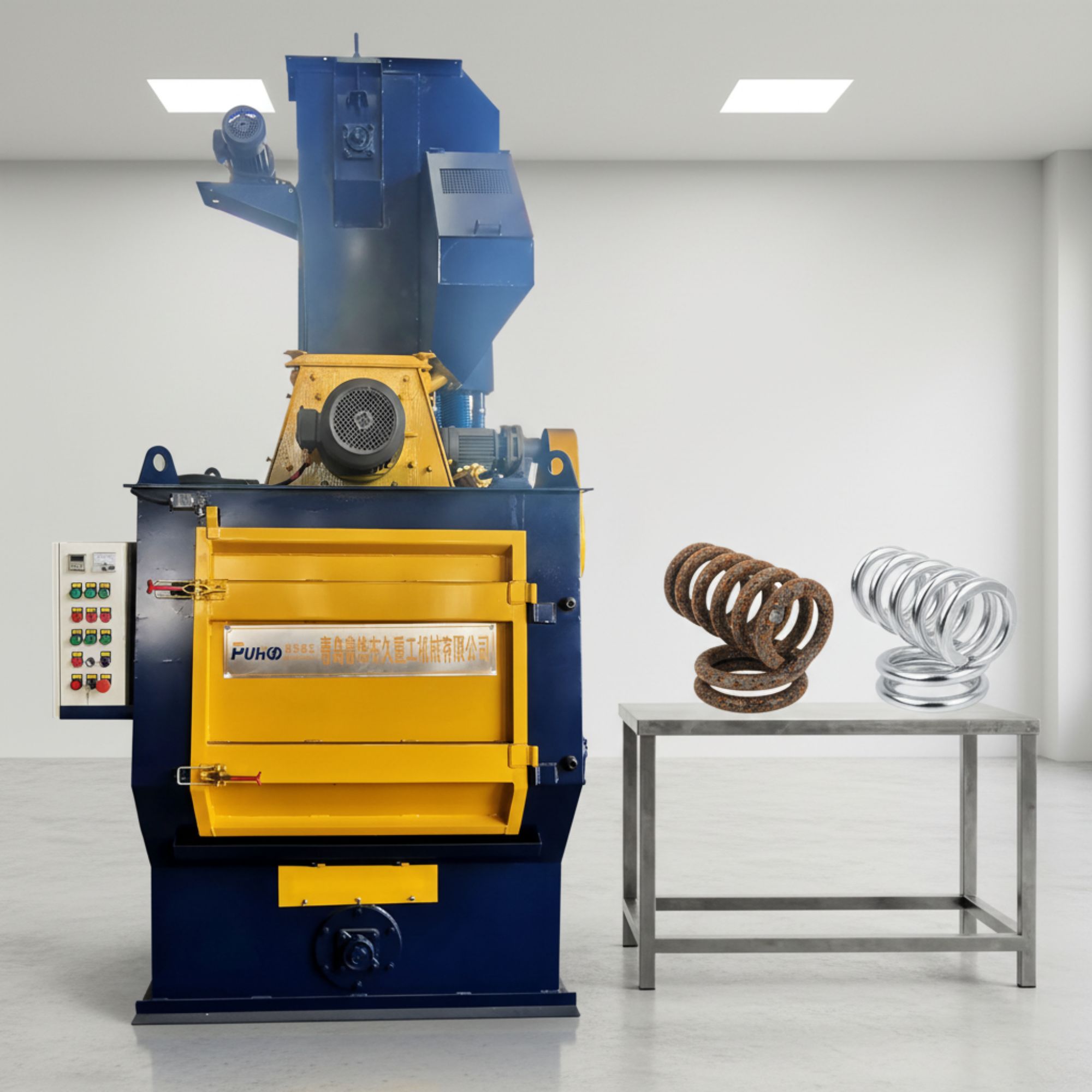
Traditional finishing methods often force parts into rigid processes, leading to inconsistent results and unnecessary rework. By designing adaptive systems that mold themselves to the geometry and material of each component, manufacturers can achieve a level of precision that static setups simply cannot match. These systems use real-time feedback to adjust pressure, speed, and tool paths, ensuring that every curve and edge receives exactly the right treatment.
The heart of this approach lies in the integration of sensors and responsive control algorithms. Rather than relying on pre-programmed routines, the finishing cell continuously measures surface roughness, temperature, or dimensional variance, then modifies its actions on the fly. This not only improves surface quality but also extends tool life and reduces waste. For parts with complex contours or delicate features, such adaptive behavior is critical to avoiding damage while maintaining tight tolerances.
Ultimately, engineering a finishing system around the part instead of the other way around shifts the focus from mere material removal to intelligent surface refinement. It allows shops to handle higher mix, lower volume work without constant retooling or manual intervention. The result is a more agile, cost-effective process that consistently delivers the required finish right where it's needed, part after part.
How Custom Blast Solutions Elevate Component Longevity and Performance
Custom blast solutions take a precision-first approach, tailoring abrasive media, pressure, and coverage patterns to the unique metallurgical and geometric demands of each component. By carefully selecting these parameters, we can induce a consistent compressive stress layer that actively resists crack initiation and fatigue failure. This targeted surface treatment doesn’t just clean or texture—it fundamentally alters how the material withstands repetitive load cycles, effectively extending the component’s operational life far beyond standard off-the-shelf blasting.
Another layer of performance gain comes from the ability to fine-tune surface roughness to optimize lubrication retention or coating adhesion. For instance, components destined for high-friction environments benefit from a meticulously controlled profile that holds oil films more tenaciously, while parts that receive protective coatings achieve stronger bond integrity. This dual benefit—reducing wear and preventing corrosion—often unlocks performance thresholds that generic blasting simply leaves on the table.
Perhaps the most overlooked advantage is the adaptability of a custom process to production scaling without sacrificing consistency. Whether addressing a single prototype or a high-volume production run, custom systems can integrate real-time monitoring and closed-loop adjustments. This ensures every part, from the first to the thousandth, exhibits the same enhanced surface integrity, translating directly to reliable performance in the field and fewer unexpected failures over the asset’s lifetime.
Precision Media Selection and Process Control for Delicate Finishes
Choosing the right media for a delicate finish isn't simply about picking a grit size off a chart. Materials respond uniquely to different abrasives—what works perfectly on hardened steel may ruin a soft aluminum component. For intricate surfaces, the shape, hardness, and density of the media all influence the final texture. Glass beads can deliver a smooth satin sheen, while crushed walnut shells clean without altering dimensions. The key lies in matching the media's characteristics to the specific demands of the workpiece, ensuring that surface integrity stays intact while achieving the desired aesthetic.
Even with ideal media, the outcome hinges on how the process is controlled. Variables like blast pressure, nozzle distance, and exposure time must be fine-tuned to avoid over-etching or uneven coverage. For delicate parts, lower pressures and longer working distances often preserve fine details. Automated systems can help maintain consistency, but operator intuition remains vital—knowing when a surface has reached that perfect balance between refinement and restraint is a skill developed through hands-on experience.
Combining thoughtful media selection with disciplined process control turns a routine operation into a repeatable art. It's about respecting the material's limits while pushing gently toward the intended finish. Whether it's restoring a vintage part or perfecting a custom fabrication, the difference shows in the lack of defects and the uniformity of the surface. Attention to these details separates work that merely looks clean from work that truly feels refined.
Streamlining Production Workflows with Purpose-Built Blasting Machinery
In heavy industries like mining and quarrying, the right blasting equipment does more than just break rock—it reshapes the entire workflow. Purpose-built machinery eliminates guesswork by matching drill patterns, charge capacities, and timing systems directly to site geology. The result is a smoother sequence from drilling to muck pile formation, where every blast feeds downstream processes with predictable fragmentation and minimal rework.
Instead of forcing a one-size-fits-all approach, these specialized units integrate with existing site logistics. Automated loading systems and pre‑programmed delay patterns reduce manual intervention, cutting downtime between blast cycles. When the gear fits the task, crews spend less time adjusting settings and more time advancing the face, seamlessly linking extraction to haulage and processing.
The quiet efficiency shows up in the details—fewer oversized boulders, consistent floor grades, and less wear on crushers. By aligning blasting output with the real needs of the mill, operations turn a disruptive event into a reliable step in the production chain. This isn’t just about bigger bangs; it’s about designing a blast that feeds the whole plant without friction.
Real-World Applications: Meeting Strict Tolerances Across Sectors
In aerospace manufacturing, components like turbine blades and fuselage parts are held to tolerances as tight as a few microns. A single deviation can compromise fuel efficiency or, worse, lead to catastrophic failure during flight. Engineers rely on advanced coordinate measuring machines and laser scanning to verify every contour, ensuring that each piece fits seamlessly into assemblies that endure extreme temperatures and pressures.
The medical device sector demands equal rigor. Orthopedic implants, such as hip replacements, require near-perfect spherical bearings to mimic natural joint motion. Even a minor surface irregularity can accelerate wear and cause discomfort or tissue damage. Here, precision grinding and electrochemical machining achieve surface finishes that bone and tissue can integrate with smoothly, reducing rejection risks and extending implant lifespan.
Automotive powertrain systems also reflect this insistence on tight tolerances. Fuel injectors must deliver droplets of exact size for efficient combustion, while transmission gears need flank geometry within sub-millimeter accuracy to minimize noise and energy loss. Automated inline gauging stations catch drift early, adjusting tool offsets in real time to keep production lines running without sacrificing the dimensional integrity that drivers demand for smooth, reliable performance.
FAQ
A tumble shot blasting machine is a type of equipment that uses centrifugal force to propel abrasive media against the surface of components. The parts are placed inside a rotating drum or belt, which tumbles them continuously while high-speed particles remove contaminants, scale, or roughness, leaving a clean and uniform finish.
Precision finishing is achieved through careful control of parameters such as media type, blast intensity, drum speed, and cycle time. The tumbling action ensures all surfaces are evenly exposed, while adjustable settings allow operators to target specific surface roughness values or remove minimal material, ideal for delicate or complex parts.
Typical users include aerospace, automotive, medical device manufacturing, and metalworking sectors. Any industry that requires deburring, descaling, peening, or cosmetic finishing of small to medium-sized parts—like fasteners, gears, or surgical instruments—can benefit from precise and repeatable surface treatment.
Customization options may include drum size and configuration, variable speed drives, multiple blast wheels, dust collection systems, and integration with upstream or downstream processes. Material handling features, such as automatic loading/unloading, can also be tailored to suit production volumes and part geometries.
Compared to manual methods or chemical processes, tumble shot blasting offers higher consistency, faster cycle times, and the ability to handle large batches. It is also more environmentally friendly than chemical treatments, as it uses mechanical energy rather than hazardous substances, and can often be recycled media.
Important considerations include part size, shape, material, required finish quality, production volume, and available floor space. Evaluating the abrasive media type and consumption, maintenance requirements, and energy efficiency will help ensure the machine meets both technical and economic goals.
Regular maintenance involves inspecting and replacing worn blast wheel components, checking and cleaning dust collector filters, monitoring media levels and condition, and lubricating moving parts. A preventive maintenance schedule, along with operator training, helps sustain performance and extend equipment life.
Conclusion
When standard blasting equipment can't meet the exacting demands of precision manufacturing, custom tumble shot blasting machines step in to bridge the gap. These solutions are engineered from the ground up around the specific geometry, material, and finish requirements of each component—whether it's a delicate medical implant, a fatigue-critical aerospace fastener, or a high-wear automotive gear. By tailoring everything from drum design and media flow dynamics to blast angle and intensity, manufacturers achieve consistent, repeatable results that off-the-shelf systems simply cannot deliver. This adaptive engineering not only refines surface texture and removes burrs with surgical accuracy but also introduces beneficial compressive stresses that measurably extend part service life. The outcome is a surface treatment that directly contributes to longer component longevity and improved performance under stress, allowing parts to resist corrosion, reduce friction, and endure millions of load cycles without premature failure.
Achieving a delicate finish on intricate parts demands more than just the right machine—it requires precise media selection and unwavering process control. Small variations in media size, shape, or hardness can mean the difference between a flawless satin finish and costly surface damage. That's why purpose-built blasting machinery integrates closed-loop controls, multi-stage separation, and real-time monitoring to keep every variable within a tight window. This level of discipline streamlines entire production workflows, eliminating secondary hand-finishing and reducing scrap rates. In real-world settings, from orthopedic device makers requiring sub-micron Ra values to electronics manufacturers cleaning miniature connectors without edge rounding, these systems repeatedly hold tolerances that push the limits of traditional finishing. By aligning machine capabilities with specific production targets, custom solutions transform surface preparation from a routine step into a strategic advantage—one that supports faster throughput, fewer quality rejects, and a finish that consistently meets the most stringent specifications across demanding sectors.
Contact Us
Contact Person: Bruce
Email: [email protected]
Tel/WhatsApp: +86 15166629468
Website: https://www.povalchina.com/