
Custom Swiss-Type Machine Factories: Driving Innovation in Precision Engineering
2026-05-18
In the world of precision engineering, the demand for custom Swiss-type machines is surging, driven by the need for intricate components in medical devices, aerospace, and electronics. Behind this evolution are specialized factories that blend traditional craftsmanship with cutting-edge technology to deliver tailor-made solutions. At the heart of this innovation is WINNRUI CNC, a leader pushing the boundaries of what these machines can achieve. From micro-machining to high-volume production, their approach redefines efficiency and accuracy—sparking curiosity about the untapped possibilities in your own manufacturing setup.
Beyond Standard: Tailoring Swiss-Type Machines for Unprecedented Accuracy
Most machine shops settle for what comes off the showroom floor, but when microns matter, Swiss-type lathes demand a more personal touch. Out-of-the-box tolerances rarely cut it for high-stakes work like medical bone screws or aerospace sensor components. Tuning the guide bushing clearance, dialing in the perfect bar pre-tension, and mapping thermal growth across hours of continuous production are just the starting points. These machines reward obsessive calibration—every tweak to the cutting edge geometry or adjustment to the spindle’s radial play compounds into a finished part that measures dead center in the tolerance band.
Precision isn’t just about the hardware; it’s a conversation between the setup and the material. A 316 stainless behaves differently under high-pressure coolant than does a free-machining brass, and the sliding headstock design amplifies those quirks. Real accuracy comes from adapting chip breakers and pecking cycles to match the alloy’s personality, often through trial cuts that go beyond manufacturer recommendations. The sweet spot emerges when the collet’s grip, the tool’s overhang, and the bar loader’s feed rhythm all sync up—a harmony you won’t find in any manual.
Ultimately, tailoring a Swiss machine means building a repeatable process around its eccentricities. Data logging spindle loads and tool wear patterns over thousands of cycles reveals drift trends that standard setups ignore. Small adjustments like laser-measuring bar stock straightness before loading or swapping in ceramic bearings for the live tools can shave off fractions of a micron other shops deem “good enough.” It’s this refusal to settle that transforms a flexible platform into a metrology-grade production cell.
When Microns Matter: The Art of Customizing Precision Engineering
Precision isn’t just a specification; it’s a quiet dance between intent and capability, where a single micron can dictate success or scrap. In custom engineering, those microns become the artist’s brushstroke—invisible to the naked eye yet defining the soul of a component. The challenge isn’t merely to hit a number but to understand how material memory, thermal drift, and tool wear conspire to shift reality by microscopic degrees. Every custom solution begins with listening to these whispers, turning rigid blueprints into living conversations between engineer and medium.
The artistry emerges in the choices that data alone can’t dictate: selecting a grinding wheel bond that sings at the right frequency, or hand-scraping a surface until it floats on a film of air. Machines can repeat, but they can’t intuit the way a journeyman feels a tenth-of-a-micron deviation through the soles of their feet. Customization demands this hybrid fluency—digital precision guided by tactile wisdom. When a part must interface with a legacy assembly never designed for modern tolerances, the engineer becomes part detective, part sculptor, teasing out a fit that respects both thousandths of an inch and decades of wear.
Ultimately, working at the micron level is an exercise in humility. It reminds us that no surface is truly flat, no edge perfectly sharp, and that every measurement is a compromise with uncertainty. The art lies in mastering that compromise, delivering a piece that performs its function with a grace that belies the chaos of its creation. It’s not about chasing zeros on a report; it’s about crafting a quiet certainty that, when the part slides into place, it belongs there as if it grew into the assembly on its own.
From Blueprint to Reality: Inside a Bespoke Swiss-Type Factory
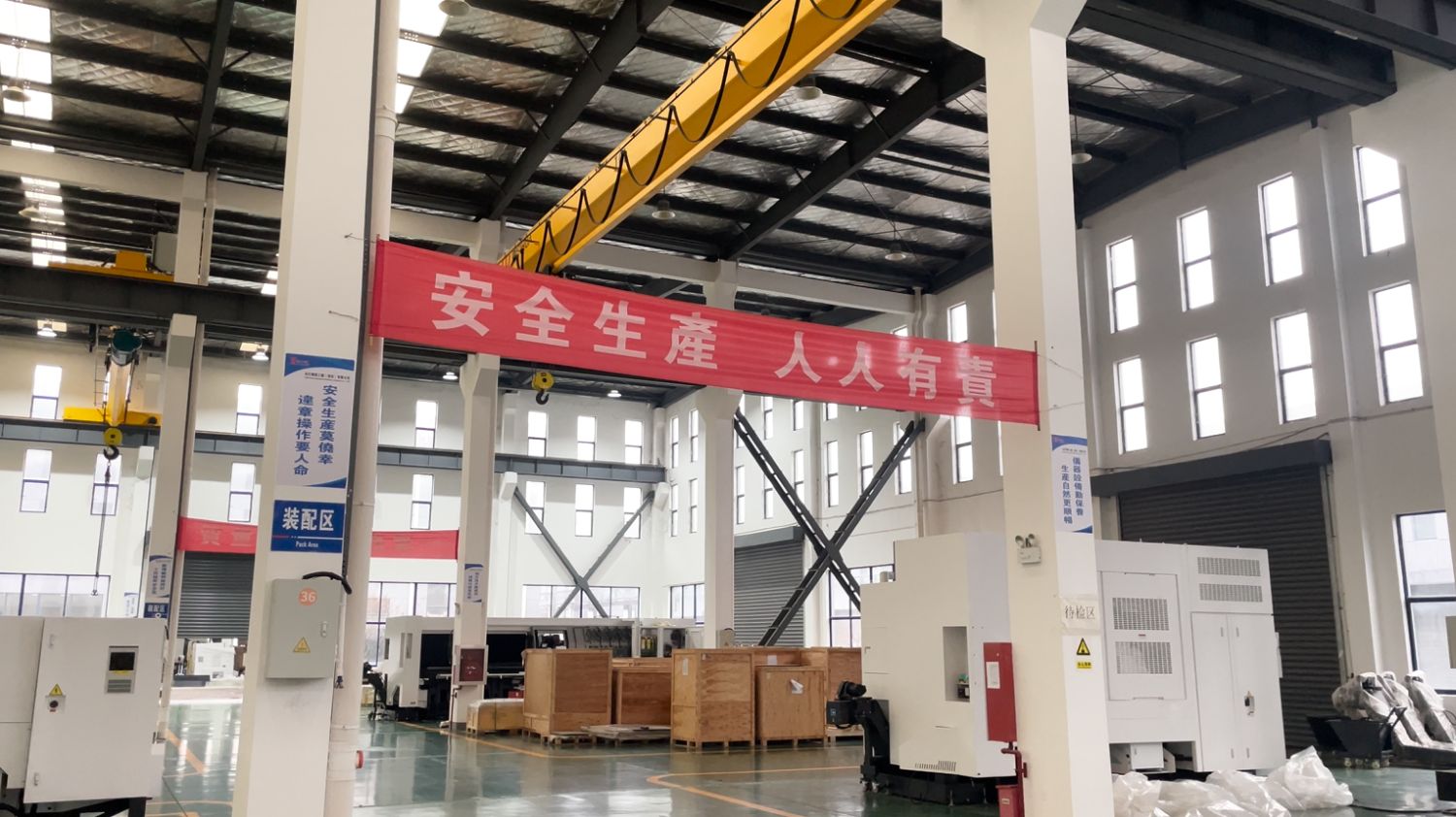
Walking through the doors of a bespoke Swiss-type factory feels less like entering a production floor and more like stepping into a precision laboratory. Every square foot hums with intention, where engineering sketches and client visions are transformed into tangible, microscopic marvels. The air itself seems calibrated—temperature and humidity tightly controlled to ensure that each sliding headstock lathe operates within micron-level tolerances. Here, the journey begins not with raw steel, but with a conversation: a deep dive into a customer’s unique challenge, whether it’s crafting bone screws for the medical industry or creating tiny connector pins for aerospace applications. From those early talks, a blueprint emerges, often refined through obsessive iteration before a single chip of metal is cut.
The machinery is undeniably the star, yet it’s the human expertise that orchestrates the symphony. Programmers translate abstract geometries into lines of G-code, while seasoned machinists coax life from bar stock with a blend of gut instinct and decades of acquired wisdom. The Swiss-type lathe, with its sliding headstock and multi-axis capability, becomes an extension of their will, guiding 20-foot bars through a choreography of turning, milling, and cross-drilling—all without the material ever leaving the guide bushing. It’s a ballet of synchronized spindles and live tooling, often completing complex parts in a single cycle that would elsewhere demand a parade of secondary operations. The result? Parts so consistent that inspection becomes almost a formality, with measurements often falling within a handful of microns.
What truly sets a bespoke facility apart, though, is its obsession with the invisible. Beyond the gleaming machines lie systems for coolant filtration that rival those in semiconductor fabs, and tool management protocols that track every micro-endmill’s life down to the second. Waste is engineered out, not just in material but in motion: part collection trays are custom-designed, and robotic arms gently retrieve finished components, preserving their pristine surfaces. It’s a relentless pursuit of perfection where every detail serves the final goal—delivering not just parts, but confidence, sealed in vacuum-packed trays and accompanied by certificates of conformance. The blueprint, once a static document, has become a living process that breathes quality into every component that leaves the floor.
Redefining Limits: How Custom Machining Fuels Innovation in Small Parts
When off-the-shelf components fall short, custom machining steps in to bridge the gap between imagination and reality. It takes the boldest design concepts and carves them into functional precision, even at a microscopic scale. This is not just about making things smaller—it's about unlocking performance that was previously out of reach. By tailoring every contour and tolerance to the task, engineers are free to chase breakthroughs without being boxed in by what's available in a catalog.
The true magic happens in the intersection of advanced tooling and material science. Exotic alloys, engineered polymers, and even ceramics become workable canvases for laser and multi-axis machining. Tiny components with complex internal geometries emerge from deliberate, layer-by-layer subtraction, holding tolerances that measuring instruments struggle to confirm. Each part becomes a critical enabler, allowing entire systems to operate faster, endure more stress, or consume less energy.
Beyond the technical specifications, custom machining fosters a culture of iterative innovation. Prototypes evolve overnight, failures become quick learning cycles, and niche applications find their perfect fit without the burden of mass-production constraints. In industries ranging from medical devices to aerospace, these small, bespoke parts quietly redefine what's possible, proving that the only real limit is the willingness to push beyond conventional boundaries.
The Human Touch in Automated Precision: Craftsmanship Meets Swiss-Type Technology
In the world of Swiss-type machining, the dialogue between human skill and automated precision is far from one-sided. While the machines execute micron-level movements with unwavering consistency, it's the machinist's eye that catches a subtle vibration before it becomes a defect, or an experienced hand that fine-tunes a setup based on the unique grain of the metal. This isn't about overwatching a process; it's about a symbiotic relationship where intuition refines the programmed routine, turning raw efficiency into an art form.
Decades of hands-on craftsmanship have quietly infiltrated the digital backbone of these advanced lathes. The knowledge of feeling a perfect chip formation—that spiraling ribbon of steel—now translates into optimized tool paths that anticipate wear and thermal drift. Each automated cycle carries the legacy of countless hours at the bench, where the sound of a cut determines the final surface finish. Modern Swiss-type technology doesn't erase this heritage; it amplifies it, demanding a workforce that blends tactile wisdom with coding literacy.
The result is a discreet yet profound evolution in manufacturing. In sectors where tolerances are measured in microns and complexity rivals clockwork, the differentiating factor isn't the machine's speed or spindle count—it's the human capacity to problem-solve in real time. A craftsman might adjust a program to compensate for a batch of slightly oversized bar stock, something no sensor suite could elegantly handle alone. This fusion ensures that even in the most automated environments, the hallmark of true quality remains a distinctly human signature.
Future-Proofing Micro-Manufacturing: Custom Solutions for Evolving Industries
Micro-manufacturing thrives on adaptability, not just precision. As industries shift from mass production to hyper-specialized, agile workflows, the ability to reconfigure tools, processes, and even entire production cells without massive downtime is what separates leaders from the rest. Custom solutions embedded at the machine level—think modular fixtures, software-defined toolpaths, and on-the-fly quality checks—turn potential disruption into a competitive advantage.
We’ve seen how off-the-shelf equipment often falls short when client demands suddenly change. That’s why we design systems that evolve alongside the products they make. Whether it’s a medical device startup pivoting to a new material or an aerospace supplier needing tighter tolerances overnight, the infrastructure should never be the bottleneck. Flexible automation, where software updates replace hardware overhauls, keeps micro-manufacturing nimble.
True future-proofing also means anticipating the hidden costs of scaling down. Energy consumption, floor space, and skilled labor all become magnified when working at micro-scale. By co-engineering with clients, we bake in efficiency from day one—selecting actuators that sip power, designing compact cells that fit through standard doorways, and creating intuitive interfaces that reduce training hours. It’s about building not just for today’s spec, but for next year’s unknown challenge.
FAQ
A Swiss-type machine, also known as a Swiss-style lathe, uses a sliding headstock to feed bar stock through a guide bushing, enabling precise machining of long, slender parts. Custom-built versions go beyond off-the-shelf configurations by incorporating specialized tooling, automation add-ons, or unique spindle arrangements tailored to a manufacturer's specific part geometry or production volume—essentially turning a versatile platform into a dedicated high-efficiency solution.
By integrating advanced kinematic designs, real-time process monitoring, and thermally stabilized structures, custom Swiss-type factories are tightening tolerances down to the sub-micron level. They’re also pioneering hybrid processes—like combining turning with laser cutting or in-process metrology—so complex parts often come off the machine fully finished, eliminating multiple setups and boosting both accuracy and speed.
You’ll find their output in medical devices (think bone screws and surgical instruments), aerospace (hydraulic fittings, sensor housings), electronics (connectors, pins), and high-end automotive components. Essentially, any sector that demands small, intricate metal components with flawless surface finishes and tight dimensional control leans on these shops.
Look beyond the equipment list. Genuine custom capability shows in the engineering team’s expertise—do they have application engineers who collaborate on design-for-manufacturability early in the project? Check if they offer modular machine platforms that can be reconfigured with interchangeable tooling units, and whether they maintain a portfolio of proprietary automation for handling tricky geometries or materials.
It’s a combination of machine rigidity, specialized cutting tool geometry, and optimized coolant delivery. Top factories often customize high-pressure coolant systems (up to 2000 psi or more) and employ vibration-dampening tool holders. They might also tune the machine’s kinematics to reduce tool deflection, and use adaptive control algorithms that adjust feeds and speeds in real time based on sensor feedback from the cutting zone.
Absolutely—modern custom Swiss-type factories are designed for scalability. With bar feeders, parts conveyors, and integrated post-process measurement, they can run lights-out 24/7. The customization often targets high-volume efficiency: for example, a factory might develop a quick-change pallet system for tooling that slashes changeover times, making it cost-effective to run millions of parts annually.
Automation is the backbone. Beyond simple bar loaders, innovative factories implement robotic part collection with vision-based sorting, automated deburring, and inline quality checks that feed data back to the machine for tool wear compensation. Some even use digital twins to simulate and optimize the entire process before cutting metal, minimizing down-time and scrap.
Conclusion
The evolution of Swiss-type machining has always been synonymous with precision, but custom Swiss-type machine factories are taking this legacy further. Rather than settling for off-the-shelf limitations, these facilities craft bespoke solutions that push accuracy into sub-micron realms. The process begins long before metal touches tooling—engineers collaborate with clients to reimagine what’s possible, translating abstract needs into tangible blueprints. Inside these factories, every component is scrutinized, from spindle configurations to guide bushing geometries, ensuring that the final machine isn’t just assembled but purpose-built. What sets this apart is the fusion of human expertise with automated systems; seasoned machinists imbue each customization with an artisan’s insight, refining toolpaths and damping characteristics in ways algorithms alone cannot replicate.
This marriage of craft and computation unlocks new frontiers in micro-manufacturing. Where standard machines falter on exotic alloys or complex medical devices, tailored Swiss-types excel, producing components with flawless surface finishes and tight tolerances that redefine industry benchmarks. The impact ripples across sectors—from aerospace to watchmaking—enabling lighter, more intricate parts that elevate product performance. As industries evolve, these custom solutions aren’t just reactive; they are designed to anticipate future demands, integrating modular architectures that adapt to new materials and production paradigms. In essence, custom Swiss-type factories don’t merely supply machinery—they cultivate an ecosystem of continuous innovation, turning precision engineering into a dynamic craft that grows alongside the ambitions of those who rely on it.
Contact Us
Contact Person: Tim
Email: [email protected]
Tel/WhatsApp: +86 15522553731
Website: https://www.winnrui-cnc.com/