
China Woven Geotextile Solutions for Durable Road Construction and Erosion Control
2026-09-10
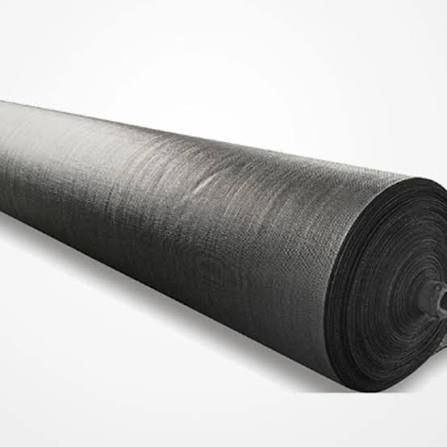
China’s woven geotextile solutions have quietly become the backbone of durable road construction and erosion control—yet not all fabrics earn the name. JInseed Geosynthetics Solution stands out by engineering high-tenacity polypropylene yarns into a tight, dimensionally stable web that locks aggregates in place and filters water without clogging. Whether you’re reinforcing a highway base or armoring a riverbank, the difference is in the weave—and the partner behind it.
Locking Aggregate in Place: Woven Geotextiles Under Heavy Traffic
When haul trucks rumble across an unpaved access road, the top layer of crushed stone rarely stays put on its own. Individual particles shuffle sideways, sink into the subgrade, or get kicked up by tires. Woven geotextiles interrupt this cycle by forming a taut, high-modulus layer that grips the base course from below. The fabric's interlaced yarns create small but consistent points of contact, letting aggregate interlock into the openings instead of sliding over a slick surface. Under repeated axle loads, that locked structure behaves like a thin, flexible slab—spreading stress outward before it reaches the soft ground underneath.
Not all woven fabrics handle heavy traffic the same way. The key is the balance between aperture size and tensile strength. If the openings are too large, fine particles escape and the layer loses density. If they are too tight, water ponds on top and the stone never bites into the weave. A well-matched geotextile lets the aggregate project slightly into the yarn grid while still keeping the subgrade separate. This mechanical bond holds even when trucks brake, turn, or accelerate sharply—situations that normally tear up an unpaved surface within weeks.
Field results show that woven geotextiles under heavy traffic do more than just save on stone replacement. They reduce rutting, keep the road crown from flattening, and extend the time between regrading passes. Contractors often notice that the first few passes of a vibratory roller are enough to seat the aggregate firmly, because the fabric resists lateral spread from the start. The payoff is less downtime, fewer potholes, and a working surface that stays structurally intact even when loaded far beyond what the raw subgrade could support on its own.
Rain, Runoff, and Slope Stability: A Geotextile-First Approach
Rainfall rarely acts alone on a slope. The moment water begins to infiltrate, soil suction drops and pore pressures rise, weakening the bonds that hold the slope together. A geotextile-first approach addresses this sequence before it escalates, placing permeable fabric at the critical boundary where runoff meets soil. Instead of relying solely on surface armoring, this method uses the geotextile to filter, drain, and separate, keeping fine particles in place while letting excess water escape.
On steep or newly graded slopes, nonwoven geotextiles laid in horizontal benches or wrapped at the toe create stable drainage paths that reduce saturation zones. The fabric prevents soil piping and maintains the designed slope angle even during repeated wet-dry cycles. When combined with vegetation, the geotextile holds seeds and moisture long enough for roots to establish, then continues to act as a root-reinforcement layer that resists shallow sliding.
Compared with concrete or riprap, a geotextile-first strategy adapts to ground movement, installs with lighter equipment, and leaves the surface more natural. The key is specifying the right fabric weight, permittivity, and UV resistance for the site, and anchoring the geotextile so it does not become a slip plane itself. Projects that start with this drainage-focused layer tend to recover faster after intense storms and show fewer deep-seated failures linked to uncontrolled infiltration.
Inside China’s Woven Geotextile Plants: Quality Control That Shows
Walk into any serious woven geotextile facility in Shandong or Jiangsu and you'll notice the inspection stations before the warehouse door. Rolls aren't just sampled; they're unrolled on backlit tables where even slight weave drift or missed picks show up immediately. Operators run a gloved hand along the selvedge, check width every few meters, and log the time. That kind of tactile checking catches what automated cameras can miss.
Tensile grab tests and trapezoid tear tests happen right on the floor, not in a distant lab. A strip clamped into the machine gets pulled until it breaks, and the number is written on the roll tag with a marker. If the value drops below spec, the entire batch from that loom gets held. Some plants also do a quick UV exposure check using a handheld meter on incoming polypropylene tape, rejecting lots before weaving starts if stabilizer levels look thin.
The best plants tie these checks to specific operators and shifts. A woven geotextile roll leaves with a small paper ticket showing who wove it, who inspected it, and the exact test results. Buyers who visit can ask to see the day's reject pile; it's often more telling than any certificate. When the reject pile has rolls with a single thin streak marked in red, you know the plant treats defects as events, not statistics.
Choosing Fabric Strength Without Overspending
Many people assume thicker fabric means stronger fabric, but durability depends far more on fiber type and weave than on weight alone. A tightly woven plain cotton can resist tearing better than a thicker, loosely constructed textile. The real trick to saving money is spotting fabrics that deliver high strength at a lower price point—like polyester-cotton blends, which combine the abrasion resistance of polyester with the comfort of cotton, and often cost less than either pure fiber while lasting just as long.
When shopping, focus on tear strength and tensile strength rather than just ounces per yard. Give a corner of the fabric a quick tug or try to rip a small sample—resistance tells you more than the label. Another money-saving move is buying undyed greige goods or overstock fabric, which often sell at a discount yet perform identically to their finished counterparts. Canvas and oxford cloth are reliable options, but pay attention to grades: a 10-ounce canvas may be a smarter buy than a 12-ounce version if your project doesn't demand extreme toughness.
Finally, resist the urge to over-buy for "just in case" scenarios. Choose the strength level that matches your actual use, and you'll avoid paying for performance you don't need. Sometimes two layers of mid-weight fabric stitched together cost less and work better than one layer of ultra-heavy cloth. Keep an eye on local fabric store clearance bins or remnant tables—you can often find high-quality, durable material at half the regular price.
Lay It Once, Lay It Right: Field Tricks for Road Builders
Nobody on a paving crew wants to tear out fresh asphalt because a grade pin was off by half an inch. Getting the subbase right before the paver ever moves is the difference between a smooth ride and a resurface call two years later. Run a string line down the centerline and check your crown every ten feet—not just at the edges where the eye naturally catches dips. If the gravel underlay is even slightly high in the middle, the mat will bridge and crack under load. A cheap laser level and an extra pass with the roller on soft spots beat any amount of hand-shoveling after the mix is down.
The paver operator sets the tempo, but the screed crew keeps the thickness honest. Watch the auger chamber: if it's less than half full at the ends, the head of material pushes unevenly and you'll see waves in the mat. Adjust the flow gates before you start the pull, not halfway through a 200-foot run. And don't trust the automatic grade controls blindly—a worn ski or a dirty sonic sensor will lie to you all day. One old hand I worked with kept a pocket mirror to check the trailing edge of the screed while walking backwards. He caught more low spots than the entire electronic rig.
Finally, work the joints while they're still workable. The moment the roller operator stops paying attention to the butt joint against yesterday's lane, you've created a future pothole. Use a thin paint line as your overlap guide, not a guess from the seat. If the mix starts to drag and tear instead of compact, it's already too cold—pull back and reheat the edge with a torch rather than forcing it. Road building is half patience, half knowing when to break your own schedule to save a mile of misery later.
From Highway Shoulders to Riverbanks: One Material, Many Jobs
A geotextile fabric starts its day as a silent workhorse under the gravel of a highway shoulder, where it separates sharp aggregate from soft subgrade and keeps ruts from forming after heavy rain. The same roll can be unspooled along a riverbank, pinned against the slope, and hidden beneath a layer of riprap or soil. There, it filters moving water, lets it drain through, and holds fine particles in place so the bank doesn’t slough into the current.
What makes this material so adaptable isn’t a single high-tech trick but three basic jobs done well: separation, filtration, and reinforcement. On a road project, it stops layers from mixing under load. Near a stream, it acts like a strong, permeable skin that resists erosion without blocking groundwater flow. Contractors keep choosing it because one truckload can solve problems that used to require separate deliveries of sand, crushed stone, and concrete.
From the flat, sun-baked shoulder of a rural highway to the steep, brushy edges of an urban creek, the material quietly proves that the best infrastructure tools are often the least visible. It doesn’t need maintenance, doesn’t rust, and doesn’t mind being buried for decades. That kind of low-profile reliability is exactly why engineers reach for it again and again when the job site changes but the underlying need—keeping soil and water in their proper places—stays the same.
FAQ
They use high-tenacity polypropylene or polyester yarns woven into a tight grid, which locks aggregate in place and spreads loads evenly. Many factories in Shandong and Jiangsu run continuous production lines, so you get consistent tensile strength without paying for unnecessary branding.
The open weave slows surface runoff and holds soil particles while letting water drain through. Instead of forming a solid barrier that can balloon or tear, the fabric works with the ground, reducing rill erosion and helping vegetation establish.
Usually not. Road-grade woven geotextiles are optimized for separation and reinforcement, while erosion control grades prioritize UV resistance and drainage. Reputable suppliers will recommend different weights and weave patterns depending on the site conditions.
Ask for tensile strength tests in both machine and cross direction, CBR puncture resistance, apparent opening size, and UV stability data. Also confirm the roll dimensions and whether the supplier can provide third-party inspection before shipment.
Buried under pavement, it is protected from UV and typically lasts as long as the road structure itself, often 20 years or more. The key failure mode is installation damage, so using the right overlap and aggregate size matters more than extra polymer additives.
They serve different jobs. Wovens offer higher strength at lower elongation, so they are better for separation and reinforcement under heavy loads. Nonwovens are preferred for filtration and drainage. Some projects use a composite or place a nonwoven over a woven layer.
For standard rolls in stock, 7 to 15 days is common. Custom weights, widths, or UV treatments might add another week. It is wise to confirm the production schedule before finalizing project timelines, especially around Chinese New Year or peak construction seasons.
Chinese mills often have lower raw material and labor costs, but you should compare on delivered price, including freight and import duties. Request a sample with a certified lab report to verify that the lower quote still meets your specified tensile and puncture values.
Conclusion
Road crews who have watched aggregate vanish into soft subgrade know the real value of a woven geotextile that grips under load. Chinese mills have moved beyond generic polypropylene tapes: the best lines now run high-tenacity filaments with tightened weave counts so the fabric locks stone in place instead of letting it shuffle sideways under heavy traffic. You can spec a 200 kN/m product on paper, but what shows up on site depends on how seriously the plant checks roll weight, tensile grab strength, and CBR puncture resistance before shipment. Field tricks matter just as much—pulling the fabric taut before the first dump of base rock and overlapping at least 300 mm on curves keeps the separation layer working through years of rutting cycles, not just the first monsoon.
Where water is the main enemy, a geotextile-first approach changes the math. Instead of waiting for rills to become gullies, contractors are placing woven fabric beneath riprap and vegetated slopes, letting it filter soil while allowing runoff to pass without building pore pressure. On a riverbank job in the middle Yangtze, the same 400 g/m² roll that stabilized a highway shoulder also armored a bend against scour—one material, no special ordering. That flexibility is the quiet advantage of buying from Chinese factories that have moved inspection cameras onto the production line, because a missed weave flaw in a slope wrap is not something you discover until after the rain has done its work. Choosing a fabric with a realistic safety factor, not the highest tensile number on the brochure, keeps budgets sane while the ground stays where it belongs.
Contact Us
Contact Person: Jerry Qiu
Email: [email protected]
Tel/WhatsApp: +65 84265294
Website: https://www.jinseed-geo.com