
China Water Jet Sewer Machine Company Selection Tips for Municipal Drainage Teams
2026-11-17
Ask any municipal drainage crew what happens when a 'good enough' jetter meets years of grease, roots, and silt, and you'll hear the same story: downtime, missed deadlines, and repair bills. The real difference starts long before the first nozzle hits the pipe—it starts with how you evaluate suppliers in China's crowded water jet sewer machine market. In this guide, we break down practical selection tips for drainage teams, including what to look for beyond the spec sheet and why AMJET has become a reference point for crews that can't afford guesswork.
Matching the Jet Truck to the Lines Your Crew Actually Clears
Crews often default to the biggest unit on the yard, but a jet truck that outmuscles the line can turn a routine clear into a flooded vault or a washed-out lateral. Look at the pipe diameter, the distance between access points, and what actually tends to accumulate, such as grease, roots, sand, or hardened scale, before picking the truck. A 4-inch residential lateral rarely needs the same flow and pressure you would send through a 24-inch storm trunk.
Match the hose reel and nozzle to the job as much as the pump. If your crew spends most shifts pulling a 1/2-inch hose through 6-inch lines, a truck built around a 1-inch hose and heavy flow will slow them down and blast through soft blockages instead of cutting them loose. Pay attention to the nozzle angle and flow rating, because a jetter only clears what the water can actually reach from the nozzle position.
It also helps to track what gets cleared week to week instead of relying on a one-size spec sheet. When the truck matches the lines your crew really works, you see fewer return calls, less wasted water, and less wear on hoses and fittings.
How to Tell Whether a Factory Builds Machines or Only Assembles Them
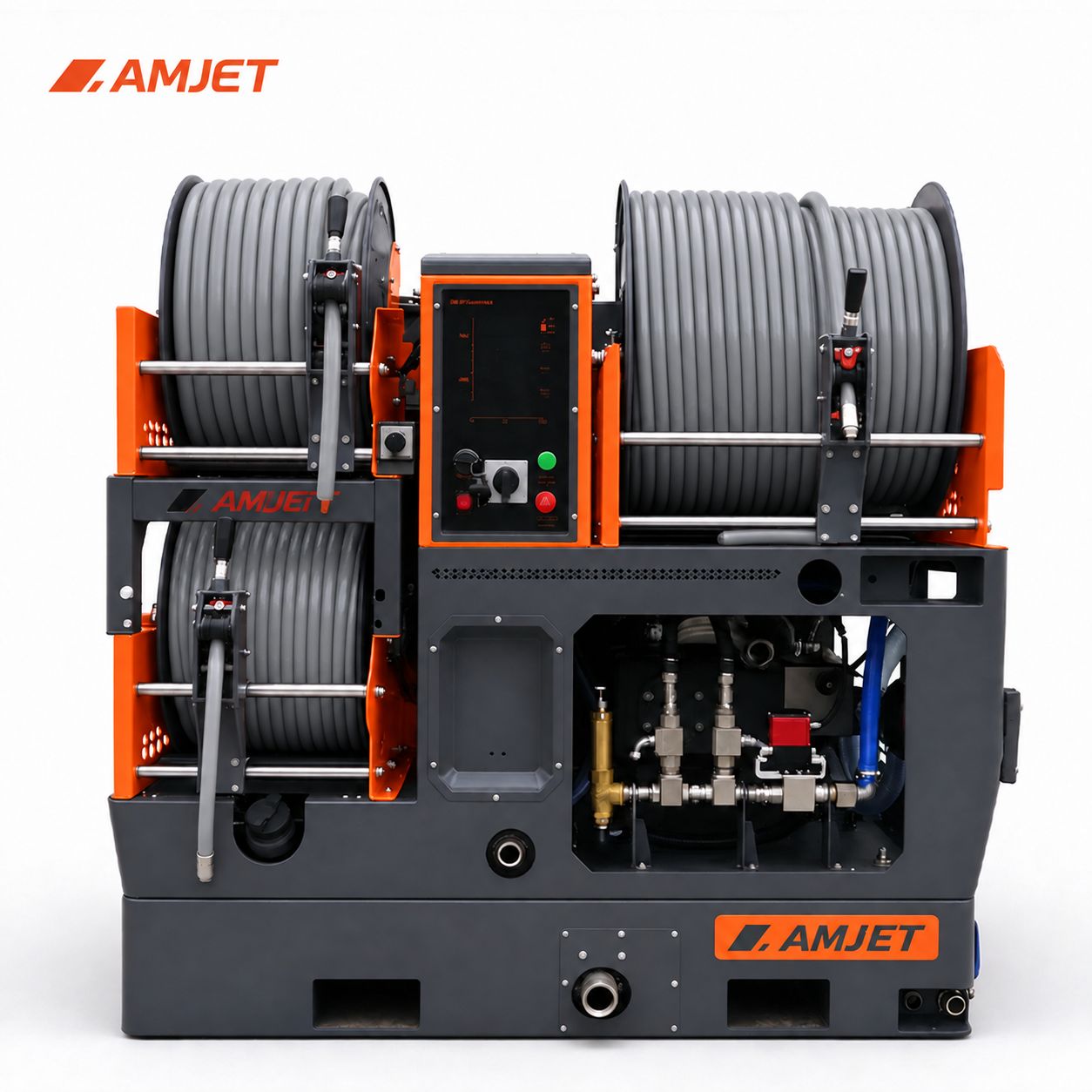
A quick look at the shop floor usually tells you more than a brochure. Factories that genuinely build machines tend to run cutting, welding, and finishing operations under the same roof, and you can hear that work happening. Assembly-focused plants are quieter in comparison: their main activity is unboxing subassemblies, bolting them together, and running a short test before shipping.
Another useful signal is how the factory handles revisions. When a hole needs to move or a frame rail has to be shortened, a builder can walk the change over to the in-house machine shop and have the part modified that day. An assembler, by contrast, usually has to send the request back to the component supplier and wait for a corrected batch, which affects both lead time and the tone of the conversation.
Traceability also separates the two. A builder can typically show records for raw material, in-process inspection, and serial numbers assigned before final assembly. An assembler often traces only finished modules or purchased kits. That difference becomes obvious when a customer asks for a custom frame size, a special guarding layout, or a replacement part three years later.
Pump Pressure and Flow Rate Numbers Worth Pinning Down Before You Buy
Most pump listings lead with a big PSI or GPM figure, but that headline number rarely matches how the pump will behave once it is hooked up to real plumbing. Pressure drops as flow increases, so a unit that advertises 60 PSI at the outlet may only deliver 20 PSI at the nozzle when you actually need meaningful volume. Look for a pressure-flow curve or at least two published data points, not a single peak rating.
Flow rate is just as easy to misread. A pump rated at 5 GPM might move that much water in an open discharge test, yet lose half of it once you add fittings, filters, bends, or elevation change. Before buying, add up the demand of the fixtures or tools you plan to run at the same time, then compare that number against the pump's flow at the pressure your setup requires. If the manufacturer only shows maximum flow at zero head, treat it as a rough ceiling rather than a promise.
It also helps to separate working pressure from peak or shut-off pressure. Peak pressure tells you how hard the pump can push against a closed valve, but it says little about everyday performance. Where possible, pin down the pressure at the flow rate you actually need, and leave a small margin for dirty filters, longer hose runs, or future additions. That one extra set of numbers can save you from buying a pump that looks strong on paper but falls flat in your specific setup.
Why the Lowest Quote Often Becomes the Most Expensive Machine Over Time
A low initial price can be the most expensive line on a purchase order, because it rarely reflects what was left out to reach that number. Frames get lighter, bearings become smaller, and controls are stripped down to the absolute minimum. Once the machine is bolted to the floor, those omissions show up as misalignment, vibration, and fault codes that nobody on the maintenance team has seen before. Each unplanned stop turns the purchase discount into lost output, and the gap between the cheap machine and a more carefully built competitor starts closing within the first few months.
The real cost migrates into operations. A machine that was cheap to buy often needs more frequent tool changes, consumes more air or electricity per cycle, and asks for recalibration at shorter intervals. Those costs are quiet, so they don't appear on the original comparison sheet. Over three or four years, the accumulated energy waste and service hours can overtake the price difference that made the low quote look like the responsible choice in the boardroom.
Then there is the exit. Low-cost equipment tends to age faster and carry little residual value because replacement parts are difficult to source and the build quality doesn't inspire confidence in a second owner. What began as a saving on the invoice ends as a machine that is expensive to keep, expensive to repair, and almost impossible to sell. In that sense, the lowest quote isn't the cheapest option; it is just the one that delays most of the bill.
Parts, Training, and the After-Sales Support Drainage Teams Forget to Lock In
Most drainage teams spend their budget on the pump or vacuum unit itself, then treat spare parts as an afterthought. That works until a mechanical seal or float switch fails during a storm, and the replacement is three weeks out. Locking in a parts kit before delivery—impeller, wear plates, gaskets, seals, control relays—prevents a small failure from turning into a shutdown.
A one-hour walkaround at commissioning is not training. Operators need hands-on time with the actual control panel, fault codes, and bypass procedures, not just a manual left on a shelf. When turnover is high, that knowledge disappears unless the supplier provides structured, repeatable sessions and simple reference cards tied to the unit’s specific configuration.
After-sales support often gets reduced to a phone number. The teams that stay operational clarify response times, remote diagnostics access, and loaner pump availability before signing. Otherwise the first real test is a failed check valve at 2 a.m., and the person on the other end has no record of the site or the equipment.
Pre-Shipment Tests That Catch Weak Points Before the Machine Leaves China
Most factories only run a machine long enough to confirm it switches on. We push further. Every unit is loaded to at least 85 percent of rated capacity for a minimum of four hours, with the spindle, feed motors, and cooling circuit running in the same sequence it will see on your floor. This repeated cycle exposes loose terminal blocks, undersized wiring, and heat buildup around drives that a short no-load test misses. When a weak point appears, the part is changed on the spot and the test restarts from zero, not patched and passed in a hurry.
Hydraulic and pneumatic systems get a separate round of pressure-drop checks after the main run. Hoses, manifolds, and seals are left under pressure overnight; any drop beyond a tight tolerance triggers a full leak trace before packing. We also pull the inspection covers after testing to look for metal fines, uneven wear on guideways, or signs of cavitation in the pump housing. That final look catches problems that would otherwise only show up after the machine is installed overseas, where a small repair turns into a long delay.
FAQ
Look beyond catalogs. Ask about pressure and flow combinations that match your typical pipe diameters and blockages, inspect weld quality and pump brand on actual units, and request references from cities with similar infrastructure.
Ask for a written response-time commitment, confirm whether they have local service partners or remote diagnostic support, and request the list of spare parts they stock in your region. A factory visit or live video walkthrough of their service area can reveal a lot.
Not automatically. The risk usually comes from mismatched specs, thin frames, or no local parts support. If the pump, hose reel, and engine are from recognized brands and the frame is reinforced, a lower price can be reasonable. Focus on lifecycle cost, not just invoice price.
Match flow rate and pressure to the job. For heavy silt and root intrusion, higher flow often clears debris better than extreme pressure alone. Also check hose length, reel drive type, nozzle kit variety, and whether the unit can handle recycled water if your city requires it.
Choose a supplier that uses standard fittings, widely available pumps, and simple controls. Ask your mechanics to review the parts list before purchase. Avoid highly customized electronics that only one factory can replace.
Ask for a detailed datasheet with working pressure, flow, engine or motor specs, dimensional drawings, a full spare parts list, warranty terms, and a recent certificate or test report. If they hesitate to provide these, that is a red flag.
It depends on access and daily use. Truck-mounted units carry more water and suit large mains and long shifts. Trailer-mounted units are easier to maneuver in narrow lanes and can be towed by existing vehicles, which often fits smaller municipal teams.
Request case studies from other city drainage departments, ask for photos or videos of similar units in operation, and contact one or two past municipal buyers directly. A company that mainly sells to farms or factories may not understand the duty cycles and reporting needs of a public works team.
Conclusion
Municipal crews often buy horsepower and tank size, but matching actual lines matters. If your city mostly clears 6-inch laterals, a machine rated for big trunk sewers wastes fuel and maneuverability; if you run long interceptor lines, an undersized jetter stalls. Ask the factory what pipe diameters, lengths, and sediment loads their models were actually tested on. Also check whether they manufacture frames, reels, and water tanks themselves or simply bolt together purchased components. A plant that cuts and welds its own steel can adjust hose reel placement, tank baffles, and axle loading; an assembler often cannot. Before signing, pin down pump pressure and flow rate at the nozzle, not just engine output. For grease and sand, high flow at moderate pressure clears better than maximum pressure with low volume. Get a pump curve for actual nozzle sizes.
Low quotes usually hide thin steel, smaller hydraulic coolers, or no local parts inventory. A unit that sits idle six weeks waiting for an imported valve costs more than a slightly pricier machine with common spare parts bundled. Municipal teams should lock in training hours, wiring diagrams, and a written response time for breakdown calls before deposit. Pre-shipment testing is another point many skip: request video of the machine running at full pressure with the exact pump and reel you ordered, plus a load test with full water tank. Weak points like hose guide friction, relief valve chatter, and overheating often show up in that footage. If a factory is vague about test procedures or after-sales support, walk away. The goal is not the cheapest truck on paper; it is a machine that stays out of the repair bay during wet season.
Contact Us
Contact Person: Mike
Email: [email protected]
Tel/WhatsApp: +86 19545555505
Website: https://www.amjeting.com/