
China Plastic Pipe Machine: What Every Manufacturer Should Consider Before Buying
2026-11-02
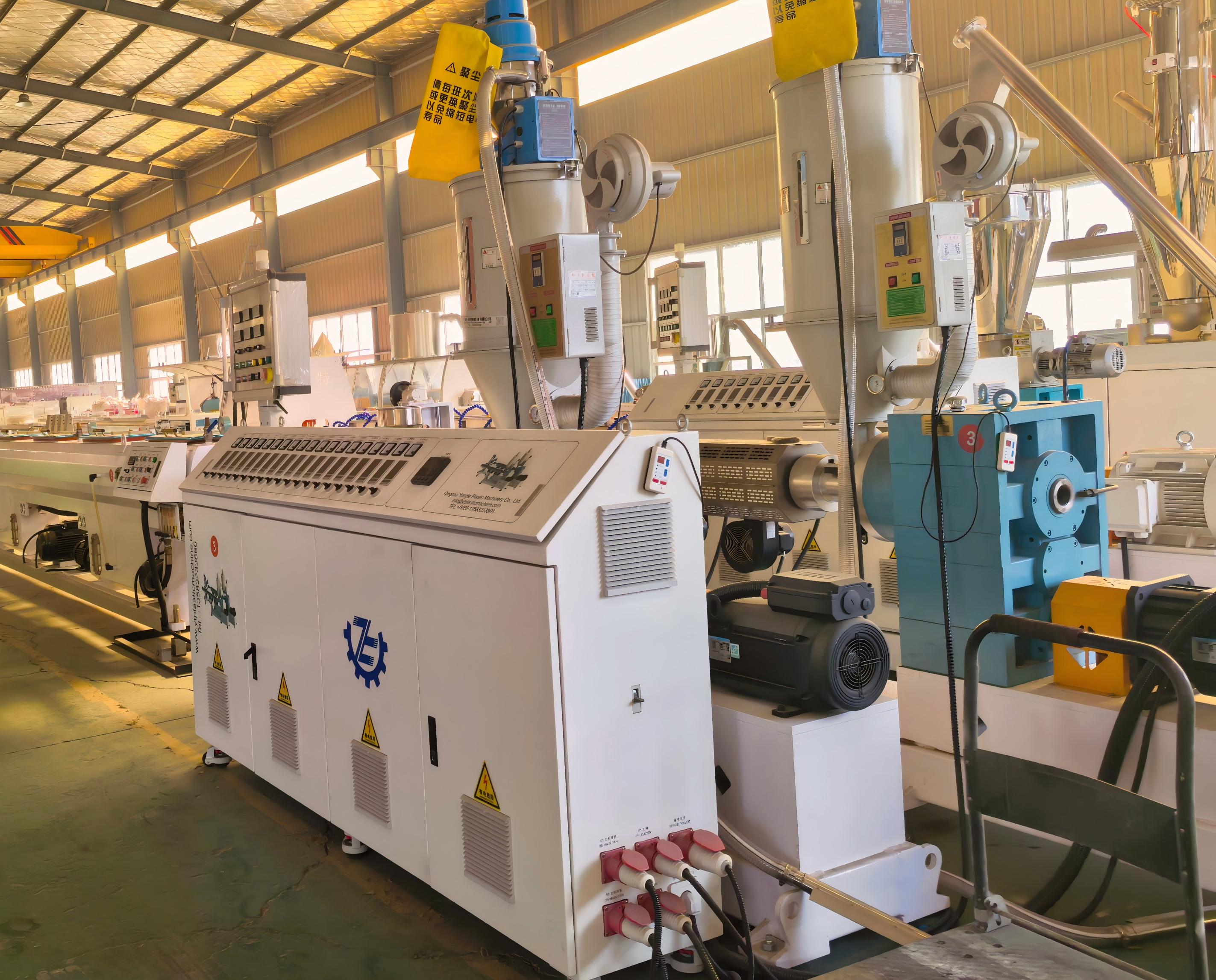
China's plastic pipe machine market offers tempting cost advantages, but not all equipment is created equal. As manufacturers evaluate their options, several factors are often overlooked, leading to costly downtime or subpar output. That's why a reliable partner like Yongte matters—but not without proper due diligence. Before you sign that purchase order, let's look at what truly counts.
Real output depends on your resin blend, not the catalog rating
A resin's datasheet might promise a certain tensile strength or flow rate, but those numbers come from ideal lab conditions using a single, standardized material. In practice, you're rarely running that exact resin — you're mixing regrind, adjusting for moisture, or blending in a filler to cut cost. Each of those changes shifts how the material behaves under heat and pressure, so the throughput you actually get is a product of your specific blend, not the brochure.
Think of the catalog rating as a starting point, not a guarantee. When you add 20% recycled content, the melt viscosity changes; when you toss in glass fiber, the wear on your screw increases. These real-world variables directly affect how many kilograms per hour your machine can push. Two shops running the "same" resin grade can see wildly different outputs simply because one uses virgin pellets and the other runs a proprietary mix with colorant and slip agent.
The smart move is to baseline your own process. Start with a small batch of your actual blend, measure the output at your normal barrel temperatures, and then tweak from there. Don't chase the number on the data sheet — chase the number your line produces with the material you actually feed it.
Screw and barrel metallurgy determine how often you replace wear parts
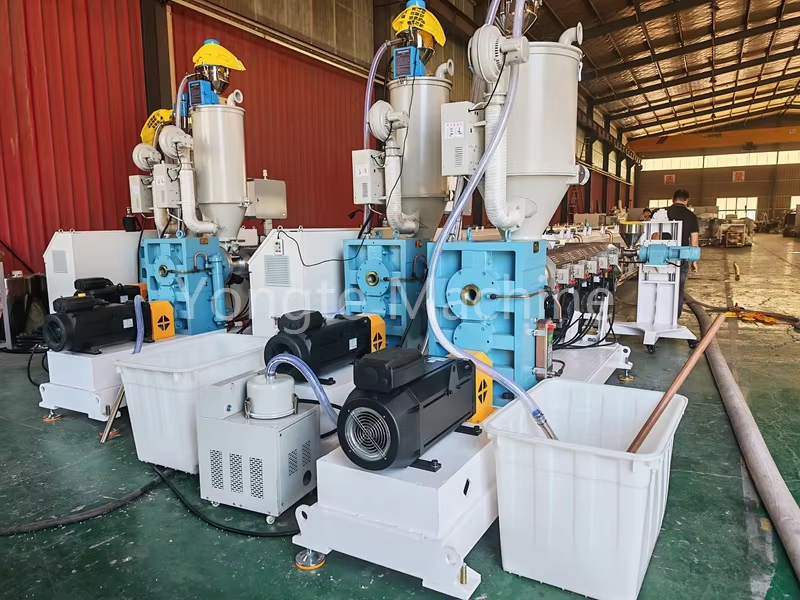
Metal choice in screws and barrels rarely gets the attention it deserves until a line shuts down for an unplanned swap. Nitrided steel works fine for gentle polyolefins, but run the same screw against 30% glass-filled nylon and the flight tips will round off in months. The reason is straightforward: abrasive fillers tear through a thin nitride case, while the underlying steel deforms quickly once that hard skin is gone. Switching to a bimetallic barrel with a high-chromium or tungsten-carbide liner and a screw with hardened flight surfaces changes the wear pattern from rapid loss to slow, predictable erosion. Wear life is not a generic specification; it is a direct function of alloy composition, case depth, and carbide distribution in the chosen metallurgy.
A useful comparison comes from two plants processing the same reinforced resin. One runs standard nitrided components and replaces the screw and barrel every seven to nine months because clearance grows too large and melt quality drops. The other upgrades to a powder-metallurgy barrel liner and a screw with welded hardfacing on the flights. That setup typically runs two to three years before clearance drift forces a rebuild. The difference is not just hardness on a data sheet. It is how well the microstructure resists both abrasive wear from fibers and corrosive attack from flame retardants or recycled content. Once clearance opens, backflow increases, plasticating becomes inconsistent, and energy input rises long before a catastrophic failure announces itself.
Maintenance schedules built around tribal knowledge or supplier averages often miss real wear curves. Better practice is to track actual hours against resin type, filler percentage, melt temperature, and back pressure for each screw and barrel combination. Plotting measured clearance or output drift reveals when metallurgy is the limiting factor. In many cases, moving to a higher alloy grade costs more up front but cuts total replacement frequency enough to pay for itself within the first extended run. The goal is not to buy the most expensive materials; it is to match the metallurgy to the specific wear mechanisms in your process.
Energy bills over five years often exceed the machine's purchase price
Most shoppers fixate on the sticker price without checking how much power a machine draws. That oversight gets expensive. A mid-range refrigerator priced at $800 can easily rack up $1,000 or more in electricity charges over five years, depending on local rates and usage patterns. Washing machines, dishwashers, and dryers follow the same pattern: the initial purchase feels like the main expense, but the meter keeps running long after you leave the store.
Energy efficiency labels are not just marketing stickers. A model that uses 20% less electricity than a similar unit saves real money month after month. If two machines cost the same but one has a lower annual kWh rating, the cheaper-looking option may actually be the costlier one over half a decade. Treat the energy bill as part of the purchase price, and the decision becomes clearer.
A control system your operators can't learn in two weeks becomes a bottleneck
When an interface takes more than a couple of weeks to master, operators stay dependent on a handful of super-users for everyday tasks. Production slows because normal adjustments, changeovers, and fault recovery all wait for someone who understands the deeper layers. That dependency creates a real bottleneck—not because the process is hard, but because the control layer adds unnecessary friction.
Two weeks is already generous for a modern operator role. In many plants, people rotate across lines or cover shifts with minimal handover. If the system requires memorizing nested menus, obscure alarm codes, or undocumented sequences, new hires spend their first month just trying not to make mistakes. Meanwhile, experienced operators become the only ones who can run certain batches, which puts every schedule at risk when someone is sick or on leave.
The fix isn't more training videos or thicker manuals. It's designing the control system around what operators actually need to see and do in the first two weeks. Use task-based screens, plain-language alarms, and default recipes that match real production. Before buying or deploying a system, run a simple test: give a new operator two days of familiarization, then ask them to handle a routine start-up and one common fault. If they can't, the system is already a bottleneck waiting to happen.
Local spare parts and service response affect uptime more than brand name
In industrial operations, the availability of local spare parts often outweighs the logo on the machine. A well-known brand means little if a critical component takes weeks to arrive from another region while production halts. Sites that keep regional stock or work with nearby suppliers recover faster, and that recovery time directly shapes annual uptime figures. Operators quickly learn that proximity of parts and people beats distant prestige.
Service response is equally decisive. A local technician who can reach the site within hours will solve many issues before they escalate, regardless of the equipment's badge. In contrast, waiting for specialized support from a distant headquarters can stretch minor faults into major downtime. Over months and years, these differences accumulate far more than any marketing promise. Buyers who prioritize accessible service networks tend to see steadier production than those swayed by brand reputation alone.
Run your own material through the line before wiring any deposit
Before you sign off on a single dollar, make sure your own stock has actually traveled through the entire line. Vendor samples are polished, but your rolls may have different thickness, curl, or static behavior. Run a small batch and watch every station. Jams, misfeeds, uneven coating, or edge damage often hide until real material hits the line.
Once you have wired a deposit, your leverage shrinks. A machine that cannot handle your substrate becomes your problem, not the manufacturer's. Test with the exact stock you intend to run daily, and only then consider the financial commitment.
FAQ
Ask for a live video tour of their workshop floor and request references from overseas buyers who bought the same model within the last two years. Check whether they assemble gearboxes and screws in-house or outsource these core parts. A factory that can show you machining centers, a test bench for extruders, and a recent shipment being packed usually has real production capacity.
Look beyond motor power. Focus on screw L/D ratio, barrel material and nitriding depth, gearbox torque rating, and whether the control system allows closed-loop diameter and wall thickness adjustment. For HDPE, a grooved feed section and a barrier screw design make a bigger difference in output stability than raw horsepower.
Sometimes, but the risk sits in after-sales support and spare parts consistency. A machine that costs 20% less can lose you that margin quickly if you wait three weeks for a replacement heater band or a PLC module. Always negotiate a written spare parts list with part numbers and confirm the supplier keeps common wear parts in stock.
Installation supervision, local electrical conversion, water and air line setup, initial screw and barrel break-in, and operator training. Also budget for import duties, port fees, and possible calibration tools. Many buyers only compare FOB prices and forget that a smooth startup requires another 8-12% of the machine value.
Very important if your maintenance team is not familiar with Chinese domestic PLC brands. Choose Siemens, Mitsubishi, Delta, or another brand your local technician can service. The PLC and HMI determine how easily you can fine-tune temperature zones, line speed, and alarms. A reliable control system reduces the chance that a minor fault shuts down your entire line.
Check the vacuum tank length and whether it has multiple independently controlled vacuum chambers. For pipe sizing, ask about the maximum pipe diameter and whether the haul-off uses rubber pads or caterpillar tracks. Uneven pulling force causes wall thickness variation, so the haul-off should offer stepless speed adjustment and smooth acceleration.
Technically some extruders can process different materials after a thorough screw and barrel cleaning, but you usually sacrifice output quality and efficiency. Screw geometry for PVC differs from PE and PPR. If you need frequent material changes, ask the supplier to provide two or three screw and barrel sets rather than claiming one universal design.
Request a factory acceptance test with your own raw material or a similar grade. Ask them to run the line at the promised output for at least four continuous hours, record energy consumption, wall thickness variation, and surface finish. If possible, attend by video call during the test and ask them to show real-time parameters on the HMI.
Conclusion
Most catalog throughput figures for Chinese pipe lines are optimistic at best. What you actually get each shift depends heavily on the resin blend you run, including regrind percentage, filler loading, and melt flow consistency. A machine rated for 400 kg/hr might struggle to hold 300 kg/hr with a high-viscosity blend or dirty recycled material. Beyond output, the metallurgy of the screw and barrel dictates your maintenance calendar. Standard nitrided steel wears quickly with abrasive compounds like calcium carbonate or glass-filled polymers, forcing you to replace screws and barrels far more often than a bimetallic setup would. And then there is the quiet killer: energy consumption. Over a five-year span, electricity costs for heating and driving the extruder can exceed the purchase price of the entire line, especially if the machine lacks efficient barrel heating zones or a properly matched drive motor.
A control system that looks impressive in a demo but requires weeks of training will bottleneck your production the moment a shift change happens. Pick an interface your operators can master in two weeks, not one designed for engineers. Uptime also hinges on local spare parts availability and how fast a technician can reach your plant. A well-known brand name means little if you wait three weeks for a replacement gearbox from another province. Before committing any money, insist on running your own material through the extruder and downstream haul-off. Bring actual production regrind, not the vendor's clean sample pellets. Record output, scrap rate, and dimensional stability over several hours. Only after you see your resin blend perform acceptably on the exact line configuration should you wire a deposit.
Contact Us
Contact Person: Ms Qin
Email: [email protected]
Tel/WhatsApp: 8613583233866
Website: https://www.yongteplast.com