
China High Strength Steel Plate Manufacturers You Can Trust for Industrial Projects
2026-11-21
China high strength steel plate manufacturers you can trust for industrial projects are rarely the ones that only talk about tonnage. The real difference shows up in mill certificates, consistent mechanical properties, and the ability to handle tight specifications without delays. Sanhe Steel stands out in that crowded field by pairing domestic production control with practical export experience. In this article, we break down what to check before choosing a supplier, so your next structural, machinery, or energy project starts on firmer ground.
Why Not All High-Strength Plate From China Meets the Same Yield Strength
A Q550 or Q690 designation says more about the minimum requirement than the actual path a mill took to reach it. Chinese steelmakers operate within a standard that leaves room for different microalloying strategies, rolling schedules, and cooling rates. One plant may lean heavily on niobium and controlled rolling, while another uses vanadium with a faster cool, and a third might rely on tempering after rolling. The resulting plates can all clear the specified yield point on paper, yet carry noticeably different through-thickness properties, bend behaviour, and weld response.
Thickness also works against uniformity. As plate gauge increases, the core cools more slowly, so the grain structure is not the same at the surface as it is at the quarter-line or mid-thickness. A mill certificate sometimes reflects a test coupon taken from a location that flatters the result, especially if the buyer never fixes the sampling position in the purchase order. Two plates with identical markings can therefore behave quite differently once a fabricator cuts into them or puts a heavy fillet weld through the centre.
Testing itself introduces another layer of variability. For steels without a clear yield plateau, the 0.2% proof stress depends on strain rate, extensometer setup, and specimen preparation. A recheck in an independent lab may come in below the mill value not because the steel changed, but because the test method was stricter or the sample was taken from a harsher spot. Buyers who treat the reported yield strength as a single fixed number often overlook that the number is only as reliable as the sampling and test convention behind it.
Mill Certificates Worth Reading Before You Sign a Supply Contract
A mill certificate is one of the few documents that gets waved through during contract review, yet it tends to matter more than the invoice when a material failure occurs. Before you sign, read it like you are checking a passport, not a brochure. The heat number, product description, dimensions, and applicable standard should all line up with what you actually ordered. If the certificate only gives you a generic grade and a smiling sales contact, push for the full test report.
The useful details live in the measured values, not the stated minimums. A certificate that merely repeats the standard's required yield or tensile figures tells you little about the batch in front of you. You want the actual chemical composition, mechanical test results, and coating or dimensional tolerances for the specific heat or lot. Also note the issuing mill and any third-party inspection mark. When that information is missing or heavily redacted, treat the certificate as incomplete, even if the sales terms say it is all in order.
Finally, compare the certificate date with the production date and shipping timeline. Old stock can carry old certificates, and that is not automatically a problem, but it should be disclosed, not discovered. If the document is dated months before the material arrived and no one can explain the gap, ask for retesting or walk away from the contract.
How the Right Chinese Mills Keep Hardness and Toughness in Balance
A mill that knows what it is doing starts with the steel itself. Hardness and toughness pull in opposite directions, so the chemistry has to be tuned rather than copied from a generic ladle card. Some Chinese mills keep carbon near the lower end of the spec and lean on chromium and molybdenum to build deep hardenability. Others add a small vanadium or niobium addition to pin grain size during rolling. The point is not to hit a single chemistry target; it is to make sure the as-cast structure will respond predictably to heat treatment, because no tempering curve can rescue a badly balanced melt.
The bigger difference shows up in the heat treat shop. The better mills use narrow tempering windows and check hardness after each batch instead of trusting a fixed recipe. They also avoid over-quenching thin sections, which can leave the surface hard and the core brittle. In practice, that means running interrupted quench cycles or switching polymer concentration based on section size, then following with a temper that drops hardness only a few points. The result is a material that wears well without cracking at the first shock load.
What separates these mills from the rest is less about equipment and more about discipline. They keep records of actual toughness tests, not just hardness readings, and they hold heats back when the ratio between the two drifts. A mill that treats hardness as only half the requirement tends to make rolls and liners that survive longer in real service because the operators are not chasing a number at the expense of the part.
What Heavy Fabrication Shops Notice About Dimensional Stability
Weld sequencing rarely gets the credit it deserves until a 40-foot beam pulls itself out of square overnight. Shops that work with thick plate learn to read movement as a process variable, not a mistake. They see how a heavy fillet weld on one side of a neutral axis introduces enough contraction to bow a flange, and how cutting a large opening after assembly relieves locked-in stress in ways that can shift bearing points by several millimeters.
The real signal comes from repetition. When the same part distorts in the same direction across five jobs, the cause is usually not the welder or the machine operator. It is the sequence, the restraint, or the residual stress already sitting in the mill plate. Experienced fabricators start leaving extra stock only where movement actually shows up, pre-cambering members instead of trying to force everything flat after welding.
Dimensional checks at the end of a shift tell a different story than checks taken right after welding. Temperature equalization, overnight cooling, and the release of clamping pressure all change the numbers. Heavy fabrication shops that pay attention treat inspection as an ongoing reading of the structure, not a final gate.
When a Reliable Plate Supplier Affects Project Cost More Than Price Per Ton
A lower per-ton quote often looks like the obvious way to keep a job under budget, but that number ignores what happens after the plates arrive. If a batch comes in with inconsistent flatness or scattered mill test values, the shop burns hours adjusting torch settings, reworking bevels, and sorting material. A supplier with tight dimensional control and consistent heat numbers removes that quiet labor cost before cutting even starts.
The real cost difference usually shows up during fit-up and welding. Plates that vary in thickness or have excessive crown can throw off root gaps and edge alignment. Welders compensate with extra passes, more filler metal, and longer arc time. In one case, switching to a supplier that guaranteed tighter tolerances cut rework on a tank floor by roughly a third, even though the invoice price was slightly higher.
Delivery patterns matter just as much. A dependable plate source that stages material to match the erection sequence keeps the site from turning into a laydown yard. Fewer double-handling moves, less weather exposure, and no crew standing idle waiting on a truck can easily outweigh a modest saving per ton. Once those hidden costs are added, the cheap quote rarely looks cheap.
Turning a Trial Order Into a Long-Term Steel Plate Supply Partnership
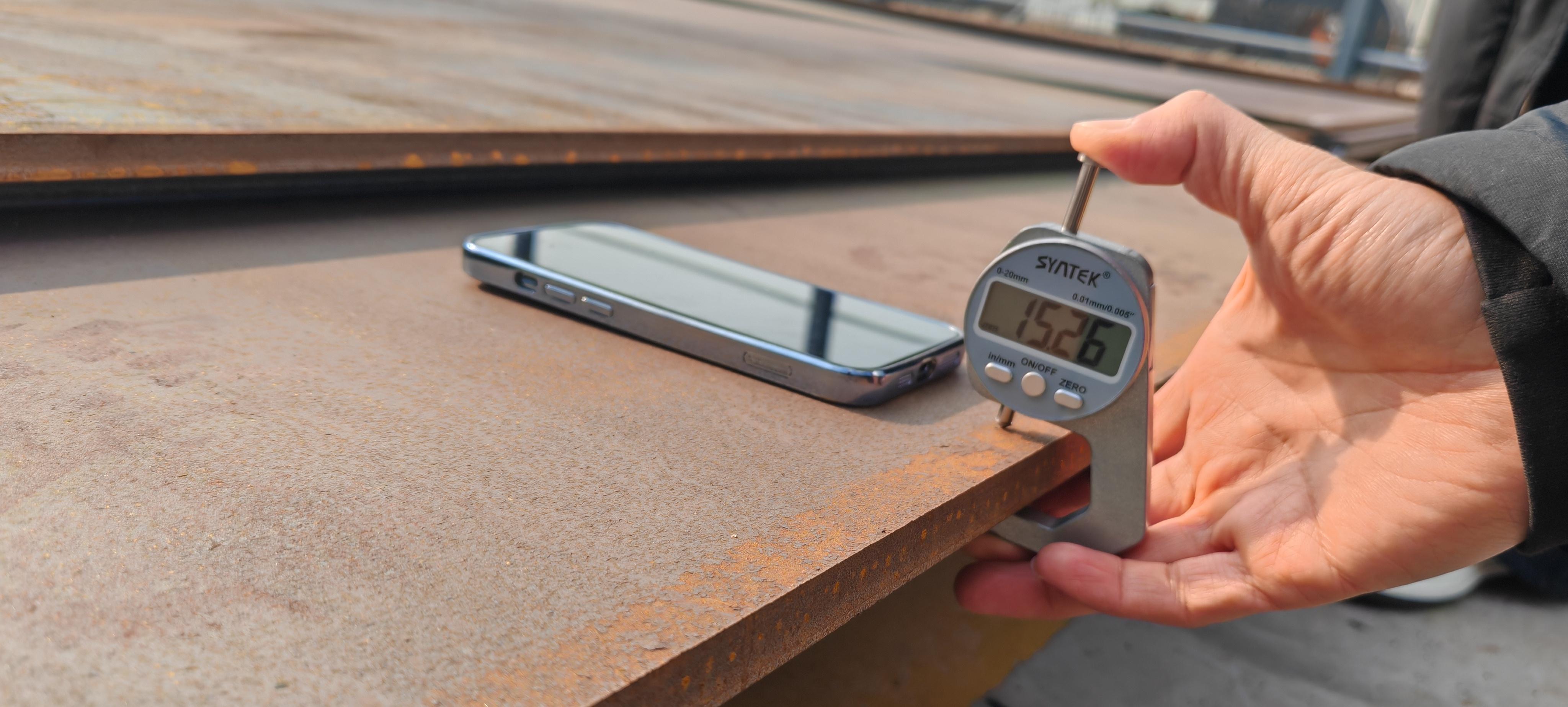
A first shipment tells you more than a mill certificate ever will. When the plates arrive, we check thickness across the full width, edge straightness, surface condition, and whether the heat numbers match the documentation. Small deviations get logged, not ignored, because that record becomes the basis for the next order. One issue handled bluntly and fixed fast usually does more for trust than three spotless deliveries.
The shift from transactional buying to a supply partnership usually happens in the exchanges between orders. A supplier who flags a rolling delay before it affects your production line, or warns that a particular grade is likely to move up next month, gives you room to plan. In return, sharing a rough three-month requirement forecast lets the mill group your plates with other orders, which often improves yield and shortens lead time.
Over time the relationship stops being about price per ton alone. You start sending the same supplier more difficult specs, ask for pre-cut blanks instead of full plates, or request bundled documentation for your own customers. When the steel, the paper, and the problem-solving all hold up consistently, the trial order quietly becomes the reference point for a supply arrangement that both sides treat as long-term.
FAQ
Look for a track record in similar industrial projects, mill certificates that match the actual heat numbers, and consistency in impact test values. A dependable supplier will also be open about rolling schedules and allow third-party inspection without hesitation.
Heavy equipment builders, bridge fabricators, mining machinery producers, pressure vessel shops, offshore structure contractors, and wind tower manufacturers tend to place repeat orders. The material often goes into booms, chassis, lifting structures, and load-bearing joints.
The better operations use controlled rolling followed by normalizing or quenching and tempering. They run spectro checks on each heat, apply ultrasonic testing for internal soundness, and keep Charpy impact results within a narrow range instead of just meeting the minimum.
Yes. Many suppliers offer cut-to-length plate, specific widths, shot blasting, primer coating, and edge preparation. Thickness availability often spans from 6 mm to over 200 mm, depending on the grade and mill capacity.
Common grades include Q460C/D/E, Q550D/E, Q690D/E, S460NL, S690QL, and A514 Grade B/E. For abrasive conditions, NM400 and NM500 wear plate are also frequently requested.
It depends on whether the grade is in stock or needs a rolling window. Stock plate can ship within one to two weeks, while custom production often takes 20 to 40 days. Port congestion and vessel availability can add another week or two.
You should receive an EN 10204 3.1 or 3.2 mill test certificate, chemical and mechanical test reports, ultrasonic test results where applicable, a certificate of origin, and a detailed packing list. Any missing document usually means the material has not been fully verified.
Yes. Firms like SGS, BV, and TUV regularly witness testing, check dimensions, review heat numbers, and supervise loading at the mill or port. A manufacturer that resists this level of access is usually not the right partner for critical industrial work.
Conclusion
High strength steel plate from China is not a single grade, and treating it that way is where many industrial buyers get burned. Two heats can carry the same nominal yield strength on paper but behave differently after cutting, welding, or prolonged loading because of variations in mill practice, chemistry control, and rolling temperature. That is why reading mill certificates carefully before signing a supply contract matters more than comparing headline prices. Look beyond the yield figure at the actual heat analysis, impact test temperatures, elongation values, and the standard used for testing. Mills that consistently keep hardness and toughness in balance tend to document those details clearly instead of hiding behind broad statements.
The differences become obvious once material reaches a heavy fabrication shop. Plate that remains dimensionally stable during cutting and welding saves real money by reducing straightening, rework, and fit-up delays. A supplier with dependable inventory, honest mill data, and on-time delivery changes project cost far more than a few dollars per ton on the invoice. This is also why many buyers start with a trial order: a small batch reveals how the plate handles and whether the supplier can repeat the same result. When that repeatability is there, the relationship naturally grows from a sample request into a long-term supply partnership built on measured performance rather than promises.
Contact Us
Contact Person: Zoey
Email: [email protected]
Tel/WhatsApp: +86 15865577002
Website: https://www.sanhesteels.com