

China Beer Mug Sourcing Made Simple for Global Buyers
2026-08-20
Ask any importer about sourcing beer mugs from China, and you'll hear a war story. MOQ confusion, hidden mold fees, lids that crack in transit—the pitfalls are real but avoidable. This post maps the cleanest route to dependable, cost-effective suppliers and shows why APEXAL is the quiet favorite among buyers who skip the drama.
Spotting a Beer Mug Supplier That Won't Go Silent After Payment
Placing an order with a beer mug supplier feels straightforward until the invoice is marked paid and your follow-up emails start bouncing. Too many buyers learn the hard way that a vendor's responsiveness during the sales pitch doesn't guarantee support once the money has cleared. To spot a supplier that stays reachable after payment, look for concrete signs of operational backbone: a physical address that actually receives mail, a phone line answered by a human during business hours, and order confirmation documents that name a specific account manager rather than a generic sales inbox.
Another practical test is to send a small, slightly awkward request before you commit—maybe ask about a custom engraving depth or lead time changes for holiday peaks. A supplier who answers patiently and with real detail, not just a canned reply, is more likely to treat post-payment questions the same way. Also check whether they have a documented process for defects, refunds, or reorders. If their terms only describe how to pay but never what happens when a crate arrives with chipped rims, that silence will likely continue after your wire transfer.
Finally, don't underestimate the value of talking to past buyers, not just reading testimonials on the supplier's own site. Ask in industry forums or trade groups whether anyone had to chase this vendor for a delayed shipment or a missing pallet. A pattern of slow responses after payment usually shows up quickly in those conversations. The goal isn't to find a perfect supplier, but one whose post-sale behavior matches their pre-sale enthusiasm—and who treats your paid order as the start of a working relationship, not the end of it.
Glass, Ceramic, or Stainless: Picking a Material That Survives Real Use
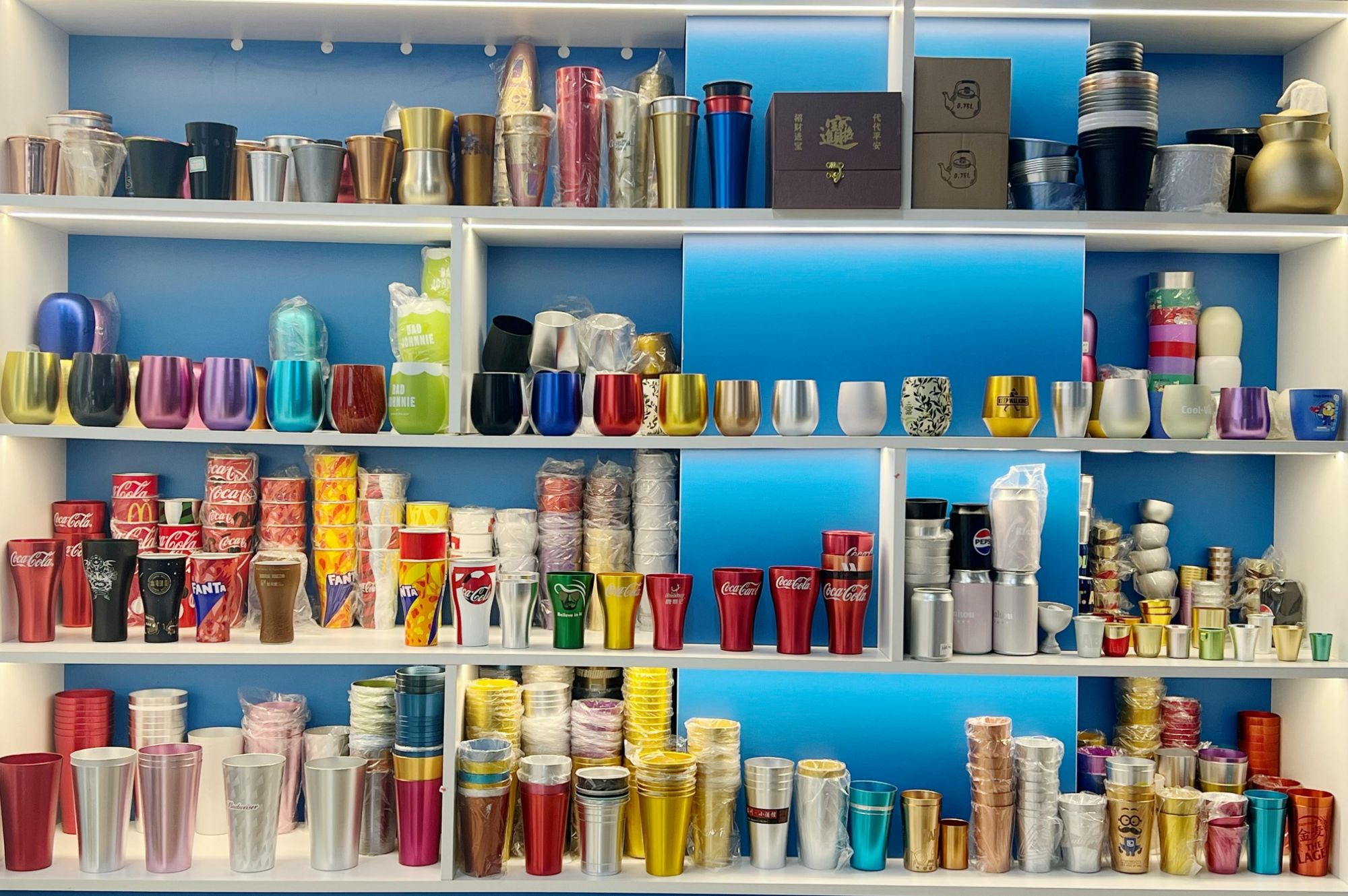
The daily drop test is where most materials reveal their true character. Glass looks pristine on a shelf but shatters on the first tile floor encounter, while ceramic can chip at the rim with a single careless knock against the sink. Stainless steel, on the other hand, takes dents and scratches as badges of honor, still holding your morning coffee without leaking a drop. When you reach for a container at 6 a.m. with one eye still closed, the choice becomes obvious: you need something that forgives clumsy hands and tight schedules.
Heat tolerance separates the practical from the decorative. Pouring boiling water into a glass carafe might work once, but thermal shock eventually cracks the base and sends hot liquid across the counter. Ceramic holds heat well but demands gentle preheating and can crack under sudden temperature swings. Stainless steel shrugs off direct flame, ice baths, and everything in between, making it the only reliable option for camp stoves, office microwaves, and hurried reheating sessions. It won't win beauty contests against hand-thrown mugs, but it will still be there after years of abuse.
Weight and maintenance settle the argument for anyone who actually carries their drinkware. A glass bottle adds noticeable heft to a backpack and requires careful packing next to keys and chargers. Ceramic travel mugs are heavy and often leak from worn lids. Stainless steel stays lightweight, resists odors and stains with a quick rinse, and survives being tossed into a gym bag or dropped onto pavement without a second thought. The material doesn't hold grudges, and neither should your daily gear.
Custom Logos and Shapes Without Getting Stuck at High MOQs
High minimum order quantities usually exist because the factory is trying to cover the cost of building a custom steel mold or screen setup. That is fine for a brand ordering 10,000 pieces, but it makes no sense for a small launch, a local team, or a limited drop. The workaround is to choose decoration and cutting methods that do not rely on that expensive upfront tooling. Laser cutting, digital UV printing, CNC engraving, and embroidery digitizing can be adjusted per file instead of requiring a dedicated mold. You still get your exact logo and a custom silhouette, but the setup cost stays low enough that running 25 or 50 units does not destroy the budget.
Another way to bypass high MOQs is to separate the shape from the color fill. A standard blank in your chosen material can be cut to a custom outline, then printed with your artwork at full color. Because the blank already exists in the supplier's inventory, there is no mold wait time and no charge for new dies. The customization happens in the digital file, not in tooling. This also makes reorders faster: you keep the same cut file on record, change the artwork when needed, and order only what you actually sell.
Pay close attention to how the supplier quotes the first sample. Some factories will offer a low per-piece price and then pad the sample or setup fee to recover the mold cost. Ask for a line-item breakdown separating material, cutting or printing setup, and per-unit production. If a vendor says a custom shape requires a mold, ask whether laser cutting, water jet, or CNC routing can achieve the same outline. Often the "mold required" answer is just the default response, not the only manufacturing option.
What Actually Drives Shipping Costs and Breakage for Beer Mugs
Mugs are heavier than most people assume, and that weight interacts with dimensional weight pricing in ways that aren't obvious from a simple distance calculation. A standard beer mug can weigh over a pound, and when you add the extra space needed to keep the handle from snapping, the package often becomes larger than the product itself. Carriers charge for the space a parcel occupies, not just its weight, so bulky protective packaging around an awkward shape can push shipping costs higher even for short hauls.
Breakage doesn't usually happen from a single dramatic drop. It's the cumulative effect of vibration and repeated small impacts during sorting and transit. If mugs are packed tightly but without enough separation, the handles act as levers; a tap on the rim transfers force straight into the handle joint. Stacking boxes on a pallet also matters more than people think. The bottom box can bear hundreds of pounds of pressure, and any void space in the box allows the mugs to shift and collide under that load.
Packaging choices are where the real leverage is. Custom die-cut inserts or molded pulp trays keep each mug suspended, so the glass never touches another hard surface. Using a slightly larger box with less internal packing can be cheaper than a small box stuffed with heavy fill, because it allows the carrier's automated systems to process it without reorientation. Shippers who treat beer mugs like standard glassware often pay for that mistake twice: higher freight from oversized dimensions and replacement costs from breakage that could have been prevented with a $0.30 insert.
A Ten-Minute Quality Check That Catches Most Factory Defects
A ten-minute quality check isn't about chasing perfection across every station — it's about catching the handful of defects that actually cause returns or rework. Walk the line with a simple checklist limited to five items: fit and finish on visible surfaces, proper torque on critical fasteners, correct labeling and packaging, function of moving parts, and absence of cosmetic damage from handling. If any item fails twice in a week, that station gets a deeper audit.
The trick is to use the same ten minutes at the same time each day, preferably right after the first full batch of the shift. Operators shouldn't stop production; they should pull one finished unit from the line and inspect it against photos of known good and bad examples. Have them note the defect type, not just a pass or fail. This builds a pattern over a week that reveals whether problems are random or systemic, like a dull cutting tool showing up more often after the third hour.
Don't hide the results. Post them on a whiteboard near the break room with a simple red-green tally. When red marks cluster around one category, you know exactly where to spend maintenance time before a small issue becomes a shipment of returns. It's low-tech, but it works because it makes quality visible without slowing down the floor.
From First Sample to Final Delivery: A Sourcing Sequence That Works
Getting a usable first sample rarely means you're done. It's the starting point for a back-and-forth that separates reliable suppliers from the rest. We treat that initial piece as a physical checklist—noting fabric weight, stitching tension, hardware finish, and any dimension that drifts from spec. One round of comments goes back with photos and measurements, not vague notes like 'make it better.' That level of detail cuts the usual sample ping-pong down to two or three revisions instead of six.
Once the sample is approved, the real discipline starts. We lock a pre-production sample, sign off on packing standards, and set a clear inspection gate before bulk cutting. Mid-production, someone walks the line with the approved sample in hand—checking labels, seams, and color lots under the same light. Shipping doesn't happen until the final audit matches what was signed off. That sequence has saved more shipments than any contract clause ever could.
FAQ
Start by clarifying your target market and intended use. Do you need thick, durable glass for bars or lighter, promotional-grade mugs? This shapes everything from material choice to budget and helps suppliers give you realistic options instead of a generic catalog.
Look for factories that list beer steins, tankards, or pint glasses as core products, not just a side category. Ask for their top three export markets and recent client types. A specialist will talk about glass thickness, handle molds, and annealing processes without hesitation.
Many mid-sized Chinese factories accept 1,000 to 3,000 pieces per design for custom work, though some smaller workshops may go as low as 500 with a higher unit price. If you need only a few hundred, ask about stock designs with logo printing instead of full custom molds.
Request pre-production samples before mass production and keep one sealed reference sample. Specify tolerances for capacity, weight, and height in your purchase order. For glass, also ask about thermal shock resistance if the mugs will be used for hot or cold drinks.
For food-contact glassware, ask for FDA or LFGB compliance depending on your market. Many export-focused factories also have ISO 9001 for quality management. Don't just accept a certificate by email; ask for the latest test reports from an accredited lab, especially for lead and cadmium content.
Yes. You can change the shape, capacity, handle style, glass color, frosting, etching, and packaging. Some factories even offer 3D mold design for unique silhouettes. The real limit is usually your budget and production lead time, not the factory's capability.
Ask for individual cardboard dividers or foam partitions, not just bubble wrap. For export, double-wall cartons are standard. You can also request a drop test video or a pre-shipment inspection of a few cartons. Clear packaging specs should be written into the contract, including box dimensions and pallet loading.
For small orders, air freight or courier consolidation may work if you need speed. For larger volumes, sea freight is the norm. Use FOB terms if you want control over the ocean freight forwarder, or EXW if you have your own China-based agent. Always confirm whether the price includes export packing and loading.
Conclusion
Finding a beer mug supplier in China who won't ghost you after the deposit comes down to reading their behavior before you pay. A factory that walks you through the production floor on a video call, names the glass furnace they use, and pushes back with realistic lead times is a better bet than one that says yes to everything. On materials, don't just pick from a catalogue—order a sample set and use it for a week: ceramic handles get too hot for some hands, stainless dents on concrete, and thin glass rims chip faster than you'd think. For custom logos and shapes, ask about existing molds and previous client brands; if the factory already runs a similar blank, you can often add a frosted logo or a slight taper at quantities under 500 pieces without paying for a brand-new mold.
Shipping cost and breakage are more about packaging design than the distance from Shanghai to your port. Foam inserts, honeycomb dividers, and strapping the cartons to pallets cut damage claims far more than air freight ever will. Do a ten-minute quality pass on any sample batch: run your finger around the rim for sharp edges, pour hot water into the mug to check for cracks or glaze crazing, and drop it from counter height onto a wooden board if the supplier claims it's durable. And resist the urge to skip from first sample to final order; a pre-production sample followed by a 100-piece trial order catches most factory defects while there's still time to fix tooling or firing curves. The buyers who keep this sequence calm and boring are the ones who end up with mugs that survive both the ocean and the bar.
Contact Us
Contact Person: Milo
Email: [email protected]
Tel/WhatsApp: +86 18621923991
Website: https://www.dgbaide.com