

Acrylic Chemical Soil Stabilizer: How It Works and Key Benefits
2026-07-30
Soil stabilization is a critical challenge in construction, agriculture, and infrastructure. Traditional methods often fall short in durability, cost, or environmental impact. Enter acrylic chemical soil stabilizers — a game-changing solution that transforms loose, weak soil into a solid, erosion-resistant foundation. At MST, we harness advanced polymer technology to deliver stabilization that’s fast-acting, long-lasting, and eco-friendly. In this post, we’ll unpack the science behind acrylic soil stabilizers, how they work, and the key benefits that make them a superior choice for modern projects.
A Closer Look at How Acrylic Binders Transform Loose Soil
When acrylic binders are introduced to loose, granular soil, the change is almost immediate. These liquid polymers coat each particle, forming a flexible yet durable film that binds them together without completely filling the voids. This means the soil retains much of its natural porosity, allowing water and air to move through while gaining substantial mechanical strength. The result is a stabilized surface that resists erosion, dust generation, and rutting—all without the heavy compaction or constant watering typically required to keep loose soil in place.
What makes acrylic binders particularly effective is their ability to create bonds that remain flexible over time. Unlike rigid cement or lime treatments that can crack under thermal expansion or traffic stress, acrylic-treated soil can flex slightly, absorbing movement without breaking down. This elasticity helps maintain long-term integrity on slopes, unpaved roads, and construction sites where shifting ground is common. Moreover, the clear finish preserves the natural color of the earth, making it a visually subtle solution for landscape projects or heritage sites where appearance matters.
Application is straightforward yet requires attention to soil type and moisture. In practice, a diluted acrylic solution is sprayed onto the soil surface or mixed into the top layer, then allowed to cure. Over hours or days—depending on temperature and humidity—the water evaporates, leaving behind a continuous web of interconnected polymer chains. The treated layer typically ranges from a few millimeters to several centimeters thick, enough to lock particles in place while still supporting plant root growth where desired. This adaptability has made acrylic binders a go-to for dust suppression on haul roads, slope stabilization on embankments, and even temporary ground reinforcement at outdoor events.
Unpacking the Chemistry That Makes Soil Stay Put
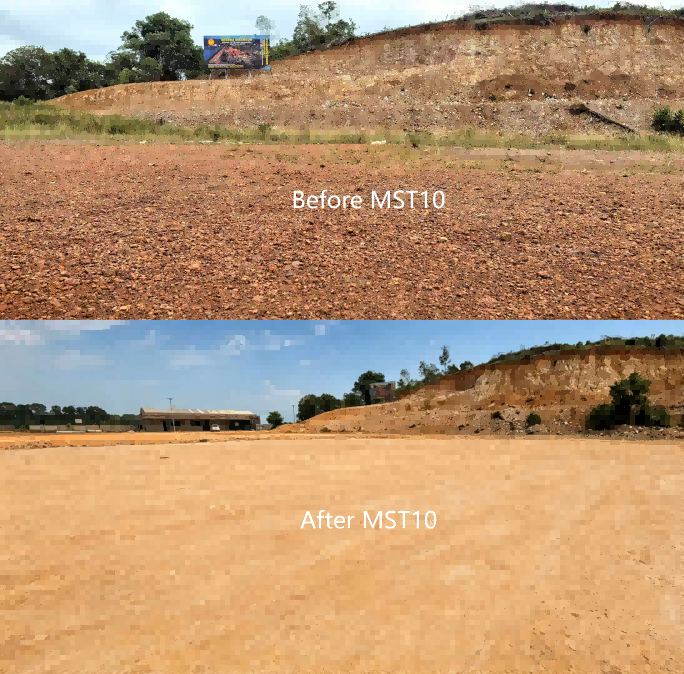
Soil’s ability to resist erosion isn’t just down to physical structure—it’s largely a chemical story. At the heart of it are soil aggregates, those small clumps of mineral particles, organic matter, and microbial byproducts. The “glue” that holds them together often comes from polysaccharides and proteins secreted by soil organisms, as well as from decomposed plant residues rich in sticky substances like glomalin. These organic molecules bridge clay particles and other soil components, creating stable micro-habitats that water can’t easily tear apart. Without this chemical binding, even dense soils would quickly slump and wash away.
Clay minerals themselves wield a surprising chemical influence. Because of their tiny size and layered structure, clay particles carry a negative electrical charge that attracts and holds onto positively charged ions—things like calcium, magnesium, and potassium. This cation exchange capacity means that clay can form strong, flocculated networks when the right ions are present, especially calcium, which acts as an electrostatic bridge between neighboring particles. In contrast, an overload of sodium ions causes clay to disperse; the particles repel each other, the soil structure collapses, and erosion risk skyrockets. This push-pull balance between flocculation and dispersion is a subtle but powerful chemical lever that keeps topsoil anchored in place.
Even the pH of the soil solution has a hand in its staying power. Acidic conditions tend to dissolve the very cementing agents—like calcium carbonate and iron oxides—that help bind particles. In well-buffered, slightly alkaline soils, these inorganic cements remain stable, reinforcing the soil matrix. Similarly, the breakdown of organic matter releases humic acids that complex with metals, forming durable organic-mineral associations. These complexes coat sand and silt grains, essentially armoring them against the scouring energy of raindrops and overland flow. It’s a dynamic chemical ecosystem, constantly balancing dissolution and precipitation, adsorption and desorption—all quietly determining whether the land holds firm or gives way to erosion.
Stopping Erosion in Its Tracks with a Simple Spray
When rain hits bare soil, the impact alone can dislodge particles and kick-start a destructive cycle of runoff and loss. But a spray-on solution changes that instantly. By forming a porous, breathable film over the surface, it absorbs the energy of falling drops while locking soil in place. This isn't your typical heavy mulch or rigid blanket—it's a lightweight application that conforms to bumps, slopes, and channels, creating a shield without smothering the ground underneath. The film remains flexible as the soil expands and contracts, so it won't crack and leave weak points exposed.
The real advantage is how fast it works. Instead of waiting for vegetation to establish or crews to lay mats, one person with a backpack sprayer can treat hundreds of square feet in minutes. It sets up quickly, even on near-vertical cuts where traditional methods fail. Once applied, it holds soil and seed firmly, buying time for roots to grow and weave a living anchor. The sprayed layer itself gradually degrades, adding no waste—just a cleaner site and a head start for natural recovery.
Beyond large construction sites, this approach shines in hard-to-reach spots: cattle paths, hiking trails, ditch banks, or anywhere erosion quietly chews away at the land. Because the spray is water-based and free of harsh solvents, it's safe around streams and sensitive habitats. Users often tweak the concentration to match their conditions—thicker for sandy soils, thinner where clay already offers some grip. That mix of simplicity, speed, and adaptability is what stops erosion before it gains momentum, turning a reactive problem into a one-step fix.
From Dusty Roads to Solid Surfaces: The Real-World Impact
In countless regions, the shift from unpaved trails to proper roads isn’t just about smoother rides—it transforms daily life. Farmers can get crops to market before they spoil, children reach schools even during rainy seasons, and emergency services respond faster. A stretch of bitumen or concrete quietly knits communities together, turning isolation into connection.
There’s also an overlooked economic ripple: when transport becomes predictable, local businesses thrive, and new ones emerge. A roadside stall can evolve into a permanent store, and a village might attract a healthcare clinic because supply trucks can now reach it year-round. These hard surfaces lay the groundwork for opportunities that dusty paths could never support.
Beyond the practical, there’s something human about a paved road—it signals that a place matters. It says someone invested in its future. The hum of tires on asphalt replaces the crunch of gravel, and with it comes a quieter confidence. That simple band of solid ground can become the backbone of progress, one stretch at a time.
Why Acrylic Stabilizers Are a Smart Choice for the Environment
Acrylic stabilizers stand out for their minimal ecological footprint throughout their lifecycle. Unlike some conventional additives that rely on heavy metals or release volatile organic compounds, these stabilizers are designed with cleaner chemistry. Their manufacturing process typically consumes less energy and generates fewer hazardous byproducts, which means a reduced burden on air and water quality from the very start.
During use, acrylic-based formulations demonstrate exceptional longevity and weather resistance in end products. This durability translates into fewer replacements and less material waste over time. Paints, coatings, and plastics that incorporate these stabilizers can maintain their integrity for years longer than alternatives, keeping roofs, siding, and automotive parts functional without frequent recoating or disposal. The extended service life inherently conserves resources and minimizes landfill contributions.
At the end of their useful life, materials treated with acrylic stabilizers often align better with recycling and circular economy efforts. Because they donât introduce problematic contaminants that complicate reprocessing, these stabilized materials can be more readily reclaimed and repurposed. This compatibility with existing recycling streams helps close the loop, turning potential waste into new products and further reducing the demand for virgin raw materials.
Getting the Most Out of Your Soil Stabilization Project
A truly effective soil stabilization job starts long before any equipment hits the ground. Spend extra time on the front end evaluating not just the obvious load-bearing requirements, but also how water moves across the site during different seasons. One overlooked drainage issue can unravel months of work in a single heavy rain. Talk to local operators who have worked in your specific soil conditions—their hard-won insights often reveal quirks in the ground that generic lab tests miss. This early investment in understanding the site’s personality pays off by preventing costly fixes later.
Mixing on-site materials with binders like lime or cement demands more than simply meeting a spec sheet’s dosage rate. The magic happens in the details: the depth of incorporation needs to be consistent, and the moisture content right after mixing has to fall into a narrow window for the chemical reaction to really take hold. Rushed crews sometimes underestimate how much time the material needs to mellow before final compaction, leaving weak spots that fail under repeated loads. Instead, build small test sections first and tweak your process until the treated layer stays firm even when thoroughly soaked—that’s the sign you’ve dialed it in.
After construction, many project owners treat the stabilized layer as permanent and walk away, but a light surveillance routine can double its life. Watch for surface cracking that goes deeper than superficial drying; that often signals shifting moisture levels underneath. A quick hit with a diluted sealant can keep small fissures from turning into major entry points for water. Also, keep heavy truck traffic off the very edges where the stabilization tapers—those are always the most vulnerable zones. A little attention in the first year creates a foundation that holds up far beyond what any warranty promises.
FAQ
It's a liquid additive, typically a polymer emulsion, that you mix into soil to improve its strength, water resistance, and durability. Unlike cement or lime, it works by physically binding soil particles together at a microscopic level, creating a flexible, durable matrix.
Once mixed, the acrylic polymer coats the individual soil grains. As it cures, the polymer chains link up, forming a three-dimensional network that locks the particles in place. This process also fills tiny voids, reducing the soil's porosity and making it less susceptible to water damage.
Acrylics offer fast curing times, minimal dust, and a clear finish that doesn't alter the soil's natural appearance. They're also highly effective at dust suppression, resist erosion, and provide a flexible bond that won't crack as easily as rigid binders like cement.
You'll see it in road construction on unpaved surfaces, in landscaping for slope protection, on construction sites for dust control, and in mine tailings management. It's also popular in residential applications for stabilizing gravel pathways or decorative aggregate without changing the look.
When properly applied, the treatment can last for years depending on traffic, climate, and soil type. The polymer matrix is UV-resistant and remains effective through freeze-thaw cycles, though high-traffic areas may need periodic touch-ups to maintain optimal performance.
Modern formulations are often low-VOC and environmentally friendly once cured. The stabilizer itself becomes inert, and because it prevents erosion and dust, it can actually reduce sediment runoff into waterways. Always check local regulations, but most acrylics are considered a green option.
First, the soil is prepared—graded, compacted, and moistened if needed. Then the liquid concentrate, diluted with water, is spray-applied or mixed in with a rototiller. After it's blended, the surface is compacted again and left to cure, usually within a day or two under good conditions.
Absolutely. They're often paired with geogrids for structural reinforcement or with cement and lime for certain subgrade applications. The acrylic can also serve as a topcoat sealer over traditionally stabilized bases to enhance water repellency and dust control.
Conclusion
Acrylic soil stabilizers work by weaving a flexible yet durable polymer network through loose soil particles. Once sprayed, the liquid acrylic binder coats each grain and then cures, forming a cross-linked matrix that locks everything in place while still allowing water to permeate. This chemical bonding transforms dust-prone, erodible ground into a resilient, load-bearing surface without the need for compaction or heavy machinery. The chemistry behind it is elegantly simple: the polymer chains create strong electrostatic and mechanical bonds with soil aggregates, effectively gluing them together. Because it's water-based and low in volatile organic compounds, the application is straightforward—just a simple spray that soaks in and sets over a few hours, dramatically reducing erosion from wind and rain.
In practice, this means dusty access roads become cleaner and safer, construction sites stay mud-free, and slopes resist washouts far longer than with conventional methods. Acrylic stabilizers also stand out for their environmental profile: they're non-toxic, support vegetation growth by letting water through, and shrink the carbon footprint of projects by cutting down on frequent grading and aggregate hauling. To get the best results, proper surface preparation and a tailored application rate are key—factors like soil type, traffic, and climate dictate the formula and coverage. When done right, the treated area gains long-term stability with minimal upkeep, proving that a smart chemical approach can deliver both performance and ecological sense, all from a bottle that turns shifting ground into solid ground.
Contact Us
Contact Person: Helen
Email: [email protected]
Tel/WhatsApp: 86 18630661160
Website: https://www.roadmilestone.com/