
5-Tier Wire Shelving Original Manufacturer: Key Benefits and Sourcing Tips
2026-11-25
Most 5-tier wire shelving looks alike in a catalog, but the gaps appear quickly: thinner wire, weak welds, and coatings that chip after months of use. Working with a true original manufacturer changes that equation, giving you direct control over materials, load ratings, and consistency from batch to batch. In this post, we’ll cover the key benefits you should expect and share sourcing tips that help you spot the difference before placing an order. For a closer look at factory-level standards, ZEOU is a solid place to start.
What Actually Changes When the Factory Sells to You First
The first real shift is in who handles the messy parts. A brand or distributor used to absorb small orders, repackage goods, answer late-night questions, and deal with returns. When the factory steps into that role, the unit price may drop, but those tasks do not disappear. They get folded into a lower quote that often looks better than the final landed cost once packaging, shipping, and after-sales time are counted.
Communication also changes in ways that feel faster but demand more from you. Instead of a sales rep translating between your sketch and the production floor, you are talking to someone who knows the machinery better than the market. That can speed up small adjustments, yet it also means you are expected to catch fit, labeling, and compliance issues yourself. The factory will build what you confirm, not necessarily what a retailer would have flagged.
Finally, responsibility stops being shared. The middleman who used to inspect a batch or hold replacement stock is gone. If a seam fails or a finish scratches, you are dealing with the source directly, and their response depends on how much future volume they see in you. Some factories handle this well because their name is now attached. Others treat direct buyers as a side channel and deprioritize fixes.
The Gauge, Finish, and Joint Details That Separate Durable Racks From Disposable Ones
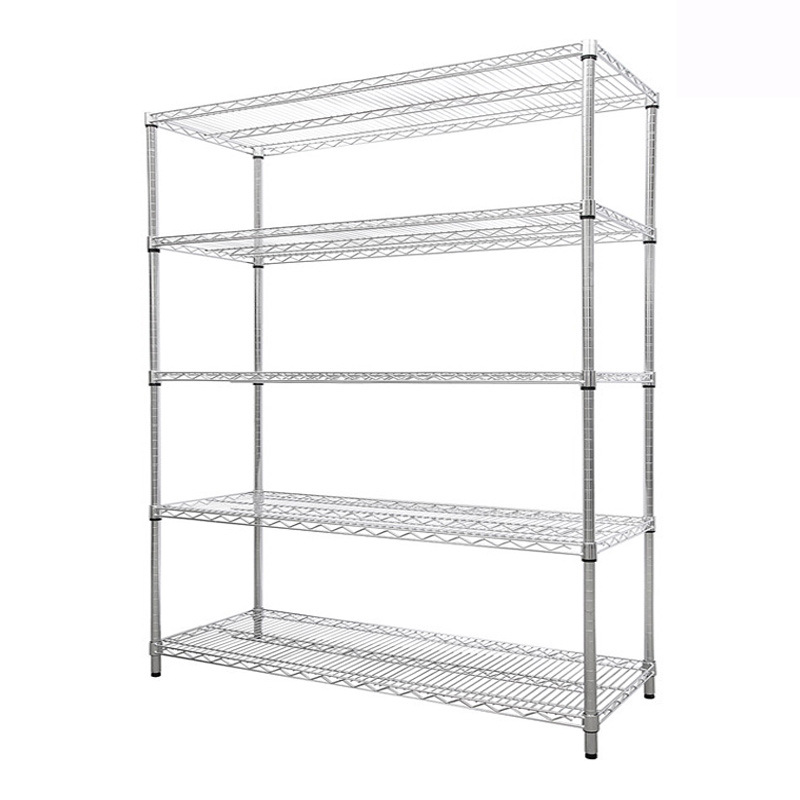
Most people check the overall size and weight capacity first, but the real lifespan of a rack is set long before assembly. Gauge is the quiet giveaway: a 14-gauge steel upright holds its corners under repeated loading, while thinner 18-gauge tubing starts to flex and lean after a few months of real use. Heavier material also takes threads and bolt holes more cleanly, so the connection points stay tight instead of wallowing out.
Finish is another place where short-lived racks cut corners. A good powder coat is applied after the metal is cleaned and phosphated, which lets it adhere to edges, cut ends, and inside the tube openings where rust usually begins. Cheaper coatings can look glossy on day one but peel away in small sheets once moisture gets underneath, leaving the steel exposed exactly where it is hardest to repaint.
Joint construction separates racks that stay square from those that develop a sway. Look for continuous welds at high-stress corners and gusseted or double-fastened connections where beams meet uprights. The hardware should be selected for shear load rather than whatever fits, with lock washers or nylock nuts in places that see vibration. Those details are easy to overlook, but they are what keep a structure silent and stable after years of loading and unloading.
Load Ratings: Field-Tested Questions Before You Quote a Pallet Order
A pallet’s listed capacity rarely tells you what happens on a dock at 6 a.m. Before quoting, ask where the weight actually sits. If the product is narrow-footed machinery, a full stack of bagged resin, or a drum that rests on a small ring, the load may act like a point load even when the total is under the rating.
Then check how the pallet is handled. Lift truck tines entering from the ends instead of the sides, push-back racking with rollers, or frequent drop impacts can cut usable capacity well below published numbers. Moisture exposure and rough reuse matter just as much as the stated kilograms.
Finally, ask for photos of failed pallets from the same lane, not just spec sheets. A cracked bottom deck or a stringer split after three trips tells you more about the true load rating than any lab certificate.
Custom Dimensions, Casters, and Finishes Resellers Rarely Mention
Most listings stick to standard widths, depths, and heights, so buyers assume a piece has to stay within those numbers. In practice, the factory can often shift a desk or shelf by a few inches without much trouble, and that changes how a piece fits against a specific wall or around existing furniture. The same goes for chair casters: soft wheels for wood floors, hard wheels for carpet, or locking casters for a piece that tends to drift are small choices that affect daily use more than finish color.
Finishes are another area where third-party sellers keep things vague. A catalog photo might show a walnut tone, but the actual stain can be lighter, redder, or flatter depending on the batch. Asking for a physical sample, a matched stain, or a low-sheen topcoat usually costs little and prevents the piece from looking out of place at home. When these options are absent from a listing, it is rarely because they are impossible; more often the reseller simply does not want to handle the back-and-forth.
How a Manufacturer Handles Samples Reveals Its Quality Threshold
A sample request often shows more about a factory than a polished website or a well-rehearsed sales call. Manufacturers with a high quality threshold treat sampling as a small production run, not as a favor. They ask about the application, expected tolerances, surface finish, and testing requirements before quoting a lead time. If the contact avoids these questions, gives vague dates, or sends whatever is available without confirming details, that is usually a preview of how larger orders will be handled.
The physical sample and its packaging are equally revealing. A serious manufacturer ships parts that are clean, protected, labeled, and consistent across the requested quantity. Many include inspection reports or material data sheets even when the buyer has not asked for them. In contrast, samples that arrive with rough edges, mixed versions, or no traceability suggest that final production will rely on sorting rather than process control. The way a company handles a low-value sample shipment mirrors its discipline on the production floor.
Follow-up after the sample is delivered matters just as much. Quality-focused manufacturers record feedback, ask specific questions about fit or performance, and offer revised samples without pushing for an immediate order. If the conversation quickly shifts to payment terms and volume discounts before any technical issue is resolved, that pressure often replaces problem-solving later. A factory that is careful with samples is generally careful with repeatability, documentation, and corrective action.
Bulk Shipping, Packaging, and Assembly Costs That Decide Your Real Margin
Most margin calculations fall apart the moment a pallet leaves the factory. You might have locked in a decent unit price, but then the carton turns out to be two inches taller than the carrier's cheapest tier, or the freight quote didn't include residential delivery and liftgate fees. Those small line items compound fast, especially when you're shipping dozens of cartons to one warehouse or splitting inventory across regions.
Packaging is another quiet drain. A product that needs custom foam inserts, reinforced corners, or double-wall boxes can easily add a dollar or more per unit before you've even taped anything shut. If the packaging is bulky, you're also paying for dimensional weight rather than actual weight, which means the carrier charges you for space your product doesn't really need.
Assembly costs tend to get overlooked until the first container arrives and someone has to attach handles, insert batteries, or sort parts into kits. That labor isn't free, and if it happens at a 3PL, the per-unit fee usually comes with a minimum charge. Subtract those from your expected margin and the profitable SKU sometimes turns out to be the one quietly eating your cash.
FAQ
A factory controls the whole process from raw wire to finished shelves, which usually means tighter tolerance control, faster adjustments when problems show up, and simpler pricing. You also reach engineering directly instead of waiting for a middleman to pass messages back and forth.
Carbon steel wire with a chrome or zinc finish is common, but the real difference is in the coating thickness and pre-treatment. Look for a smooth, even surface without rough spots near welds, and ask whether the finish is tested for humidity or salt spray if the shelves will sit in kitchens, garages, or damp storage areas.
Ask for photos or video of the production floor, request a factory audit, and check whether the supplier can explain process details such as wire gauges, welding methods, and coating line parameters. Companies that own the line can usually describe how they handle edge burrs, leveling feet, and load testing.
The wire diameter, grid spacing, sleeve or split-cone assembly method, and the way the shelf collar connects to the post all matter. Adjustable split sleeves tend to grip the post more evenly, while a thicker vertical post and tighter ring welds reduce shaking under load.
Confirm the wire diameter, finish type, post thickness, shelf dimensions, number of reinforcing bars, packaging method, and whether the price includes drop tests or load certifications. Also ask for a pre-production sample and clarify the timeline for any needed changes.
Yes. Flat-packed or knock-down designs with nested shelves and bundled posts save space. Ask the manufacturer to optimize carton dimensions and pallet loading, and consider mixed loading if you also need related storage products in the same shipment.
Request batch inspection records, check whether they use go/no-go fixtures for post holes and sleeve fit, and ask about the defect rate on previous export orders. Consistency shows up in small things like uniform weld spots, straight posts, and even spacing between shelf grids.
You can usually adjust shelf size, wire gauge, grid spacing, post height, color coding, finish type, casters or feet, and packaging with your brand. Some manufacturers also offer custom edge reinforcements or modular add-ons like dividers and hanging rails.
Conclusion
Buying directly from an original manufacturer changes more than the invoice. It puts you in the same room as the people who can adjust tube thickness, rework a weld spec, or swap a finish without waiting on a reseller to relay the message. That access matters once you start comparing racks by what actually holds up: wire gauge, coating type, and the way joints are finished. A shelf that looks identical in a photo can be chromed, powder-coated, or dipped in something far less durable. Load ratings deserve the same skepticism. Instead of accepting a printed number, ask how the test was run—uniform boxes per shelf or a single centered pallet? Was the rating recorded with casters locked or with the unit on leveling feet? Honest manufacturers answer these questions without hesitation; the ones selling disposable racks usually avoid them.
Custom work is where direct sourcing becomes more useful. Resellers rarely bring up adjustable shelf spacing, reinforced posts, heat-resistant finishes, or casters rated for wet floors because those details complicate the sale. A factory, by contrast, can tell you quickly whether a change adds a day or a week to production. Use the sample stage as a filter. If a manufacturer sends a sample with sloppy welds, sharp cut ends, or coating that chips at the corner, assume the container load will be worse. Finally, calculate margin after bulk shipping, packaging density, and assembly labor. Flat-packed units may save freight but cost more on site. The opposite can also be true for fully welded frames. A manufacturer that helps you match packaging to your unloading setup usually protects more profit than a slightly lower unit price.
Contact Us
Contact Person: Alin
Email: [email protected]
Tel/WhatsApp: +86 15015291051
Website: https://zeoumetal.com/